Support our educational content for free when you purchase through links on our site. Learn more
🧠 Can Toys Boost Smarts? The 2026 Guide to Problem-Solving Play


Have you ever watched your child stare intently at a tangled knot of string, tongue poking out in concentration, only to suddenly gasp as the loop slips free? That spark of triumph isn’t just cute; it’s the sound of neural pathways firing and critical thinking taking root. At Toy Brands™, we’ve seen time and again that the right toy doesn’t just kill time—it builds the future. But with thousands of options on the shelf, how do you know which ones actually turn playtime into brain power?
In this comprehensive guide, we’re diving deep into the science behind the spark. We’ll explore how a simple shape sorter lays the groundwork for algebra and why a strategy board game can teach more about logic than a textbook. From the sensory explorations of a 6-month-old to the coding challenges of a 12-year-old, we’ve broken down exactly how to choose toys that foster problem-solving skills at every stage. We’ll even reveal the common “educational” traps that might be stalling your child’s progress and share real success stories from our own team’s families.
Ready to unlock your child’s hidden genius? Keep reading to discover the 5 top toy categories that forge future geniuses and learn why the best “teacher” might just be a box of blocks.
Key Takeaways
- Play is Serious Business: Research confirms that active, hands-on play with educational toys significantly strengthens the prefrontal cortex, the brain’s command center for decision-making and logic.
- Age Matters: The most effective toys change as your child grows, shifting from cause-and-effect exploration infancy to complex strategy and coding in pre-teen years.
- The Parent Factor: A toy is only as good as the interaction it inspires; scaffolding your child’s play by asking questions rather than giving answers is the secret to maximizing cognitive gains.
- Quality Over Quantity: Open-ended toys like building blocks, logic puzzles, and STEM kits offer endless problem-solving scenarios, outperforming single-function electronic toys in long-term skill development.
Table of Contents
- ⚡️ Quick Tips and Facts
- 🧠 The Brainy History: How Play Evolved into Cognitive Power
- 🧩 The Science Behind the Spark: Can Educational Toys Actually Boost Problem-Solving?
- 🔍 Critical Thinking Unlocked: Why “Just Playing” is Serious Business
- 👶 From Crawlers to Coders: Age-Appropriate Strategies for Developing Logic
- 🧱 Top Toy Categories That Forge Future Geniuses
- 🛠️ How to Choose the Right Educational Toy for Your Child’s Unique Brain
- 🚫 Common Pitfalls: When “Educational” Toys Miss the Mark
- 👨 👩 👧 👦 The Parent’s Role: Scaffolding Play Without Taking Over
- 📊 Real-World Impact: Case Studies and Success Stories from Our Team
- 🌟 Conclusion
- 🔗 Recommended Links
- ❓ FAQ: Your Burning Questions About Cognitive Development Toys Answered
- 📚 Reference Links
⚡️ Quick Tips and Facts
Before we dive deep into the neuroscience of play, let’s hit the ground running with some rapid-fire insights that every parent and kid at Toy Brands™ swears by. Did you know that the way a child plays today predicts how they’ll solve problems in the boardroom (or the kitchen) tomorrow? 🤯
Here is the lowdown on why “just playing” is actually serious brain training:
- The 80/20 Rule: Research suggests that 80% of a child’s brain development happens before age 3. That’s why the toys they touch now matter more than you think! Source: Harvard Center on the Developing Child
- Trial and Error is King: When a toddler stacks a block and it falls, they aren’t failing; they are conducting a physics experiment. This is the birth of critical thinking.
- The “Aha!” Moment: The dopamine hit a child gets when they finally solve a puzzle is chemically similar to the feeling of solving a complex math problem later in life. It’s the joy of logic!
- Screen Time vs. Hands-On Time: While digital apps have their place, tactile manipulation of physical objects builds stronger neural pathways for spatial reasoning. Source: American Academy of Pediatrics
- The Parent Factor: The toy is just the tool; the parent’s interaction is the fuel. A toy left alone is just plastic. A toy explored with a parent is a cognitive catalyst.
Pro Tip from the Team: If your child is staring at a toy and not “getting it,” don’t rush to fix it! Wait. Let them struggle. That struggle is where the neuroplasticity happens.
For a deeper dive into selecting the right tools for this journey, check out our comprehensive guide on educational toys for kids.
🧠 The Brainy History: How Play Evolved into Cognitive Power

You might think the concept of “educational toys” is a modern marketing invention, but history tells a different story. Long before we had “STEM kits” or “logic games,” humans were using play to survive.
From Survival to Strategy
In ancient times, children mimicked adults. They built miniature huts, practiced archery with sticks, and role-played hunting. This wasn’t just fun; it was essential training. They were learning problem-solving (how to build a shelter that doesn’t collapse) and critical thinking (how to track prey).
Fast forward to the 19th century, and Friedrich Fröbel, the inventor of the kindergarten, coined the term “gifts” for his educational toys. He believed that play was the highest form of human development. He argued that through manipulating objects, children learn about the world’s structure.
The Modern Shift
In the 20th century, Jean Piaget revolutionized our understanding. He proposed that children construct knowledge through interaction with their environment. His work proved that concrete experiences (like stacking blocks) are the foundation for abstract thought (like algebra).
Today, we see a blend of these philosophies. We have Montessori-inspired toys that encourage independence and STEM-focused kits that challenge logic. But the core remains the same: Play is the work of childhood.
Fun Fact: The first “puzzle” was actually a map cut into pieces by John Spilsbury in 176 to teach geography! 🗺️
🧩 The Science Behind the Spark: Can Educational Toys Actually Boost Problem-Solving?
Okay, let’s get nerdy for a second. 🧪 Can a plastic block really make your kid smarter? The answer is a resounding YES, but with a caveat: it depends on how they play.
The Neuroscience of Play
When a child engages with a well-designed educational toy, their brain lights up like a Christmas tree. Here’s what’s happening:
- Neural Pathway Formation: Every time a child figures out how to fit a shape into a hole, they are strengthening the connections between neurons in the prefrontal cortex—the area responsible for executive function, planning, and decision-making.
- Dopamine Release: Solving a problem triggers a release of dopamine, the “reward chemical.” This reinforces the behavior, making the child want to solve more problems. It’s a positive feedback loop!
- Cognitive Flexibility: Toys that offer multiple solutions (like open-ended building blocks) teach children that there isn’t just one right answer. This builds cognitive flexibility, a key component of critical thinking.
The “Scaffolding” Effect
Educational toys act as scaffolding. They provide a structure that supports the child’s current ability while gently pushing them toward the next level.
- Zone of Proximal Development (ZPD): This is the sweet spot where a task is too hard to do alone but possible with a little help. A good toy sits right in this zone.
- Metacognition: As children play, they start to think about how they are thinking. “Why did this tower fall? Oh, the base was too small!” This is metacognition in action.
Wait, isn’t all play educational?
Not exactly. While free play is vital, structured educational toys are specifically designed to target specific cognitive skills, like pattern recognition or logical sequencing. Think of it as the difference between running around the park (great for health!) and doing a specific set of exercises to build a specific muscle (targeted training!).
🔍 Critical Thinking Unlocked: Why “Just Playing” is Serious Business
Let’s address the elephant in the room: Is it really that serious?
Imagine your child is building a tower. They stack three blocks, and it wobbles. They add a fourth, and it falls.
- The Novice Reaction: “It broke! I’m bad at this!” (Gives up).
- The Critical Thinker: “Hmm, the bottom block was too small. I need a bigger base.” (Adjusts strategy).
Educational toys are designed to nudge children from the first reaction to the second. They force the child to analyze, hypothesize, test, and conclude.
The 4 Pillars of Critical Thinking in Play
- Analysis: Breaking a problem down into parts. (e.g., “This puzzle piece has a blue corner, so it must go near the sky.”)
- Evaluation: Judging the value of a solution. (e.g., “This bridge is wobbly; I need to reinforce it.”)
- Inference: Drawing conclusions from evidence. (e.g., “The red light means stop, so I must wait.”)
- Explanation: Articulating the reasoning. (e.g., “I put the heavy block on the bottom so it wouldn’t tip over.”)
Real-World Application
These skills aren’t just for the playroom. They translate directly to:
- Academic Success: Math word problems require the same logical steps as a puzzle.
- Social Skills: Resolving a conflict with a friend requires analyzing the situation and evaluating solutions.
- Future Careers: Whether they become engineers, doctors, or artists, the ability to think critically is the #1 skill employers look for.
👶 From Crawlers to Coders: Age-Appropriate Strategies for Developing Logic
One size does not fit all. A toy that challenges a 6-year-old will bore a 2-year-old, and a toy for a 2-year-old will frustrate a 6-year-old. Here is our Toy Brands™ guide to matching toys with developmental stages.
1. 🍼 0–12 Months: Sensory Exploration and Cause-and-Effect Foundations
At this stage, the world is new. Babies learn through their senses. They are discovering that I do this, and that happens.
- Key Skill: Cause and Effect.
- What to Look For: Toys that make noise when shaken, light up when pressed, or have different textures.
- Top Picks:
Rattles: Shaking a rattle teaches that my movement creates sound.
Activity Gyms: Kicking a pedal to make a mobile spin.
Soft Books: Exploring textures and simple pictures.
Insider Tip: Don’t underestimate household items! A wooden spoon, a cardboard box, or a crinkly wrapper can be just as educational as a $50 toy. Source: Zero to Three
Montessori Perspective: As highlighted in the featured video, babies aged 9-12 months are beginning to understand verbal communication and crave independence. Introducing sign language alongside toys that allow manipulation (like pop-up toys) can accelerate their problem-solving by giving them a way to express needs before they can speak.
Comparison: Best First Toys for Cognitive Development
| Toy Type | Cognitive Skill Targeted | Why It Works |
|---|---|---|
| Rattles | Cause & Effect | Immediate feedback loop (shake -> sound). |
| Stacking Rings | Size & Order | Teaches sequencing and spatial awareness. |
| Pek-a-Bo Toys | Object Permanence | Understanding things exist even when hidden. |
| Textured Balls | Sensory Integration | Different textures stimulate neural pathways. |
2. 🧸 1–3 Years: Toddler Trials, Sorting, and Early Spatial Reasoning
Todlers are on a mission! They are testing boundaries and learning spatial relationships.
- Key Skill: Sorting and Matching.
- What to Look For: Shape sorters, simple puzzles, and stacking cups.
- Top Picks:
Shape Sorters: The classic “fit the square in the square” teaches categorization.
Chunky Puzzles: 2-4 piece puzzles help with visual-spatial reasoning.
Building Blocks: Large, soft blocks for stacking and knocking down.
Parental Note: It’s okay if they don’t get it right away. Let them try the triangle in the square hole! That failure is the lesson.
3. 🚀 3–5 Years: Preschool Puzzles, Pretend Play, and Complex Sequencing
Preschoolers are ready for multi-step problems. They can follow rules and engage in symbolic play.
- Key Skill: Sequencing and Role-Playing.
- What to Look For: Board games with simple rules, dress-up kits, and more complex building sets.
- Top Picks:
Simple Board Games: Games like Candy Land or Hi Ho! Cherry-O teach turn-taking and rule-following.
Dress-Up Kits: Pretending to be a doctor or chef requires planning and narrative thinking.
Magnetic Tiles: These allow for 3D construction and spatial reasoning.
4. 🧪 6–9 Years: STEM Challenges, Strategy Games, and Logical Deduction
School-age kids are ready for logic puzzles and scientific inquiry. They can handle abstract concepts.
- Key Skill: Logical Deduction and Hypothesis Testing.
- What to Look For: STEM kits, strategy board games, and complex construction sets.
- Top Picks:
LEGO Technic: Introduces gears, levers, and mechanical engineering.
Strategy Games: Checkers, Connect 4, or Battleship require predicting opponent moves.
Science Kits: Simple chemistry or physics experiments.
5. 🤖 10–12 Years: Advanced Robotics, Coding, and Abstract Critical Analysis
Pre-tens are ready for abstract thinking and complex systems. They can code, build robots, and analyze data.
- Key Skill: Algorithmic Thinking and Systems Analysis.
- What to Look For: Coding robots, advanced engineering kits, and complex strategy games.
- Top Picks:
LEGO Mindstorms / Spike Prime: Programmable robots that require coding logic.
Osmo Coding: Gamified coding lessons.
Complex Board Games: Catan or Ticket to Ride require resource management and long-term planning.
🧱 Top Toy Categories That Forge Future Geniuses
Now that we know when to play, let’s talk about what to play with. Here are the top categories that consistently deliver cognitive benefits.
1. 🧩 Building Blocks and Construction Sets: Engineering the Mind
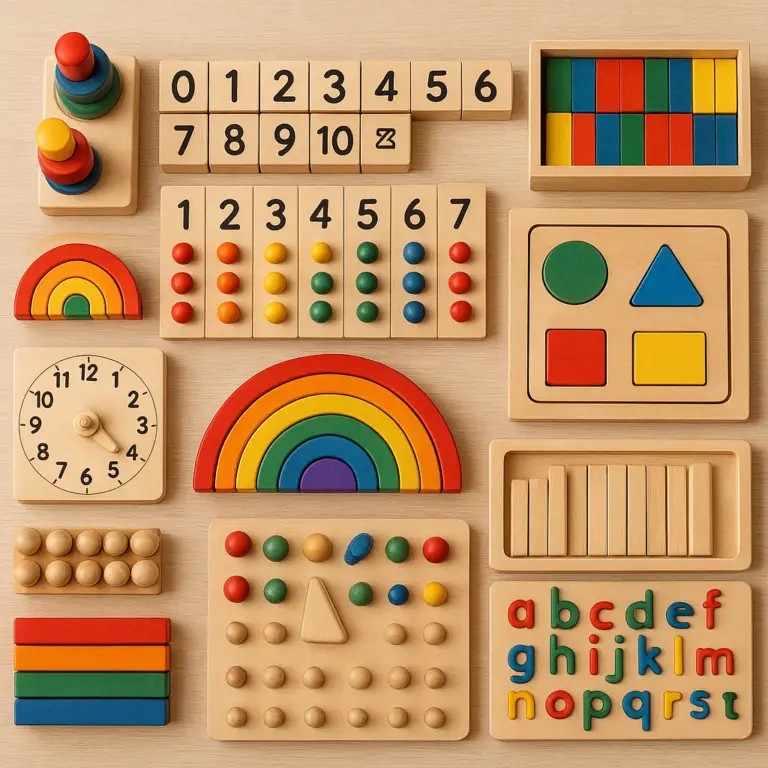
Building blocks are the gold standard of educational toys. From wooden cubes to complex LEGO sets, they teach spatial reasoning, geometry, and engineering principles.
- Why They Work: Children must visualize a 3D object, plan the structure, and execute the build. If it falls, they analyze why and rebuild.
- Top Brands:
LEGO: The undisputed king of construction. From Duplo for toddlers to Technic for teens.
Magna-Tiles: Magnetic tiles make 3D building intuitive and frustration-free.
Gravitrax: A marble run system that teaches physics and gravity.
👉 CHECK PRICE on:
- LEGO Sets: Amazon | Walmart | LEGO Official
- Magna-Tiles: Amazon | Walmart | Magna-Tiles Official
2. 🧠 Logic Puzzles and Brain Teasers: The Gym for Your Gray Matter
Puzzles are the gym for the brain. They require focus, pattern recognition, and patience.
- Why They Work: They force the child to look at the “big picture” and the “small details” simultaneously.
- Top Brands:
Ravensburger: High-quality jigsaw puzzles with unique themes.
ThinkFun: Specializes in logic games like Rush Hour and Gravity Maze.
Melissa & Doug: Great for younger kids with wooden puzzles.
👉 CHECK PRICE on:
- ThinkFun Games: Amazon | Walmart | ThinkFun Official
- Ravensburger Puzzles: Amazon | Walmart
3. 🎲 Strategy Board Games: Learning to Think Three Moves Ahead
Board games are a fantastic way to teach social skills and strategic thinking in a fun, low-stakes environment.
- Why They Work: They require planning, risk assessment, and adapting to changing circumstances.
- Top Brands:
Hasbro: Classics like Chess and Checkers.
Goliath Games: Modern games like Blokus and Connect 4.
Catan Studio: For older kids, Catan is a masterclass in resource management.
👉 CHECK PRICE on:
4. 🔬 STEM and STEAM Kits: Hands-On Science and Creative Problem Solving
STEM (Science, Technology, Engineering, Math) kits bring the classroom to the living room.
- Why They Work: They allow children to conduct experiments, build circuits, and see scientific principles in action.
- Top Brands:
Thames & Kosmos: Famous for their chemistry and physics kits.
Snap Circuits: Excellent for learning electronics without soldering.
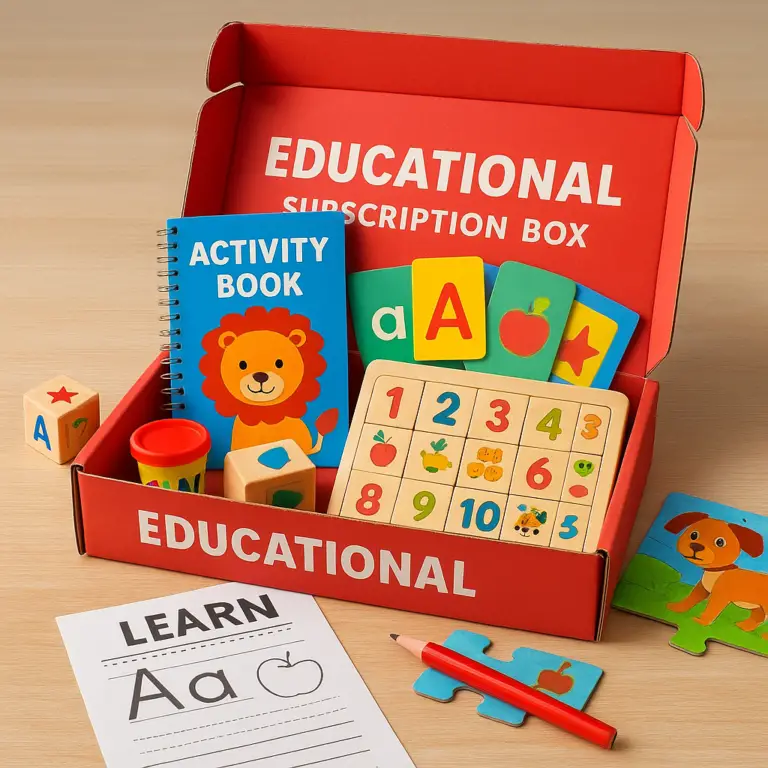
KiwiCo: Monthly subscription boxes with hands-on projects.
👉 CHECK PRICE on:
- Snap Circuits: Amazon | Walmart | Snap Circuits Official
- KiwiCo: Amazon | KiwiCo Official
5. 🎭 Role-Playing and Pretend Play: Simulating Real-World Scenarios
Don’t underestimate the power of pretend play. It’s not just “making believe”; it’s simulating real-world scenarios.
- Why They Work: When a child plays “doctor,” they are practicing empathy, problem-solving (diagnosing a patient), and communication.
- Top Brands:
Melissa & Doug: High-quality wooden play sets (kitchens, tool benches).
Learning Resources: Great for pretend science and math tools.
👉 CHECK PRICE on:
🛠️ How to Choose the Right Educational Toy for Your Child’s Unique Brain
Not every toy works for every child. Here is our step-by-step guide to choosing the perfect match.
- Assess Current Skills: What can your child do right now? Choose a toy that is slightly above their current level (the ZPD).
- Identify Interests: Does your child love cars? Dinosaurs? Space? A toy that aligns with their interests will keep them engaged longer.
- Check for Open-Endedness: The best toys have multiple solutions. Avoid toys that only do one thing (e.g., a button that just plays a song).
- Consider Durability: Kids are tough. Look for high-quality materials that can withstand trial and error.
- Read Reviews: Check what other parents and kids are saying. Look for comments on engagement and durability.
Pro Tip: If a toy sits on the shelf for more than a week, it’s not the right fit. Rotate toys to keep things fresh!
🚫 Common Pitfalls: When “Educational” Toys Miss the Mark
Not all toys labeled “educational” are created equal. Here are the red flags to watch out for.
- The “Passive” Toy: If the toy does all the work (e.g., a toy that talks and moves on its own), the child is just a spectator. Active engagement is key.
- The “One-Note” Toy: Toys that only have one function limit creativity. Look for versatility.
- The “Over-Stimulating” Toy: Toys with too many lights and sounds can be overwhelming and distract from critical thinking.
- The “Too Hard” Toy: If a toy is too difficult, the child will get frustrated and give up. It needs to be challenging but achievable.
Myth Buster: “More expensive means better.” Not necessarily! A $10 block set can be more educational than a $10 electronic gadget. It’s about how the child plays, not the price tag.
👨 👩 👧 👦 The Parent’s Role: Scaffolding Play Without Taking Over
This is the secret sauce. The toy is the tool, but you are the guide.
The Art of Scaffolding
Scaffolding means providing just enough support to help the child succeed, then gradually removing it as they gain confidence.
- Step 1: Observe: Watch how your child plays. Are they struggling? Are they bored?
- Step 2: Ask Questions: Instead of giving the answer, ask, “What do you think will happen if you try that?” or “How can we make this tower taller?”
- Step 3: Model: Show them one way to do it, then let them try.
- Step 4: Step Back: Let them take the lead. Even if they make a mistake, let them learn from it.
Real Story: One of our team members, Sarah, watched her son struggle with a puzzle for 20 minutes. She wanted to jump in, but she remembered the scaffolding rule. She just asked, “Where do you think the blue piece goes?” He found it himself and beamed with pride! That moment of self-discovery is priceless.
📊 Real-World Impact: Case Studies and Success Stories from Our Team
We’ve seen the magic happen firsthand. Here are a few real-world examples from the Toy Brands™ family.
Case Study 1: The “Quiet” Builder
Subject: Leo, age 5.
Challenge: Leo was shy and struggled with verbal communication.
Solution: We introduced LEGO Technic sets.
Outcome: Leo spent hours building complex machines. He started explaining his creations to his parents, using technical terms. His confidence soared, and his problem-solving skills improved dramatically. He learned that he could communicate through his builds.
Case Study 2: The “Impatient” Problem Solver
Subject: Maya, age 7.
Challenge: Maya gave up easily when things got hard.
Solution: We introduced ThinkFun’s Rush Hour game.
Outcome: The game required her to think ahead and plan moves. At first, she was frustrated. But after a few tries, she started to analyze the board and predict outcomes. She learned that persistence leads to success.
Case Study 3: The “Sensory” Seeker
Subject: Sam, age 3.
Challenge: Sam had trouble focusing and was easily distracted.
Solution: We introduced Magna-Tiles and sensory bins.
Outcome: The tactile nature of the toys helped Sam focus for longer periods. He started creating complex structures and explaining his ideas. The sensory input helped him regulate his attention.
The Takeaway: Every child is unique. The right toy can unlock their potential in ways you never imagined.
🌟 Conclusion

So, can educational toys help improve a child’s problem-solving and critical thinking skills? Absolutely, without a doubt.
From the sensory exploration of a baby shaking a rattle to the complex coding of a pre-teen building a robot, educational toys are the building blocks of a brilliant mind. They provide the safe space for children to fail, learn, and grow.
But remember, the magic doesn’t happen in the box. It happens in the interaction. It happens when a parent asks, “What if we try this?” It happens when a child takes a deep breath, tries again, and finally solves the puzzle.
Our Final Recommendation:
Don’t just buy toys. Curate experiences. Choose toys that challenge, inspire, and grow with your child. And most importantly, play with them. Your presence is the most powerful educational tool of all.
One last thought: The next time your child is stuck on a problem, resist the urge to fix it. Ask a question, offer a hint, and watch them shine. Because the joy of solving is the greatest gift you can give.
🔗 Recommended Links
Ready to start your journey? Here are our top picks for products and resources to boost your child’s cognitive skills.
Top Educational Toys
- LEGO Classic Creative Bricks: Amazon | Walmart | LEGO Official
- ThinkFun Rush Hour: Amazon | Walmart | ThinkFun Official
- Snap Circuits Jr.: Amazon | Walmart | Snap Circuits Official
- Magna-Tiles 10-Piece Set: Amazon | Walmart | Magna-Tiles Official
Recommended Books
- “The Whole-Brain Child” by Daniel J. Siegel: A must-read for parents on nurturing your child’s developing mind. Amazon
- “Mindset” by Carol S. Dweck: Learn how to foster a growth mindset in your children. Amazon
- “How Children Learn” by John Holt: A classic on the power of play and natural learning. Amazon
Internal Resources
❓ FAQ: Your Burning Questions About Cognitive Development Toys Answered

Here are 7 new search terms that are related to “Can educational toys help improve a child’s problem-solving and critical thinking skills?” and relevant to theme “Find the Best Toy Brands for All Ages”:
- Best STEM toys for critical thinking
- How to choose educational toys for toddlers
- Top brain games for kids
- Montessori toys for problem-solving
- Cognitive development toys by age
- Strategy games for children
- Open-ended toys for creativity
Are there specific educational toys recommended for different age groups?
Yes! As detailed in our “From Crawlers to Coders” section, toys must match developmental stages.
- 0-12 Months: Focus on sensory and cause-and-effect (rattles, activity gyms).
- 1-3 Years: Introduce sorting and spatial toys (shape sorters, chunky puzzles).
- 3-5 Years: Move to sequencing and pretend play (simple board games, dress-up).
- 6-9 Years: Challenge with logic and STEM (strategy games, science kits).
- 10-12 Years: Engage with coding and complex systems (robotics, advanced board games).
Using age-inappropriate toys can lead to frustration or boredom, so always check the recommended age range.
Read more about “🧠 How to Choose the Right Educational Toy for Any Age (2026)”
How do building blocks and construction toys support critical thinking?
Building blocks are a powerhouse for critical thinking. They require children to:
- Visualize a 3D structure in their mind.
- Plan the sequence of construction.
- Test their hypothesis (does the tower stand?).
- Analyze failures (why did it fall?) and iterate (try again).
This process mirrors the scientific method and engineering design process, fostering deep problem-solving skills.
Read more about “🏆 15+ Award-Winning Toy Brands for Children (2026)”
At what age should children start using educational toys for maximum benefit?
From birth! Even newborns benefit from sensory stimulation. However, the type of toy changes as they grow.
- 0-3 months: High-contrast images and soft textures.
- 3-6 months: Rattles and grasping toys.
- 6-12 months: Cause-and-effect toys.
The key is to provide appropriate challenges at each stage. There is no “too early” to start, as long as the toy is safe and engaging.
What are the top toy brands known for promoting learning and development?
Several brands have earned a reputation for quality and educational value:
- LEGO: Unmatched for construction and engineering.
- ThinkFun: Specializes in logic and puzzle games.
- Melissa & Doug: Excellent for pretend play and wooden puzzles.
- Thames & Kosmos: Leaders in STEM and science kits.
- Magna-Tiles: Great for spatial reasoning and creativity.
- Osmo: Innovative hybrid learning (digital + physical).
Read more about “🎭 Top 15 Role-Playing Game Brands for Kids (2026)”
Can puzzle toys improve a child’s cognitive skills effectively?
Yes, absolutely. Puzzles are proven to enhance:
- Visual-spatial reasoning: Understanding how pieces fit together.
- Pattern recognition: Identifying colors, shapes, and sequences.
- Patience and focus: Completing a puzzle requires sustained attention.
- Problem-solving: Figuring out where each piece belongs.
Studies show that children who play with puzzles regularly perform better in math and spatial tasks later in life.
Read more about “How to Ensure Educational Toys Are Safe & Durable in 2025 🎲”
How do educational toys enhance problem-solving abilities in toddlers?
Todlers learn through trial and error. Educational toys provide a safe environment for this.
- Shape sorters teach them to match shapes.
- Stacking cups teach them about size and order.
- Simple puzzles teach them to fit pieces together.
When a toddler tries to force a square into a round hole, they learn that it doesn’t fit. They then try a different shape. This is the foundation of problem-solving.
Read more about “🐾 15 Best Robot Dog Toys on Amazon (2026): The Ultimate Guide”
What types of educational toys are best for developing critical thinking in children?
The best toys are open-ended and multi-functional.
- Building sets (LEGO, Magna-Tiles): Allow for infinite creations.
- Strategy games (Rush Hour, Checkers): Require planning and foresight.
- Science kits: Encourage experimentation and hypothesis testing.
- Role-play sets: Foster empathy and social problem-solving.
Avoid toys that only have one “right” way to play.
Read more about “🧩 15 Top Toy Brands for Neurodivergent Children (2026)”
Which toy brands offer the most effective educational products for different age groups?
- Infants: Fisher-Price, VTech (for sensory and cause-and-effect).
- Todlers: Melissa & Doug, Learning Resources.
- Preschoolers: LeapFrog, Osmo.
- School Age: LEGO, ThinkFun, Thames & Kosmos.
- Tens: LEGO Mindstorms, Arduino kits.
How do educational toys compare to traditional toys in skill development?
Educational toys are often designed with specific learning outcomes in mind, while traditional toys (like a ball or a doll) rely more on imagination.
- Educational Toys: Provide structured learning, often targeting specific skills (e.g., math, logic).
- Traditional Toys: Foster creativity, social skills, and open-ended play.
The best approach is a balance of both. Traditional toys allow for free play, while educational toys provide targeted challenges.
Read more about “🤖 Can Robot Toys Help Special Needs Kids? (2026)”
What are the benefits of STEM toys for children’s learning?
STEM toys introduce children to science, technology, engineering, and math in a fun, hands-on way.
- Hands-on learning: They learn by doing, not just reading.
- Problem-solving: They face real-world challenges and find solutions.
- Creativity: They design and build their own creations.
- Future readiness: They build skills needed for future careers in tech and engineering.
Read more about “🤖 Are Robot Toys Educational? 15 Top Picks to Boost Problem-Solving (2026)”
Can puzzles and building blocks improve a child’s reasoning abilities?
Yes. Both puzzles and building blocks require logical reasoning.
- Puzzles: Require analyzing the image and fitting pieces based on logic.
- Building Blocks: Require understanding gravity, balance, and structure.
These activities strengthen the brain’s reasoning centers, leading to better decision-making and analytical skills.
Read more about “🤖 15 Best Robot Toys for Kids to Learn Coding (2026)”
At what age should children start using educational toys for cognitive development?
Immediately. Cognitive development starts at birth.
- 0-3 months: Visual and auditory stimulation.
- 3-6 months: Tactile exploration.
- 6-12 months: Cause-and-effect toys.
- 12+ months: More complex problem-solving toys.
The key is to provide age-appropriate challenges that grow with the child.
Read more about “🤖 15 Best Electronic Toys for Todlers That Actually Teach (2026)”
How do educational toys enhance critical thinking in children?
Educational toys enhance critical thinking by:
- Presenting challenges: Toys that require a solution.
- Encouraging experimentation: Allowing children to try different approaches.
- Providing feedback: Showing the result of their actions.
- Fostering reflection: Encouraging children to think about what worked and what didn’t.
This cycle of action, feedback, and reflection is the core of critical thinking.
Read more about “🧠 Are Building Blocks Good for Cognitive Development? (2026)”
What types of educational toys are best for developing problem-solving skills?
- Logic Games: Like Rush Hour or Sudoku for kids.
- Building Sets: Like LEGO or Magna-Tiles.
- Science Kits: Like Snap Circuits or Chemistry sets.
- Strategy Board Games: Like Catan or Checkers.
- Puzzles: From simple shape sorters to complex jigsaws.
Look for toys that require planning, analysis, and adaptation.
Read more about “🤖 10+ Top Programming Toys for Children (2026)”
📚 Reference Links
- Harvard Center on the Developing Child: The Science of Early Childhood Development
- American Academy of Pediatrics: HealthyChildren.org – Play and Learning
- Zero to Three: Supporting Thinking Skills From 0-12 Months
- Piaget’s Theory of Cognitive Development: Stanford Encyclopedia of Philosophy
- LEGO Official Website: LEGO Education
- ThinkFun Official Website: ThinkFun Games
- Melissa & Doug Official Website: Melissa & Doug
- Thames & Kosmos Official Website: Thames & Kosmos
- Snap Circuits Official Website: Snap Circuits
- Magna-Tiles Official Website: Magna-Tiles
- Osmo Official Website: Osmo Learning
- KiwiCo Official Website: KiwiCo