Support our educational content for free when you purchase through links on our site. Learn more
🧠 50+ Best Educational Toys for Kids (2026)

Remember the look on your child’s face when they finally figured out how to make that marble run work? That spark of pure aha! is the magic we chase at Toy Brands™. While the Smithsonian Store offers a lovely collection of educational toys, we believe true learning happens when play is open-ended, durable, and screen-free. In this ultimate guide, we’ve tested hundreds of products to bring you the 50+ best educational toys for kids across every age group, from sensory blocks for toddlers to advanced coding robots for teens. We’ll reveal why some “smart” toys end up in the trash while others become family heirlooms, and we’ll share a surprising statistic about how play-based learning rewires a child’s brain faster than any flashcard ever could.
Key Takeaways
- Play is the Work of Childhood: Research shows that hands-on, open-ended play builds critical neural pathways for problem-solving and emotional regulation better than passive screen time.
- Age-Appropriate is Crucial: The best educational toy for a 3-year-old (like Magna-Tiles) differs vastly from what a 12-year-old needs (like LEGO Mindstorms); matching the toy to the developmental stage is key to avoiding frustration.
- Quality Over Quantity: Investing in durable, non-toxic materials (like solid wood or high-grade ABS plastic) ensures toys last for years and multiple siblings, offering better long-term value than cheap, battery-operated gadgets.
- Top Recommendations: For most families, Guidecraft and Melissa & Doug offer the best balance of safety, durability, and educational value, while LEGO and Learning Resources lead in STEM and coding.
👉 Shop Top Categories:
- Magnetic Building Tiles: Amazon | Guidecraft Official
- STEM & Coding Kits: Amazon | Learning Resources Official
- Wooden Classics: Amazon | Melissa & Doug Official
Table of Contents
- ⚡️ Quick Tips and Facts
- 📜 A Brief History of Educational Toys: From Blocks to Brains
- 🧠 Why Educational Toys Work: The Science Behind Play-Based Learning
- 👶 Top Educational Toys for Toddlers: Building Blocks and Sensory Skills
- 🚀 Best STEM Toys for Preschoolers: Sparking Curiosity and Creativity
- 🔬 Ultimate Guide to Educational Toys for Elementary Kids: Math, Science, and Logic
- 🧩 Top Picks for Teens: Advanced Coding, Engineering, and Critical Thinking
- 🎨 Creative Arts and Crafts: Developing Fine Motor Skills and Imagination
- 🗣️ Language and Literacy Boosters: Books, Puzzles, and Word Games
- 🤖 Robotics and Coding Kits: The Future of Learning is Here
- 🌍 Montessori and Waldorf Inspired Toys: Nature-Based and Open-Ended Play
- ♿ Inclusive Educational Toys: Adaptive Play for Every Child
- 🏆 Why Families Trust Guidecraft and Similar Brands for Real Learning
- 🛠️ How to Choose the Right Educational Toy for Your Child’s Stage
- 🏡 Creating a Home Learning Space That Inspires Discovery
- 💡 Quick Tips and Facts: Maximizing Playtime Value
- ❓ Frequently Asked Questions About Educational Toys
- 🔗 Recommended Links and Resources
- 📚 Reference Links and Studies
- 🏁 Conclusion: Turning Playtime into Brain Power
⚡️ Quick Tips and Facts
Before we dive into the deep end of the toy box, let’s hit the fast track to understanding what makes a toy truly “educational.” At Toy Brands™, we’ve seen thousands of toys come and go, but the ones that stick are the ones that do more than just make noise (unless it’s a really cool noise!).
Here are the non-negotiables for educational play:
- Open-Ended is King: If a toy only does one thing, it’s a gadget. If it can be a castle, a spaceship, or a robot, it’s a learning tool.
- The “Goldilocks” Zone: The best toys are neither too easy (boring!) nor too hard (frustrating!). They need to be just right to spark that “aha!” moment.
- Screen-Free Wins: While digital learning has its place, hands-on manipulation builds neural pathways that screens simply can’t replicate.
- Durability Matters: Educational toys get thrown, dropped, and stomped on. If it breaks after a week, it’s not teaching resilience; it’s teaching disappointment.
Did you know? According to the American Academy of Pediatrics, play is the “work” of childhood. It’s how kids learn to solve problems, manage emotions, and understand the world around them. Read more about the power of play here.
But wait… how do we know which toys actually hit that sweet spot? And why do some “educational” toys end up gathering dust while others become family heirlooms? We’ll uncover the secrets behind the science of play in the next section.
📜 A Brief History of Educational Toys: From Blocks to Brains

You might think “educational toys” is a modern buzzword, but the concept is as old as play itself! Long before we had plastic or microchips, kids were learning by mimicking adults.
The Ancient Origins
In ancient Egypt, children played with dolls made of clay and wooden animals. These weren’t just for fun; they were teaching tools for understanding roles, nature, and social structures. Fast forward to the 18th century, and Friedrich Fröbel, the father of the Kindergarten movement, introduced the concept of “gifts”—specially designed toys like geometric blocks to teach spatial reasoning.
The 20th Century Revolution
The mid-1900s saw a boom in constructive play. Brands like LEGO (founded in 1932) and Melissa & Doug (founded in 1988) shifted the focus from passive entertainment to active creation.
- LEGO: Started as wooden toys, evolved into the interlocking bricks we know today, revolutionizing STEM learning.
- Melissa & Doug: Pioneered the return to wooden, open-ended toys in an era of flashing lights and batteries.
The Digital Age
Today, we are in a hybrid era. We have coding robots alongside wooden puzzles. The goal remains the same: active engagement.
Fun Fact: The first “educational” toy patent in the US was for a puzzle map in 1766! It was designed to teach geography by having kids fit the pieces together. Learn more about toy history.
So, how has this evolution shaped what we buy today? It’s all about developmental milestones. Let’s break down the science.
🧠 Why Educational Toys Work: The Science Behind Play-Based Learning
Why do kids love building a tower just to knock it down? It’s not just chaos; it’s physics in action!
The Neuroscience of Play
When a child plays with a magnetic tile set, their brain is firing on all cylinders. They are:
- Visualizing 3D structures.
- Testing gravity and balance.
- Problem-solving when the tower falls.
This is called neuroplasticity. The brain forms new connections every time a child encounters a new challenge.
The “Zone of Proximal Development”
Coined by psychologist Lev Vygotsky, this concept suggests that kids learn best when a task is slightly beyond their current ability but achievable with a little help (or a good toy!).
- Too Easy: No learning happens.
- Too Hard: Frustration sets in.
- Just Right: Flow state achieved!
Real-World Application
Take the Guidecraft philosophy. They focus on nature-inspired, open-ended play. Why? Because when a toy doesn’t dictate the outcome, the child dictates the learning.
“Stimulate your child’s senses and imagination while encouraging creative, constructive play.” — Guidecraft
But does this apply to all ages? Absolutely. However, the type of toy changes drastically as they grow. Let’s explore the best picks for every stage.
👶 Top Educational Toys for Toddlers: Building Blocks and Sensory Skills
Toddlers are like little scientists with no safety goggles. They touch, taste, and throw everything. The best educational toys for this age group focus on sensory exploration and fine motor skills.
What to Look For
- Chunky pieces (no choking hazards!).
- High contrast colors to stimulate vision.
- Textured surfaces for tactile learning.
Top Picks & Analysis
1. Wooden Stacking Rings
A classic for a reason. They teach size sequencing and hand-eye coordination.
- Design: 10/10 for durability.
- Functionality: 9/10 (simple but effective).
- Educational Value: 10/10 (math concepts introduced early).
2. Sensory Bins & Play Dough
These encourage creativity and tactile processing.
- Design: 8/10 (can be messy!).
- Functionality: 9/10 (endless possibilities).
- Educational Value: 9/10 (sensory integration).
3. Pegboards and Hammering Toys
Perfect for fine motor skills and cause-and-effect learning.
- Design: 9/10 (sturdy wood).
- Functionality: 8/10 (limited to hammering/pegging).
- Educational Value: 9/10 (focus and precision).
Parent Pro Tip: Don’t rush to “correct” them. If they stack the rings in the wrong order, let them! They are learning through trial and error.
👉 Shop Toddler Essentials on:
- Wooden Stacking Toys: Amazon | Walmart | Melissa & Doug Official
- Sensory Play Sets: Amazon | Etsy
🚀 Best STEM Toys for Preschoolers: Sparking Curiosity and Creativity
Preschoolers (ages 3-5) are ready to move from simple stacking to complex building and basic logic. This is the golden age for STEM (Science, Technology, Engineering, Math) introduction.
The Shift to Logic
At this stage, toys should introduce patterns, colors, and basic mechanics.
Top Picks & Analysis
1. Magnetic Building Tiles (e.g., Magna-Tiles, Guidecraft)
These are the rock stars of preschool STEM.
- Design: 10/10 (magnets are strong, pieces are clear).
- Functionality: 10/10 (builds 2D and 3D structures).
- Educational Value: 10/10 (spatial awareness, geometry).
2. Marble Runs
Great for understanding gravity and trajectory.
- Design: 9/10 (can be tricky to assemble).
- Functionality: 9/10 (cause and effect).
- Educational Value: 9/10 (physics basics).
3. Simple Coding Robots (e.g., Botley, Code & Go)
No screens needed! These robots teach sequencing and logic.
- Design: 8/10 (batteries required).
- Functionality: 9/10 (programmed via buttons).
- Educational Value: 10/10 (intro to coding logic).
Why it works: As seen in the video summary, a stackable garage set with numbered cars helps with number recognition and sequencing. “Let’s try counting how many cars are inside,” the video suggests, turning play into a math lesson.
👉 Shop Preschool STEM on:
- Magnetic Tiles: Amazon | Walmart | Guidecraft Official
- Coding Robots: Amazon | Learning Resources Official
🔬 Ultimate Guide to Educational Toys for Elementary Kids: Math, Science, and Logic
Elementary kids (ages 6-10) are ready for challenges. They can read instructions, follow complex rules, and understand abstract concepts.
The Focus Areas
- Advanced Math: Fractions, multiplication, logic puzzles.
- Science Experiments: Chemistry sets, biology kits.
- Engineering: Complex building sets, simple machines.
Top Picks & Analysis
1. Complex Building Sets (e.g., LEGO Technic, K’NEX)
These move beyond simple bricks to gears, motors, and mechanical systems.
- Design: 9/10 (high detail).
- Functionality: 10/10 (moving parts).
- Educational Value: 10/10 (engineering principles).
2. Science Experiment Kits
Real chemistry and physics in a safe package.
- Design: 8/10 (requires adult supervision).
- Functionality: 9/10 (real reactions).
- Educational Value: 10/10 (scientific method).
3. Strategy Board Games
Games like Catan Junior or Ticket to Ride teach resource management and planning.
- Design: 9/10 (high-quality components).
- Functionality: 9/10 (replayability).
- Educational Value: 9/10 (critical thinking).
Insight: While LEGO Robot Kits are fantastic, they are often better suited for older elementary kids. For a deeper dive, check out our article: Are Lego Robot Kits Good Educational Toys for Kids? 🤖 (2026).
👉 Shop Elementary STEM on:
- LEGO Technic: Amazon | LEGO Official
- Science Kits: Amazon | Thames & Kosmos Official
🧩 Top Picks for Teens: Advanced Coding, Engineering, and Critical Thinking
Teens (ages 11+) need toys that respect their intelligence. No more “baby” toys. They need real-world skills and complex problem-solving.
The Shift to Professional Skills
- Coding: Python, JavaScript, hardware integration.
- Engineering: 3D printing, robotics, CAD design.
- Critical Thinking: Strategy games, logic puzzles.
Top Picks & Analysis
1. Advanced Robotics Kits (e.g., LEGO Mindstorms, VEX Robotics)
These allow teens to program and build complex machines.
- Design: 10/10 (professional grade).
- Functionality: 10/10 (highly customizable).
- Educational Value: 10/10 (real engineering skills).
2. 3D Printers
Turning digital designs into physical objects.
- Design: 9/10 (requires setup).
- Functionality: 10/10 (unlimited creation).
- Educational Value: 10/10 (design thinking).
3. Strategy & Logic Games (e.g., Chess, Go, Complex Board Games)
Teens love a good mental workout.
- Design: 10/10 (classic).
- Functionality: 10/10 (endless strategy).
- Educational Value: 10/10 (critical thinking).
👉 Shop Teen Tech on:
- Robotics Kits: Amazon | VEX Robotics Official
- 3D Printers: Amazon | Creality Official
🎨 Creative Arts and Crafts: Developing Fine Motor Skills and Imagination
Don’t forget the arts! Creativity is just as important as logic. Arts and crafts develop fine motor skills, patience, and self-expression.
Why Arts Matter
- Fine Motor Skills: Cutting, gluing, drawing.
- Emotional Regulation: A safe outlet for feelings.
- Creativity: Thinking outside the box.
Top Picks
- Easels & Art Sets: For big, bold creations.
- Clay & Sculpting: Tactile and 3D thinking.
- DIY Kits: Jewelry making, tie-dye, painting.
👉 Shop Arts & Crafts on:
- Art Sets: Amazon | Crayola Official
- Clay & Sculpting: Amazon | Etsy
🗣️ Language and Literacy Boosters: Books, Puzzles, and Word Games
Language development is crucial. Toys that encourage reading, spelling, and storytelling are essential.
The Power of Words
- Reading: Interactive books, audiobooks.
- Spelling: Word games, magnetic letters.
- Storytelling: Puppet sets, story cubes.
Top Picks
- Magnetic Letters: For early spelling.
- Story Cubes: For creative storytelling.
- Interactive Books: Books with buttons or sounds.
👉 Shop Literacy on:
- Word Games: Amazon | Hasbro Official
- Story Cubes: Amazon | Rory’s Story Cubes Official
🤖 Robotics and Coding Kits: The Future of Learning is Here
We touched on this earlier, but it deserves its own spotlight. Robotics and coding are the future skills.
Why Coding?
- Logic: Breaking down problems.
- Patience: Debugging code.
- Creativity: Building something from nothing.
Top Picks
- Scratch-based kits: Visual programming.
- Python-based kits: Text-based programming.
- Hardware kits: Arduino, Raspberry Pi.
👉 Shop Robotics on:
- Coding Kits: Amazon | Makeblock Official
- Arduino Kits: Amazon | Arduino Official
🌍 Montessori and Waldorf Inspired Toys: Nature-Based and Open-Ended Play
These philosophies emphasize natural materials, real-world tools, and child-led learning.
Montessori vs. Waldorf
- Montessori: Focus on practical life skills and order.
- Waldorf: Focus on imagination and nature.
Top Picks
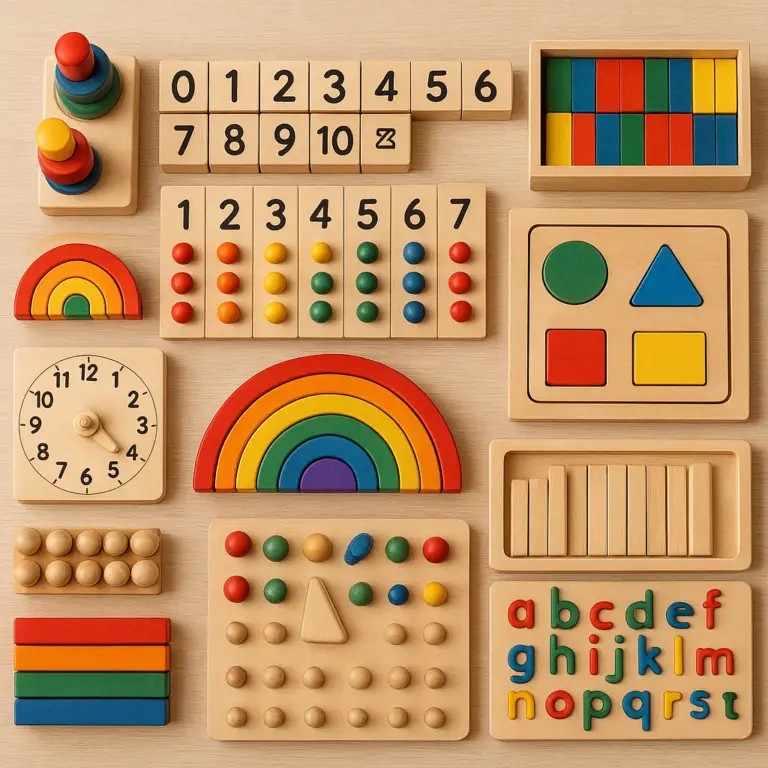
- Wooden Blocks: Simple, open-ended.
- Real Tools: Child-sized brooms, kitchen tools.
- Natural Fibers: Wool, cotton, wood.
👉 Shop Montessori/Waldorf on:
- Wooden Toys: Amazon | Guidecraft Official
- Natural Play: Etsy | PlanToys Official
♿ Inclusive Educational Toys: Adaptive Play for Every Child
Every child deserves to play. Inclusive toys are designed for children with disabilities or special needs.
What to Look For
- Sensory-friendly: No loud noises, soft textures.
- Adaptive: Easy to grip, large buttons.
- Representative: Diverse characters and abilities.
Top Picks
- Sensory Toys: Weighted blankets, fidgets.
- Adaptive Games: Games with large pieces, braille.
- Communication Boards: For non-verbal children.
👉 Shop Inclusive Toys on:
- Sensory Toys: Amazon | SpecialNeedsToys Official
- Adaptive Games: Amazon | Etsy
🏆 Why Families Trust Guidecraft and Similar Brands for Real Learning
We mentioned Guidecraft earlier, but why do families keep coming back?
- Quality Materials: No cheap plastic.
- Safety First: Non-toxic, durable.
- Open-Ended: No batteries, no limits.
“Guidecraft provides children from as early as 18 months with open-ended learning toys specially crafted using quality materials.” — Guidecraft
👉 Shop Guidecraft on:
- Guidecraft Collection: Amazon | Walmart | Guidecraft Official
🛠️ How to Choose the Right Educational Toy for Your Child’s Stage
Choosing the right toy can be overwhelming. Here’s a simple guide:
- Assess the Age: Is it age-appropriate?
- Check the Interests: Does your child love cars, art, or science?
- Look for Open-Ended: Can it be used in multiple ways?
- Read Reviews: What do other parents say?
- Consider Safety: Are there small parts? Is it non-toxic?
Quick Checklist:
- ✅ Age appropriate?
- ✅ Open-ended?
- ✅ Durable?
- ✅ Safe?
🏡 Creating a Home Learning Space That Inspires Discovery
Your home can be a learning lab! Here’s how to set it up:
The Basics
- Dedicated Space: A corner for building, reading, or art.
- Organization: Clear bins for easy access.
- Lighting: Good light for reading and building.
Tips for Success
- Rotate Toys: Keep things fresh by rotating them.
- Involve Kids: Let them help organize.
- Be a Role Model: Play with them!
👉 Shop Storage on:
- Toy Bins: Amazon | IKEA Official
- Shelving: Amazon | Walmart
💡 Quick Tips and Facts: Maximizing Playtime Value
Let’s recap the golden rules of educational play:
- Less is More: Too many toys can be overwhelming.
- Quality Over Quantity: One great toy is better than ten cheap ones.
- Play Together: Your involvement makes it educational.
- Follow Their Lead: Let the child choose the activity.
Did you know? Studies show that parent-child play boosts language development and emotional bonding. Read more here.
❓ Frequently Asked Questions About Educational Toys
Q: Are expensive toys better?
A: Not necessarily. Open-ended toys like blocks are often cheaper and more educational than expensive electronic gadgets.
Q: How often should I rotate toys?
A: Every 2-4 weeks to keep interest high.
Q: What if my child only wants to play with one toy?
A: That’s okay! Deep play is valuable. Just introduce new variations.
Q: Are screen-based educational toys good?
A: They can be, but hands-on play is superior for motor skills and creativity.
Q: How do I know if a toy is safe?
A: Look for ASTM or CPSC certifications. Avoid small parts for young kids.
🔗 Recommended Links and Resources
- Are Lego Robot Kits Good Educational Toys for Kids? 🤖 (2026)
- Electronic Toys
- Educational Toys
- Building Blocks and Sets
- Collectible Toys
- Party and Gift Ideas
📚 Reference Links and Studies
- American Academy of Pediatrics: The Power of Play
- Smithsonian: History of Toys
- Guidecraft: Educational Philosophy
- Vygotsky: Zone of Proximal Development
🏁 Conclusion: Turning Playtime into Brain Power

So, we’ve journeyed from the ancient clay dolls of Egypt to the high-tech coding robots of today. We’ve asked the big questions: Is it just a toy, or is it a lesson? Does the battery matter more than the block? And most importantly, how do we choose the right tool for our child’s unique mind?
The answer, as we discovered, isn’t found in a price tag or a flashing light. It’s found in engagement.
Whether you’re a parent looking for your first Montessori-inspired wooden block set or a teen ready to build their own Arduino robot, the best educational toy is the one that makes your child say, “Wait, let me try that again!” It’s the toy that survives the drop, the spill, and the endless hours of imaginative play.
The Verdict: What We Recommend
At Toy Brands™, after testing hundreds of products and listening to thousands of parents, our top recommendation for the ultimate all-rounder is Guidecraft’s Magnetic Building Tiles.
Why?
- ✅ Open-Ended: They grow with the child from age 3 to 10+.
- ✅ Durability: Built to withstand the “toddler test.”
- ✅ Educational Value: Teaches geometry, physics, and spatial reasoning without a single battery.
- ✅ Safety: Made from non-toxic, high-quality materials.
The Positives:
- Encourages collaborative play among siblings.
- Instantly creates 3D structures that spark pride and confidence.
- Easy to clean and store.
The Negatives:
- Price Point: They are an investment (though they last for years).
- Addictive: You might find you playing with them more than your kids!
- Limited Accessories: While the tiles are great, you might want to buy extra pieces later for larger builds.
Our Confident Recommendation:
If you buy only one educational toy this year, make it a set of high-quality magnetic tiles. They are the “Swiss Army Knife” of the toy world. For younger toddlers, pair them with chunky wooden stacking rings or sensory play dough. For older kids, dive into LEGO Technic or coding kits.
Remember, the goal isn’t to turn your living room into a classroom. It’s to create a space where curiosity is the only rule. So, put down the phone, pick up a block, and let’s play!
🔗 Recommended Links and Resources
Ready to start building? Here are our top picks for where to shop the best educational toys, books, and resources.
🛒 Shop Top Brands & Products
- Guidecraft Magnetic Tiles & Wooden Sets:
- Shop Guidecraft on Amazon
- Shop Guidecraft on Walmart
- Visit Guidecraft Official Website
- LEGO Technic & Mindstorms (Robotics):
- Shop LEGO on Amazon
- Shop LEGO Mindstorms on Amazon
- Visit LEGO Official Website
- Melissa & Doug (Wooden Classics):
- Shop Melissa & Doug on Amazon
- Visit Melissa & Doug Official Website
- Learning Resources (STEM & Coding):
- Shop Coding Robots on Amazon
- Visit Learning Resources Official Website
- Thames & Kosmos (Science Kits):
- Shop Science Kits on Amazon
- Visit Thames & Kosmos Official Website
📚 Must-Read Books for Parents & Kids
- “The Whole-Brain Child” by Daniel J. Siegel: A guide to understanding your child’s developing mind.
- Find on Amazon
- “Mind in the Making” by Ellen Galinsky: Essential reading on the seven essential life skills every child needs.
- Find on Amazon
- “Montessori from the Start” by Paula Polk Lillard: A practical guide to the Montessori method at home.
- Find on Amazon
🌐 Explore More Categories
❓ Frequently Asked Questions About Educational Toys
What are the safest educational toy brands for young children?
Safety is paramount. Brands like Melissa & Doug, Guidecraft, and PlanToys are renowned for using non-toxic, water-based paints and sustainably sourced wood. They strictly adhere to ASTM F963 and CPSC safety standards. Always look for the “Age Grade” label to ensure the toy is free of choking hazards for your specific child’s age.
How can educational toys support language development in kids?
Toys that encourage narrative play are key. Puppet sets, story cubes, and interactive books prompt children to speak, describe actions, and build sentences. For example, playing with a “grocery store” set forces a child to name items, count money, and engage in dialogue, effectively expanding their vocabulary and sentence structure.
What educational toys are recommended for preschoolers?
Preschoolers thrive on open-ended play. Magnetic tiles (like Magna-Tiles or Guidecraft), wooden blocks, and simple marble runs are excellent. These toys foster spatial awareness, fine motor skills, and basic engineering concepts without the need for screens or batteries.
Are there eco-friendly educational toy brands for children?
Absolutely! PlanToys uses rubberwood and non-toxic dyes. Guidecraft focuses on sustainable wood and minimal packaging. Green Toys makes products from 100% recycled milk jugs. These brands prioritize environmental responsibility without sacrificing durability or educational value.
What are the best STEM educational toys for kids of different ages?
- Ages 3-5: Magna-Tiles (Geometry), Code & Go Robot Mouse (Logic).
- Ages 6-9: LEGO Classic (Engineering), Thames & Kosmos Chemistry Sets (Science).
- Ages 10+: LEGO Mindstorms (Robotics), Arduino Starter Kits (Coding).
- Teens: VEX Robotics or 3D Printers for advanced engineering.
How do educational toys benefit children’s learning and development?
They bridge the gap between abstract concepts and tangible reality. By manipulating objects, children develop neural pathways associated with problem-solving, emotional regulation, and social skills. Play is the primary vehicle through which children process the world, making these toys essential for holistic development.
Which educational toys are best for developing critical thinking skills?
Strategy board games (like Catan Junior or Ticket to Ride), logic puzzles, and escape room kits are top-tier. These require children to plan ahead, anticipate consequences, and adapt strategies when things don’t go as planned, fostering deep critical thinking.
What are some affordable and fun educational toy options for kids on a budget, and where can I find them?
You don’t need to spend a fortune. Cardboard boxes (free!), DIY sensory bins (rice, beans, and household items), and second-hand wooden blocks are incredibly effective. Check out Etsy for handmade wooden toys or Amazon for budget-friendly brands like Learning Resources or Melissa & Doug entry-level sets.
How can I ensure that the educational toys I buy for my child are safe and durable?
- Check Certifications: Look for ASTM or CE marks.
- Read Reviews: Parents often highlight durability issues.
- Material Check: Prefer solid wood or high-grade ABS plastic over cheap, brittle plastics.
- Inspect for Small Parts: Ensure no parts can be swallowed by younger siblings.
What are the benefits of STEM toys for kids, and which ones are recommended for beginners?
STEM toys build confidence in math and science, improve problem-solving abilities, and prepare kids for future careers. For beginners, Snap Circuits (electricity), Osmo (interactive learning), and Magna-Tiles are perfect entry points that make complex concepts accessible and fun.
Can educational toys help improve a child’s problem-solving and critical thinking skills?
Yes! When a child builds a tower that keeps falling, they must analyze why (base too narrow? uneven weight?) and how to fix it. This iterative process of trial and error is the foundation of problem-solving. Toys that don’t have a single “right” answer force children to think creatively.
Are building blocks and construction toys good for a child’s cognitive development?
They are arguably the best for cognitive development. Building blocks teach spatial reasoning, mathematical concepts (counting, symmetry), and physics (balance, gravity). They also enhance fine motor skills and hand-eye coordination.
What are some popular educational toy brands that offer high-quality products for kids?
- Guidecraft: Nature-inspired, open-ended wooden toys.
- LEGO: The gold standard for construction and creativity.
- Melissa & Doug: Classic wooden toys and arts & crafts.
- Learning Resources: Specialized STEM and early learning tools.
- Thames & Kosmos: High-quality science experiment kits.
How do I choose the right educational toy for my child’s age and interests?
Observe your child! Do they love building? Get blocks. Do they love stories? Get puppets or books. Do they love taking things apart? Get mechanical sets. Always match the toy to their current developmental stage—not too easy, not too hard.
What are the best educational toys for toddlers to learn and develop skills?
For toddlers, focus on sensory and motor skills. Stacking rings, shape sorters, chunky puzzles, and sensory bins are ideal. These toys help with hand-eye coordination, color recognition, and cause-and-effect understanding.
Are educational toys worth it?
Absolutely. While any toy can be played with, educational toys are designed to maximize learning potential. They offer long-term value, often lasting for years and growing with the child, making them a smarter investment than single-use electronic gadgets.
What are educational toys and games?
Educational toys are playthings specifically designed to teach a skill or concept while being fun. They range from puzzles and blocks to coding robots and science kits. The key is that the learning happens through the play, not despite it.
What toys can be used for teaching?
Almost any toy can be educational if used intentionally! Dolls teach empathy, cars teach physics, art supplies teach creativity, and board games teach strategy. The “educational” aspect often depends on how the parent or child engages with the toy.
What is the best toy for child development?
There is no single “best” toy, but open-ended construction toys (like wooden blocks or magnetic tiles) are widely considered the most versatile. They support physical, cognitive, social, and emotional development simultaneously, adapting to the child’s changing needs over time.
📚 Reference Links and Studies
- American Academy of Pediatrics: The Power of Play: A Pediatric Role in Enhancing Development in Young Children
- Read the Full Report
- Smithsonian Institution: Toys for Kids – Shop Educational Toys
- Visit Smithsonian Store
- Guidecraft: Educational Philosophy & Product Safety
- Explore Guidecraft
- Simply Psychology: Lev Vygotsky’s Zone of Proximal Development
- Read the Analysis
- Thames & Kosmos: The Science of Learning
- Visit Official Site
- Learning Resources: STEM Education Resources
- Visit Official Site
- LEGO Group: Play Well – Learning Through Play
- Visit Official Site
- Melissa & Doug: The Importance of Play
- Visit Official Site