Support our educational content for free when you purchase through links on our site. Learn more
🧠 How to Choose the Right Educational Toy for Any Age (2026)


Ever walked into a toy store, felt your brain short-circuit, and wondered, “Is this just a glorified plastic brick, or will it actually teach my kid how to code?” You are not alone. At Toy Brands™, we’ve seen parents buy the flashiest, most expensive gadget only to watch it gather dust while their child plays with the cardboard box it came in. Why? Because the best educational toy isn’t the one with the most buttons; it’s the one that matches your child’s unique developmental stage and sparks their specific curiosity.
Did you know that children who engage in open-ended play develop problem-solving skills up to 30% faster than those who only use single-function toys? In this ultimate guide, we’re breaking down exactly how to decode your child’s needs from infancy to their teenage years. We’ll reveal the secret “Interest-Match Method” we use to find the perfect toy, share a shocking story about a “safe” toy that wasn’t, and provide a comprehensive list of the top 15 must-have categories that grow with your child. By the end, you’ll never look at a toy aisle the same way again.
Key Takeaways
- Match the “Just Right” Challenge: The perfect educational toy sits in the sweet spot between boredom and frustration, offering a challenge your child can overcome with a little effort.
- Follow the Passion: Interest-driven learning is the most effective method; if your child loves dinosaurs, find a counting game with T-Rexes, not a generic math set.
- Prioritize Open-Ended Play: Toys that can be used in multiple ways (like blocks or clay) provide significantly more long-term value and creativity than single-purpose electronic gadgets.
- Safety First: Always check for non-toxic materials and age-appropriate sizing, remembering that “3+” often refers to choking hazards, not just cognitive ability.
- Rotate to Refresh: Regularly swapping out toys keeps playtime exciting and prevents the “overwhelmed by choice” syndrome.
👉 Shop by Category:
- 👉 Shop Building Blocks & Sets: LEGO & Magnetic Tiles
- 👉 Shop STEM & Coding Kits: Science & Robotics Toys
- 👉 Shop Wooden & Pretend Play: Melissa & Doug & More
- 👉 Shop Interactive Learning: Osmo & Tablet Toys
Table of Contents
- ⚡️ Quick Tips and Facts
- 📜 The Evolution of Play: A Brief History of Educational Toys
- 🧠 Decoding Developmental Stages: Matching Toys to Cognitive Milestones
- 🎯 How to Choose the Right Educational Toy Based on Your Child’s Unique Interests
- 👶 Gifts for Babies: Sensory Exploration and Motor Skills (0–12 Months)
- 🧸 Gifts for Todlers: Building Blocks, Balance, and Early Language (1–3 Years)
- 🚀 Gifts for Preschoolers: Creativity, Social Skills, and Pre-Math (3–5 Years)
- 📚 Gifts for Early Elementary: Reading, Logic, and STEM Foundations (5–8 Years)
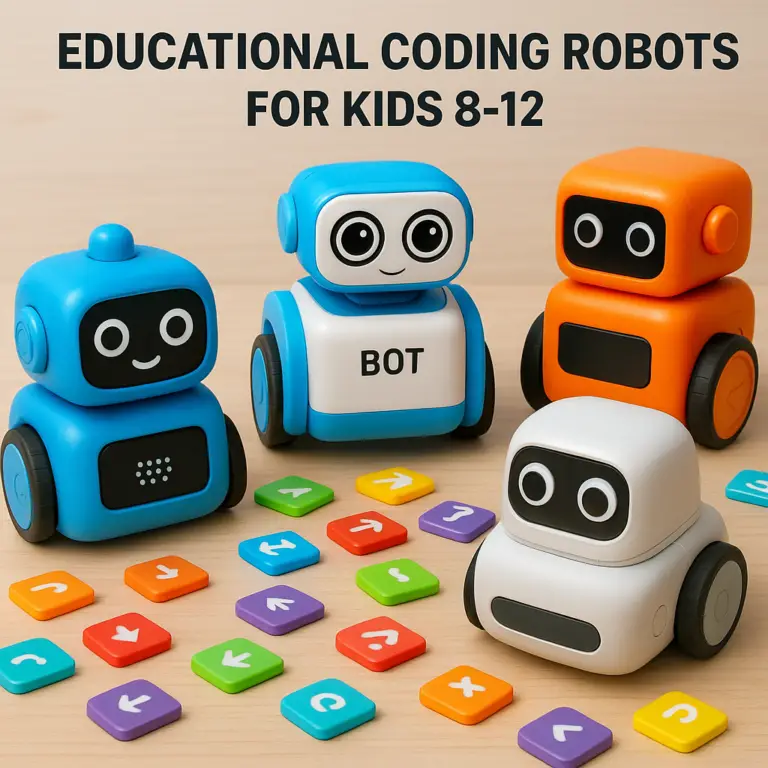
- 🔬 Gifts for Middle Childhood: Complex Engineering, Strategy, and Coding (8–12 Years)
- 🤖 Gifts for Teens: Advanced Robotics, Electronics, and Critical Thinking (13+ Years)
- 🧩 Top 15 Must-Have Educational Toy Categories for Every Age Group
- 🛡️ Safety First: What to Look for in Non-Toxic and Durable Materials
- 💡 Screen Time vs. Hands-On Play: Finding the Perfect Balance
- 🏆 Brand Spotlight: Trusted Names in Educational Play (LEGO, Melissa & Doug, Osmo, and More)
- 💰 Budget-Friendly Hacks: Getting the Most Value for Your Educational Toy Investment
- 🎨 DIY vs. Store-Bought: When to Build and When to Buy
- 📊 Comparison Table: Best Educational Toys by Age and Skill Focus
- ❓ Frequently Asked Questions About Choosing Educational Toys
- 🔗 Recommended Links for Parents and Educators
- 📖 Reference Links and Studies on Child Development
- 🏁 Conclusion: Turning Playtime into a Learning Adventure
⚡️ Quick Tips and Facts
Before we dive into the deep end of the toy aisle, let’s get our bearings with some golden rules that the kids and parents at Toy Brands™ swear by. Choosing the right educational toy isn’t just about grabbing the shiniest box; it’s about hitting the sweet spot between challenge and fun.
- Age Labels are Safety Guides, Not Developmental Scripts: As noted by experts at Elevate Toddler Play, a “3+” label often means “no small choking hazards” rather than “perfect for a 3-year-old’s brain.” Always look beyond the box!
- The “Just Right” Challenge: A toy that’s too easy leads to boredom; one that’s too hard leads to frustration. The magic happens in the middle, where your child is stretching their skills.
- Open-Ended is King: Toys that can be used in multiple ways (like blocks or clay) often provide more long-term value than single-function electronic gadgets.
- Rotate, Don’t Hoard: Having 50 toys out at once can overwhelm a child. Rotating a smaller selection keeps play fresh and exciting.
- Follow the Lead: If your child is obsessed with dinosaurs, don’t force a math game. Find a dinosaur counting game! Interest-driven learning sticks best.
For a deeper dive into our curated collections, check out our guide on educational toys for kids.
📜 The Evolution of Play: A Brief History of Educational Toys

Did you know that the concept of “educational toys” is actually quite modern? For centuries, children played with whatever they could find: sticks, stones, and homemade dolls. The idea that a toy could teach a specific skill only gained traction in the 18th and 19th centuries.
From Froebel to Fisher-Price
The father of the kindergarten system, Friedrich Fröbel, is often credited with inventing the first true educational toys in the 1830s. He created “Gifts” (like geometric blocks) designed to help children understand the world through structure and pattern.
Fast forward to the 20th century, and companies like Fisher-Price and LEGO revolutionized the industry. LEGO, founded in 1932, started with wooden toys but shifted to plastic bricks in the 1950s, creating a system that taught engineering, spatial awareness, and creativity simultaneously.
“Play is the highest form of research.” — Albert Einstein
Today, we’ve moved from simple wooden blocks to STEM kits, coding robots, and interactive globes. But the core principle remains the same: learning through doing.
🧠 Decoding Developmental Stages: Matching Toys to Cognitive Milestones
One of the biggest mistakes parents make is buying a toy based on the calendar age rather than the developmental age. A 4-year-old who is a whiz at puzzles might be ready for 6-year-old logic games, while another might need more sensory play.
The Three Pillars of Development
When evaluating a toy, ask yourself: Does this support Physical, Cognitive, or Social-Emotional growth?
| Developmental Domain | What It Looks Like | Toy Examples |
|---|---|---|
| Physical (Motor Skills) | Fine motor (grasping, stacking) and Gross motor (running, jumping). | Building blocks, balance bikes, lacing cards. |
| Cognitive (Brain Power) | Problem-solving, memory, logic, language, and math concepts. | Puzzles, board games, science kits, coding robots. |
| Social-Emotional (Heart & Mind) | Empathy, sharing, emotional regulation, and role-playing. | Dollhouses, pupets, cooperative board games. |
Pro Tip: Don’t ignore the “boring” stuff. A simple set of nesting cups teaches volume, size comparison, and fine motor skills all at once!
🎯 How to Choose the Right Educational Toy Based on Your Child’s Unique Interests
Here’s the secret sauce: Passion is the best teacher. If your child is obsessed with space, a generic math worksheet will be ignored, but a “Build Your Own Rocket” kit will be a hit.
Step-by-Step: The Interest-Match Method
- Observe: What does your child do for hours without getting bored? Is it building towers? Drawing? Pretending to be a vet?
- Identify the Skill: If they love building, they need spatial reasoning and engineering. If they love pretending, they need language and social skills.
- Find the Bridge: Look for a toy that combines their interest with a new skill.
Love Animals? → Get a magnifying glass and a field guide (Science + Observation).
Love Music? → Get a keyboard with sheet music or a drum set (Rhythm + Coordination).
Love Cars? → Get a marble run or track set (Physics + Cause & Effect).
“If a toy aligns with your child’s interests, they’re more likely to explore it in meaningful ways—leading to deeper learning and play.” — Elevate Toddler Play
👶 Gifts for Babies: Sensory Exploration and Motor Skills (0–12 Months)
Babies are like little scientists, testing the laws of physics by dropping everything from the high chair. Their play is all about sensory input and cause-and-effect.
What to Look For
- High Contrast: Black and white patterns stimulate developing vision.
- Textures: Soft fabrics, crinkly paper, and smooth wood.
- Graspability: Large, easy-to-hold shapes.
Top Picks for Babies:
- Montessori Mobiles: These hanging mobiles (like the Munari Mobile) provide visual tracking and focus.
- Soft Sensory Balls: Perfect for grasping and rolling.
- Activity Gyms: Encourages reaching, kicking, and tummy time.
Safety Check: Ensure no small parts (choking hazard) and that materials are non-toxic.
🧸 Gifts for Todlers: Building Blocks, Balance, and Early Language (1–3 Years)
Todlers are on a mission! They are mastering walking, talking, and independence. They need toys that are durable, open-ended, and encourage imitation.
The “Why” Behind the Toy
- Stacking & Nesting: Teaches size differentiation and spatial awareness.
- Push/Pull Toys: Helps with balance and gross motor skills.
- Pretend Play: A toy kitchen or tool set helps them process the world around them.
Top Picks for Todlers:
- Melissa & Doug Wooden Stacking Rings: A classic for a reason. It teaches order and size.
- Pikler Triangle: For gross motor climbing and balance (check out Pikler Triangle options).
- Shape Sorters: Excellent for problem-solving and hand-eye coordination.
🚀 Gifts for Preschoolers: Creativity, Social Skills, and Pre-Math (3–5 Years)
Preschoolers are ready for complex play. They can follow simple rules, engage in cooperative play, and start understanding numbers and letters.
Key Focus Areas
- Fine Motor Skills: Scissors, beads, and small blocks.
- Social Skills: Board games with turn-taking.
- Creativity: Art supplies and open-ended building sets.
Top Picks for Preschoolers:
- Magna-Tiles: These magnetic building tiles are a staple in our house. They teach geometry and engineering effortlessly.
- Simple Board Games: Games like Candy Land or The Sneaky, Snacky Squirrel Game teach turn-taking and color recognition.
- Art Kits: Washable markers, playdough, and easels.
📚 Gifts for Early Elementary: Reading, Logic, and STEM Foundations (5–8 Years)
This is the age of curiosity. Kids are reading, writing, and asking “Why?” constantly. They are ready for structured challenges and introduction to STEM.
What Works Best
- Construction Sets: LEGO Classic or Technic sets.
- Science Kits: Simple experiments like growing crystals or making slime.
- Coding Games: Screen-free coding toys like Code & Go Robot Mouse.
Top Picks for Early Elementary:
- LEGO Classic Creative Bricks: Endless possibilities for building.
- Osmo Coding Awbie: A brilliant way to introduce coding logic without a screen.
- National Geographic Science Kits: Hands-on geology and biology experiments.
🔬 Gifts for Middle Childhood: Complex Engineering, Strategy, and Coding (8–12 Years)
Kids in this age group are developing critical thinking and strategic planning. They can handle multi-step instructions and complex rules.
The Shift to Complexity
- Engineering: Gears, motors, and circuitry.
- Strategy: Chess, complex board games, and logic puzzles.
- Coding: Real programming languages (Python, Scratch).
Top Picks for Middle Childhood:
- LEGO Mindstorms / SPIKE Prime: Advanced robotics kits that teach coding and engineering.
- ThinkFun Games: Rush Hour and Gravity Maze are fantastic for logic.
- Micro:bit: A pocket-sized computer for learning to code.
🤖 Gifts for Teens: Advanced Robotics, Electronics, and Critical Thinking (13+ Years)
Tens need toys that respect their intelligence. They are ready for real-world applications and career-skills.
Focus on Mastery
- Electronics: Arduino kits, soldering kits.
- Advanced Coding: Web development, app creation.
- Strategy & Debate: Complex strategy games and debate clubs.
Top Picks for Teens:
- Arduino Starter Kit: Learn electronics and coding by building real projects.
- Sphero BOLT: A programmable robot ball for advanced coding.
- 3D Printers: Design and print your own objects.
🧩 Top 15 Must-Have Educational Toy Categories for Every Age Group
We’ve narrowed down the vast world of toys into 15 essential categories that grow with your child.
- Building Blocks: From Duplo to LEGO, these teach spatial reasoning.
- Puzzles: Essential for problem-solving and patience.
- Art Supplies: Fosters creativity and fine motor skills.
- Board Games: Teaches rules, strategy, and social skills.
- Science Kits: Sparks curiosity about the natural world.
- Coding Robots: Introduces logic and programming.
- Musical Instruments: Develops rhythm and auditory processing.
- Dollhouses & Figures: Encourages storytelling and empathy.
- Outdoor Play Equipment: Promotes gross motor skills and health.
- Books & Libraries: The foundation of literacy.
- Sensory Bins: Great for toddlers and special needs.
- Magnets & Tiles: Unique building experiences.
- Microscopes & Telescopes: Expands horizons to the tiny and vast.
- Kitchen Play: Teaches life skills and math (measuring).
- Strategy Games: Enhances critical thinking and foresight.
🛡️ Safety First: What to Look for in Non-Toxic and Durable Materials
Safety is non-negotiable. When shopping, always check for:
- Non-Toxic Materials: Look for “BPA-free,” “Lead-free,” and “Non-toxic paint.”
- Choking Hazards: For children under 3, avoid small parts.
- Durability: Toys should withstand rough play without breaking into sharp shards.
- Certifications: Look for ASTM, CPSC, or CE marks.
Real Story: We once bought a “wooden” toy that was actually painted with lead-based paint. It looked great, but it was a nightmare. Always check the label!
💡 Screen Time vs. Hands-On Play: Finding the Perfect Balance
In a digital world, it’s tempting to hand over a tablet. But hands-on play is ireplaceable for developing fine motor skills and spatial awareness.
The Hybrid Approach
- Active Screens: Use tablets for interactive coding or virtual field trips, not passive watching.
- Complementary Play: If they watch a video about space, get them a telescope or a planetarium app.
- The 30-Minute Rule: Limit screen time to 30 minutes, followed by 30 minutes of physical play.
🏆 Brand Spotlight: Trusted Names in Educational Play
Not all brands are created equal. Here are the ones we trust at Toy Brands™:
| Brand | Specialization | Why We Love Them |
|---|---|---|
| LEGO | Building & Engineering | Unmatched durability and creativity. |
| Melissa & Doug | Wooden Toys & Pretend Play | High-quality, non-toxic, and timeless. |
| Osmo | Interactive Learning | Brilliantly blends physical and digital play. |
| ThinkFun | Logic & Strategy Games | Challenging and educational. |
| National Geographic | Science & Nature | Inspires curiosity about the real world. |
💰 Budget-Friendly Hacks: Getting the Most Value for Your Educational Toy Investment
You don’t need to break the bank to get great educational toys.
- Buy Second-Hand: LEGO and wooden toys hold up well. Check Etsy or local consignment shops.
- Library Loans: Many libraries now lend out board games and STEM kits!
- DIY Projects: Cardboard boxes, bottle caps, and tape can become amazing toys.
- Rotate: Buying fewer toys but rotating them keeps them “new” longer.
🎨 DIY vs. Store-Bought: When to Build and When to Buy
DIY is great for:
- Sensory bins (rice, beans, water).
- Simple obstacle courses.
- Cardboard castles.
Store-Bought is better for:
- Precision engineering (LEGO, robotics).
- Safety-critical items (bikes, helmets).
- Complex rules (board games).
The Verdict: Mix both! Use DIY for creativity and store-bought for specialized learning tools.
📊 Comparison Table: Best Educational Toys by Age and Skill Focus
| Age Group | Top Skill Focus | Recommended Toy Type | Example Brand |
|---|---|---|---|
| 0-12 Months | Sensory & Motor | High-contrast mobiles, soft blocks | Manhattan Toy |
| 1-3 Years | Language & Balance | Stacking rings, ride-ons | Melissa & Doug |
| 3-5 Years | Creativity & Social | Magnetic tiles, simple board games | Magna-Tiles |
| 5-8 Years | Logic & STEM | Coding robots, science kits | Osmo, National Geographic |
| 8-12 Years | Engineering & Strategy | Advanced building sets, logic games | LEGO, ThinkFun |
| 13+ Years | Critical Thinking | Electronics, coding kits | Arduino, Sphero |
🏁 Conclusion: Turning Playtime into a Learning Adventure

Choosing the right educational toy is an art, not a science. It requires observing your child, understanding their unique interests, and balancing challenge with fun. Remember, the best toy is the one that gets your child engaged, curious, and excited to learn.
Whether it’s a simple wooden block or a complex robot, the goal is to foster a love of learning that lasts a lifetime. So, what are you waiting for? Grab a toy, get on the floor, and start playing!
Ready to find the perfect toy?
- 👉 Shop Educational Toys: Educational Toys Category
- 👉 Shop Building Blocks: Building Blocks & Sets
- 👉 Shop Electronic Toys: Electronic Toys
❓ Frequently Asked Questions About Choosing Educational Toys
How often should I update or rotate educational toys to keep my child engaged?
Answer: We recommend rotating toys every 2-4 weeks. This prevents boredom and keeps the play environment fresh. Store the “off-duty” toys in a closet and swap them out. This simple trick can make an old toy feel brand new!
What safety features should I look for in educational toys for young children?
Answer: Always check for non-toxic materials, smooth edges, and no small parts (for under 3s). Look for safety certifications like ASTM or CE. Avoid toys with long cords or strings that could pose a strangulation hazard.
Are there age-appropriate educational toys that encourage creativity and problem-solving?
Answer: Absolutely! Open-ended toys like building blocks, magnetic tiles, and art supplies are perfect for creativity. For problem-solving, look for puzzles, logic games, and STEM kits that require multi-step thinking.
How do educational toys support cognitive and motor skill development in children?
Answer: Educational toys provide hands-on practice. Building blocks improve fine motor skills and spatial awareness. Board games enhance memory and strategic thinking. Science kits foster curiosity and the scientific method.
What are the top educational toy brands recommended for toddlers and preschoolers?
Answer: Melissa & Doug, LEGO Duplo, Magna-Tiles, and Osmo are top choices. They offer high-quality, durable, and educational products that grow with your child.
How can I match educational toys to my child’s specific interests and learning style?
Answer: Observe your child. If they love animals, get a science kit about animals. If they love building, get complex construction sets. Tailoring toys to their interests ensures they stay engaged and learn more effectively.
What factors should I consider when selecting educational toys for different age groups?
Answer: Consider safety, developmental stage, interests, and durability. Avoid toys that are too advanced (frustrating) or too simple (boring).
What are the best educational toy brands for toddlers?
Answer: Melissa & Doug, Fisher-Price, and Green Toys are excellent for toddlers. They focus on sensory play, motor skills, and imaginative play.
How do I select age-appropriate toys for my child?
Answer: Look at the age recommendation on the box, but also consider your child’s individual abilities. If your child is advanced, you might choose a toy for an older age group, provided it’s safe.
Which toy brands focus on STEM learning for kids?
Answer: LEGO, Osmo, ThinkFun, National Geographic, and Sphero are leaders in STEM education. They offer robotics, coding, and science kits for all ages.
What are the top-rated educational toys for preschoolers?
Answer: Magna-Tiles, LEGO Classic, Osmo, and Melissa & Doug puzzles are consistently top-rated. They foster creativity, problem-solving, and social skills.
How can I find toys that match my child’s specific interests?
Answer: Pay attention to what they talk about and play with. If they love dinosaurs, look for dinosaur-themed science kits or books. If they love music, get a keyboard or drum set.
Are there safe educational toy brands for infants?
Answer: Yes! Manhattan Toy, Fisher-Price, and Green Toys offer safe, non-toxic, and age-appropriate toys for infants. Always check for small parts.
What educational toys do child development experts recommend?
Answer: Experts recommend open-ended toys like blocks, puzzles, and art supplies. They also suggest interactive books and outdoor play equipment to support holistic development.
🔗 Recommended Links for Parents and Educators
- 👉 Shop Top Educational Toys on Amazon: Educational Toys Search
- 👉 Shop Building Blocks on Amazon: LEGO & Building Sets
- 👉 Shop STEM Kits on Amazon: Science & Coding Kits
- 👉 Shop Wooden Toys on Etsy: Handmade Educational Toys
- Book Recommendation: The Whole-Brain Child by Daniel J. Siegel (Available on Amazon)
- Book Recommendation: Mind in the Making by Ellen Galinsky (Available on Amazon)
📖 Reference Links and Studies on Child Development
- Mindware: Shop by Age Guide – Insights on developmental stages.
- Elevate Toddler Play: How to Choose the Best Educational Toys for Your Toddler – Detailed age-specific recommendations.
- American Academy of Pediatrics: The Importance of Play – Official guidelines on play and development.
- LEGO Group: Play Well Report – Research on the benefits of play.
- National Association for the Education of Young Children (NAEYC): Developmentally Appropriate Practice – Guidelines for age-appropriate learning.
Featured Video:
For a visual guide on Montessori principles and toy selection, check out this Montessori Toy Selection Guide (embedded above). It covers everything from sensory mobiles for infants to complex building sets for preschoolers, emphasizing safety, open-ended play, and child-led learning.