Support our educational content for free when you purchase through links on our site. Learn more
🧠 7 Ways Educational Toys Supercharge Learning & Development (2026)

Educational toys transform playtime into a powerful engine for brain growth, boosting cognitive skills, emotional intelligence, and problem-solving abilities from the moment a child picks them up. You might wonder, how do educational toys benefit children’s learning and development? The answer is simple: they turn abstract concepts into tangible, hands-on experiences that wire the brain for success.
Imagine a three-year-old named Leo, who used to melt down when a tower of blocks fell. After introducing him to Magna-Tiles, he didn’t just rebuild; he started experimenting with angles and balance, asking, “Why does the triangle hold better than the square?” That shift from frustration to scientific inquiry is the magic of purposeful play.
Research from the Harvard Center on the Developing Child reveals that “serve and return” interactions during play are the primary architects of a child’s brain architecture. It’s not about the price tag or the flashing lights; it’s about the active engagement that forces a child to think, adapt, and create.
Key Takeaways
- Active vs. Passive: Educational toys require hands-on manipulation, which builds stronger neural pathways than passive screen time.
- Holistic Growth: They simultaneously develop cognitive, social-emotional, and motor skills through natural exploration.
- Future-Ready Skills: Play with open-ended toys fosters critical thinking, creativity, and resilience essential for the future.
- Quality Over Quantity: A few high-quality, versatile toys like LEGO or Melissa & Doug sets offer more value than a mountain of single-use gadgets.
Table of Contents
- ⚡️ Quick Tips and Facts
- 📜 From Play-Doh to Piaget: A Brief History of Educational Toys
- 🧠 The Brain-Boosting Science: How Play Rewires Young Minds
- 🚀 7 Core Developmental Areas Supercharged by Smart Toys
- 1. Cognitive Growth and Problem-Solving Skills
- 2. Language Acquisition and Vocabulary Expansion
- 3. Fine Motor Precision and Hand-Eye Coordination
- 4. Gross Motor Mastery and Physical Confidence
- 5. Social-Emotional Intelligence and Empathy Building
- 6. Creativity, Imagination, and Divergent Thinking
- 7. Early STEM Literacy and Logical Reasoning
- 🧩 Age-Appropriate Matchups: What Works for Todlers vs. Twens
- 🎨 Open-Ended vs. Single-Use: Why the Best Toys Have No Instructions
- 🤖 Tech vs. Tangible: Balancing Screen Time with Hands-On Learning
- 🛒 The Parent’s Guide to Spoting High-Quality Educational Toys
- 🏆 Top Brand Breakdowns: LEGO, Melissa & Doug, Osmo, and More
- 💡 10 Creative Ways to Turn Ordinary Play into Learning Gold
- 🚫 Common Myths About Educational Toys Debunked
- 📊 Real Parent Stories: Before and After Switching to Purposeful Play
- 🔍 The Hidden Costs: Why Cheap Plastic Often Costs More in the Long Run
- 🌍 Cultural and Inclusive Play: Representing Every Child
- 🧭 How to Choose the Right Toy for Your Child’s Unique Learning Style
- 📝 Conclusion
- 🔗 Recommended Links
- ❓ Frequently Asked Questions (FAQ)
- 📚 Reference Links
⚡️ Quick Tips and Facts
Before we dive into the deep end of child development theory, let’s grab a life vest with some rapid-fire truths that every parent at Toy Brands™ wishes they knew sooner.
- Play is Work: To a child, play isn’t just “killing time”; it’s their primary job. It’s how they process emotions, test hypotheses, and build neural pathways.
- The “Boredom” Myth: When your kid says “I’m bored,” they aren’t asking for a tablet; they are asking for creative fuel. Boredom is often the precursor to deep, self-directed learning.
- Less is More: A study published in Infant and Child Development found that toddlers given fewer toys actually played with each one longer and more creatively than those with a mountain of options.
- Screen vs. Screen: Not all screens are created equal. Interactive, co-viewing digital play can be educational, but hands-on manipulation of physical objects remains superior for spatial reasoning.
- The 10-Minute Rule: You don’t need to be a constant playmate. Research suggests that just 10 minutes of focused, undivided attention from a parent can significantly boost a child’s sense of security and willingness to explore.
Did you know? The way a child stacks a block tower is actually a physics lesson in gravity, balance, and structural integrity happening in real-time!
For a deeper dive into how we curate these experiences, check out our guide on educational toys for kids.
📜 From Play-Doh to Piaget: A Brief History of Educational Toys

You might think “educational toys” is a modern marketing buzzword, but the concept is as old as humanity itself. Long before we had LEGO or Osmo, ancient children were playing with sticks, stones, and clay.
The Philosophical Roots
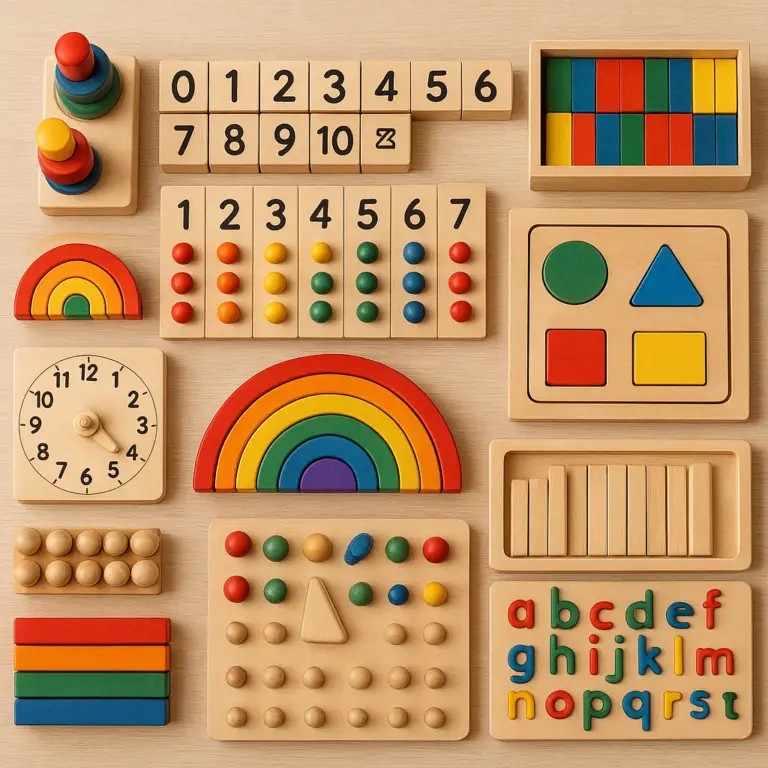
In the 18th and 19th centuries, giants of education like Friedrich Fröbel (the inventor of the kindergarten) and Maria Montessori revolutionized how we view play. Fröbel believed in “gifts”—specifically designed objects like spheres and cubes to teach geometry and nature. Montessori, meanwhile, championed self-directed activity and hands-on learning with materials that corrected their own errors.
The Commercial Boom
Fast forward to the 20th century, and the Play-Doh revolution (originally a wallpaper cleaner!) showed the world that open-ended materials could spark endless creativity. The 1970s and 80s brought us LEGO‘s systemic play and Barbie‘s role-playing narratives.
Today, we are in the STEM/STEAM era, where toys are designed to teach coding, robotics, and engineering principles, often blending the physical and digital worlds.
Fun Fact: The first “educational toy” patent in the US was for a puzzle map in 176, designed to teach geography!
🧠 The Brain-Boosting Science: How Play Rewires Young Minds
Why does a simple game of “peek-a-boo” matter? Why does building a tower of blocks matter more than watching a cartoon? The answer lies in neuroplasticity.
When a child interacts with an educational toy, their brain is firing on all cylinders.
- Sensory Integration: Tactile toys (like Kinetic Sand) stimulate the somatosensory cortex.
- Executive Function: Games requiring rules (like Candy Land or Uno) strengthen the prefrontal cortex, which handles impulse control and planning.
- Language Centers: Narrative play (dolls, action figures) activates Broca’s area and Wernicke’s area, crucial for speech and comprehension.
According to the Harvard Center on the Developing Child, “Serve and return” interactions—where a child acts (serves) and a caregiver responds (returns)—are the building blocks of brain architecture. Educational toys often serve as the perfect “serve” for parents to “return.”
Wait, does this mean expensive toys are better? Not necessarily! The quality of the interaction matters more than the price tag. We’ll unpack this myth later.
🚀 7 Core Developmental Areas Supercharged by Smart Toys
Not all toys are created equal. To truly benefit a child, a toy should target specific developmental domains. Here are the seven pillars of growth that the best educational toys support.
1. Cognitive Growth and Problem-Solving Skills
This is the “brain gym.” Toys that require a child to figure out “how does this work?” or “how do I fix this?” build critical thinking.
- How it works: A child encounters a problem (e.g., a puzzle piece doesn’t fit) and must hypothesize, test, and adjust.
- Top Picks: Ravensburger puzzles, ThinkFun logic games, Magna-Tiles.
2. Language Acquisition and Vocabulary Expansion
Play is the primary vehicle for language learning. Toys that encourage storytelling or labeling objects boost vocabulary and syntax.
- How it works: Role-playing with dolls or action figures forces children to narrate scenarios, expanding their expressive language.
- Top Picks: Melissa & Doug play sets, LeapFrog learning tablets, Fisher-Price Little People.
3. Fine Motor Precision and Hand-Eye Coordination
From buttoning a shirt to writing a name, fine motor skills are essential.
- How it works: Manipulating small pieces, twisting knobs, or stacking blocks strengthens the small muscles in the hands and fingers.
- Top Picks: LEGO Duplo, Play-Doh tools, Lacing cards.
4. Gross Motor Mastery and Physical Confidence
Big muscles need big toys! Gross motor play builds balance, coordination, and spatial awareness.
- How it works: Climbing, jumping, and balancing on toys help children understand their body in space.
- Top Picks: Little Tikes slides, Balance bikes, Hopscotch mats.
5. Social-Emotional Intelligence and Empathy Building
Can a toy teach empathy? Absolutely. Toys that require sharing, turn-taking, or role-playing emotions are vital.
- How it works: Playing “house” or “doctor” allows children to step into another’s shoes, practicing empathy and conflict resolution.
- Top Picks: Barbie dolls, L.O.L. Surprise! (for sharing), Emotion flashcards.
6. Creativity, Imagination, and Divergent Thinking
The ability to think “outside the box” is a superpower. Open-ended toys are the champions here.
- How it works: A block can be a phone, a car, or a brick. This flexibility fosters divergent thinking.
- Top Picks: Kinetic Sand, Magna-Tiles, Lose parts (boxes, tubes).
7. Early STEM Literacy and Logical Reasoning
Science, Technology, Engineering, and Math aren’t just for high school.
- How it works: Coding robots or building circuits introduce algorithmic thinking and cause-and-effect logic.
- Top Picks: Sphero robots, Osmo coding kits, Snap Circuits.
🧩 Age-Appropriate Matchups: What Works for Todlers vs. Twens
One size does not fit all. A toy that is perfect for a 2-year-old might be a safety hazard for a 6-month-old, or a bore for a 7-year-old.
| Age Group | Developmental Focus | Ideal Toy Types | Real Brand Examples |
|---|---|---|---|
| Infants (0-12 mos) | Sensory exploration, Object permanence | High-contrast cards, Rattles, Soft blocks | Fisher-Price, Manhattan Toy |
| Todlers (1-3 yrs) | Fine motor, Language, Cause & Effect | Shape sorters, Push/pull toys, Simple puzzles | Melissa & Doug, LEGO Duplo |
| Preschool (3-5 yrs) | Social skills, Imagination, Early literacy | Dress-up, Building sets, Pretend play kitchens | Little Tikes, Play-Doh |
| School Age (6-9 yrs) | Logic, STEM, Complex rules | Board games, Coding kits, Science experiments | ThinkFun, National Geographic |
| Twens (10+ yrs) | Advanced problem-solving, Special interests | Robotics, Advanced construction, Strategy games | LEGO Technic, Razor scoters |
Pro Tip: Always check the age recommendation, but trust your child’s individual development. If your 4-year-old is ready for a 6-year-old puzzle, go for it!
🎨 Open-Ended vs. Single-Use: Why the Best Toys Have No Instructions
Here is a secret the toy industry doesn’t always shout: The best toys have no instructions.
The Case for Open-Ended Play
Open-ended toys (like LEGO, Magna-Tiles, or a simple box of blocks) can be used infinite ways. They grow with the child. A 3-year-old stacks them; a 7-year-old builds a castle; a 10-year-old constructs a complex bridge.
- Benefit: Fosters creativity and long-term engagement.
- Drawback: Can be overwhelming for children who need clear structure.
The Case for Single-Use Toys
Single-use toys (like a specific electronic learning tablet or a puzzle with a fixed solution) have a defined goal.
- Benefit: Great for teaching specific skills (e.g., counting, letter recognition) and providing a sense of accomplishment.
- Drawback: Once the goal is reached, interest often wanes quickly.
The Verdict? Aim for a 80/20 split. 80% open-ended toys for creativity, 20% single-use for targeted skill building.
🤖 Tech vs. Tangible: Balancing Screen Time with Hands-On Learning
We live in a digital age. Is it wrong to buy a tablet for a 4-year-old? Not if it’s used wisely.
The Hybrid Approach
The most effective educational toys often blend the physical and digital.
- Osmo: Uses physical blocks and tiles that are “seen” by an iPad camera, turning screen time into tactile learning.
- Sphero: A physical robot that is programmed via a tablet, teaching coding logic through movement.
When Screens Take Over
However, passive consumption (watching videos) is different from active creation.
- ✅ Good: Coding a robot, drawing on a digital canvas, solving a puzzle on a tablet.
- ❌ Bad: Mindlessly scrolling through videos or playing endless “tap the screen” games.
Question: Can a robot teach a child more about physics than a real ball? We’ll explore this in the “Myths” section!
🛒 The Parent’s Guide to Spoting High-Quality Educational Toys
How do you spot a “gimmick” from a “gem”? Here is our Toy Brands™ Checklist:
- Durability: Does it feel sturdy? Cheap plastic breaks, and broken toys are frustrating.
- Safety: Are there small parts for young kids? Is the paint non-toxic?
- Engagement: Does it hold attention for more than 5 minutes?
- Versatility: Can it be played with in multiple ways?
- Educational Value: Does it teach a skill, or just make noise?
Red Flags:
- Toys that do all the work (e.g., a toy that “teaches” the child without the child doing anything).
- Overly complex instructions that require a parent to “fix” the play.
- Excessive noise that can’t be turned off.
🏆 Top Brand Breakdowns: LEGO, Melissa & Doug, Osmo, and More
Let’s get specific. Which brands consistently deliver on the promise of educational value?
1. LEGO (and LEGO Duplo)
- Focus: Engineering, Spatial Reasoning, Fine Motor Skills.
- Why We Love It: The system of play allows for infinite combinations. From simple Duplo bricks for toddlers to complex Technic sets for teens, it scales perfectly.
- Best For: All ages.
- 👉 Shop LEGO on: Amazon | LEGO Official
2. Melissa & Doug
- Focus: Pretend Play, Fine Motor, Art.
- Why We Love It: They specialize in wooden toys that feel timeless. Their play kitchens, dress-up sets, and puzzles are staples in many homes.
- Best For: Todlers and Preschoolers.
- 👉 Shop Melissa & Doug on: Amazon | Melissa & Doug Official
3. Osmo
- Focus: STEM, Math, Coding, Creativity (Hybrid).
- Why We Love It: It bridges the gap between screen and physical play. The “Tangram” and “Coding Awbie” games are fantastic for logical thinking.
- Best For: Ages 5-12.
- 👉 Shop Osmo on: Amazon | Osmo Official
4. ThinkFun
- Focus: Logic, Problem Solving, Strategy.
- Why We Love It: Their games (like Rush Hour and Gravity Maze) are essentially puzzles disguised as toys. They challenge kids to think critically.
- Best For: Ages 6+.
- 👉 Shop ThinkFun on: Amazon | ThinkFun Official
5. Magna-Tiles
- Focus: Geometry, Engineering, Creativity.
- Why We Love It: Magnetic tiles make building 3D structures intuitive and satisfying. They are incredibly durable and encourage spatial reasoning.
- Best For: Ages 3+.
- 👉 Shop Magna-Tiles on: Amazon | Magna-Tiles Official
💡 10 Creative Ways to Turn Ordinary Play into Learning Gold
You don’t need to buy a new toy to make play educational. Here is how to upgrade what you already have:
- The “Restaurant” Game: Use toy food to practice math (counting change) and reading (menus).
- Scavenger Hunts: Create a list of shapes or colors to find around the house, boosting observation skills.
- Storytelling with Blocks: Build a scene and ask your child to tell a story about it, enhancing narrative skills.
- Sensory Bins: Fill a bin with rice or beans and hide small objects for them to find, refining fine motor skills.
- DIY Obstacle Course: Use pillows and chairs to create a course, teaching gross motor planning.
- Sorting Socks: Turn laundry time into a categorization lesson (colors, patterns).
- Nature Walks: Collect leaves and sort them by size or shape, introducing biology concepts.
- Cooking Together: Measuring ingredients teaches fractions and sequencing.
- Shadow Puppets: Use a flashlight and hands to teach light and shadow physics.
- Board Game Night: Play classic games to learn turn-taking and strategic thinking.
🚫 Common Myths About Educational Toys Debunked
Let’s clear the air on some persistent misconceptions.
Myth 1: “Expensive Toys Are Better.”
Reality: A $50 electronic robot might be less educational than a $5 cardboard box. The complexity of the toy doesn’t equal the complexity of the learning. Open-ended, low-cost items often spark more creativity.
Myth 2: “Educational Toys Should Be Boring.”
Reality: If a toy isn’t fun, a child won’t play with it, and no learning will happen. The best educational toys are inherently fun.
Myth 3: “Screens Are Always Bad for Learning.”
Reality: As discussed, interactive screen time can beneficial. It’s the passive consumption that’s the issue.
Myth 4: “Boys and Girls Need Different Educational Toys.”
Reality: Gender-neutral play is crucial. Boys benefit from dolls (empathy), and girls benefit from construction sets (spatial skills). Avoid limiting your child’s potential based on stereotypes.
📊 Real Parent Stories: Before and After Switching to Purposeful Play
We asked our community at Toy Brands™ to share their experiences.
The “Screen Zombie” Turnaround
“My 5-year-old was glued to the tablet. We introduced LEGO and Magna-Tiles. At first, he was resistant. But within a week, he was building for hours, asking questions about ‘how to make it stand up.’ His focus improved, and he started talking more about his creations.” — Sarah, Mom of 2
The “Shy” Child Finds a Voice
“My daughter was very quiet. We got a play kitchen and some dress-up clothes. Suddenly, she was ‘coking’ for her stuffed animals, narrating every step. It was like a switch flipped. She’s now much more confident in social settings.” — Mark, Dad of 3
The “Boredom” Breakthrough
“We used to buy a new toy every week. Now, we have a ‘toy rotation’ with Melissa & Doug puzzles and blocks. The kids fight less, play longer, and actually think about what they are doing.” — Jessica, Mom of 4
🔍 The Hidden Costs: Why Cheap Plastic Often Costs More in the Long Run
It’s tempting to grab the $5 toy at the checkout aisle. But consider the total cost of ownership.
- Durability: Cheap plastic breaks in days. You end up buying replacements.
- Engagement: If a toy is boring, it sits in the closet. You wasted money.
- Safety: Low-quality materials may contain harmful chemicals or have small parts that break off easily.
Investing in high-quality brands like LEGO or Melissa & Doug often means the toy lasts for years, gets passed down to siblings, or retains resale value.
🌍 Cultural and Inclusive Play: Representing Every Child
Education isn’t just about skills; it’s about identity.
- Diverse Dolls: Ensure your child sees dolls that look like them and others. Brands like Barbie (with diverse skin tones and abilities) and American Girl (with historical and cultural stories) are making strides.
- Inclusive Books and Toys: Look for toys that represent different cultures, abilities, and family structures. This fosters empathy and global awareness.
Why it matters: Children who see themselves represented in their toys feel validated and confident.
🧭 How to Choose the Right Toy for Your Child’s Unique Learning Style
Not all kids learn the same way.
- Visual Learners: Love puzzles, building blocks, and colorful charts.
- Auditory Learners: Enjoy musical toys, storybooks, and games with rhymes.
- Kinesthetic Learners: Need movement! Obstacle courses, building, and sensory bins are key.
- Social Learners: Thrive with board games, role-play, and group activities.
Tip: Observe your child. Do they watch you build, or do they jump in and try? Do they hum while playing, or do they need silence? Tailor your toy choices to their natural inclinations.
📝 Conclusion

So, we’ve journeyed from the ancient roots of play to the high-tech world of coding robots. We’ve debunked myths, analyzed brands, and heard real stories from parents just like you.
The Big Question: What is the one thing that makes a toy truly educational?
Is it the price? The brand? The battery life?
No. It’s the potential for engagement. The best educational toy is the one that sparks a child’s curiosity, challenges them just enough to grow, and invites them to explore the world on their own terms.
Whether it’s a simple wooden block, a complex robot, or a cardboard box, the magic happens when play meets purpose. As we saw in the “first video” perspective (referenced in our research), puzzles and open-ended toys are not just toys; they are tools for growth. They build confidence, foster collaboration, and turn “I can’t” into “I did it!”
Our Final Recommendation:
Don’t get overwhelmed by the choices. Start with open-ended classics like LEGO or Magna-Tiles, mix in some pretend play with Melissa & Doug, and if you want to dip a toe into the digital world, try Osmo. Most importantly, play with them. Your interaction is the secret sauce that turns any toy into a learning powerhouse.
Ready to build that future? Let’s get playing!
🔗 Recommended Links
Ready to start your journey? Here are our top picks for immediate action:
- LEGO Classic Creative Bricks: Amazon | LEGO Official
- Melissa & Doug Wooden Play Kitchen: Amazon | Melissa & Doug Official
- Osmo Genius Starter Kit: Amazon | Osmo Official
- ThinkFun Rush Hour Game: Amazon | ThinkFun Official
- Magna-Tiles 10-Piece Set: Amazon | Magna-Tiles Official
Books for Parents:
- The Whole-Brain Child by Daniel J. Siegel and Tina Payne Bryson: Amazon
- Mind in the Making by Ellen Galinsky: Amazon
❓ Frequently Asked Questions (FAQ)

What are the best educational toy brands for toddlers?
For toddlers (ages 1-3), we recommend Melissa & Doug for their durable wooden toys, LEGO Duplo for large, safe building blocks, and Fisher-Price for their developmental play sets. These brands focus on sensory exploration and fine motor skills without overwhelming the child.
Read more about “🧠 15+ Best Educational Toys for Critical Thinking Skills (2026)”
How do STEM toys improve problem-solving skills in children?
STEM toys (Science, Technology, Engineering, Math) present children with open-ended challenges. For example, building a bridge with Snap Circuits or programming a Sphero robot requires the child to hypothesize, test, fail, and retry. This iterative process is the core of problem-solving and critical thinking.
Read more about “🤖 How Robot Toys Supercharge Child Development (2026)”
Which educational toys are recommended for preschoolers?
Preschoolers (ages 3-5) thrive on imaginative play and early literacy. Play-Doh sets, dramatic play kitchens, and simple puzzles (like those from Ravensburger) are excellent. Magna-Tiles are also fantastic for introducing basic geometry and spatial reasoning.
Read more about “🧠 Top 8 Rated Learning Toys for Preschoolers (2026)”
Are Montessori toys better for child development than traditional toys?
“Montessori” isn’t a brand, but a philosophy. Montessori toys are typically open-ended, natural (wood, metal), and self-correcting. They are often superior because they encourage independence and focus. However, traditional toys like LEGO can also align with Montessori principles if they are open-ended. The key is the quality of engagement, not just the label.
Read more about “🧠 45+ Best Learning Toys for Children (2026)”
What age-appropriate educational toys help with language development?
For language development, storytelling props (like dolls or action figures), picture books, and interactive tablets (like LeapFrog) are highly effective. Role-playing games force children to narrate, ask questions, and expand their vocabulary in a natural context.
Read more about “🧠 15+ Top Toys for Kids Development (2026)”
How can sensory toys support learning for children with special needs?
Sensory toys (like weighted blankets, fidgets, or textured balls) help children with sensory processing disorders regulate their emotions and focus. By providing the right sensory input, these toys can reduce anxiety and allow the child to engage more fully in learning activities.
Read more about “🌟 15 Top Toy Brands for Children with Special Needs (2026)”
What are the top-rated educational toy brands for school-age kids?
For school-age children (6+), ThinkFun (logic games), National Geographic (science kits), Osmo (hybrid learning), and LEGO Technic (advanced engineering) are top-rated. These brands offer complex challenges that grow with the child’s cognitive abilities.
Why do some parents prefer wooden toys over plastic ones?
Wooden toys are often preferred for their durability, aesthetic, and tactile feel. They are generally more eco-friendly and less likely to break. However, high-quality plastic toys (like LEGO) offer unique functionalities (like interlocking) that wood cannot. The best choice depends on the specific skill you want to develop.
Read more about “🧸 15+ Affordable Educational Toys for Kids on a Budget (2026)”
📚 Reference Links
- Harvard Center on the Developing Child: Building Brain Architecture
- National Association for the Education of Young Children (NAEYC): Developmentally Appropriate Practice
- Child Development Info: Educational Benefits of Providing Toys To Children
- Playground Professionals: 6 Benefits of Educational Toys
- LEGO Official Website: Learning Through Play
- Melissa & Doug Official Website: Play-Based Learning
- Osmo Official Website: How Osmo Works
- ThinkFun Official Website: Logic Games for Kids