Support our educational content for free when you purchase through links on our site. Learn more
🐕 Can Robot Dog Toys Be Educational? (2026 Guide)


Yes, robot dog toys are powerful educational tools that transform playtime into a dynamic classroom for coding, engineering, and social-emotional learning. When you ask, “Can robot dog toys be used as educational tools?”, the answer isn’t just a simple yes; it’s a resounding “it depends on how you play.”
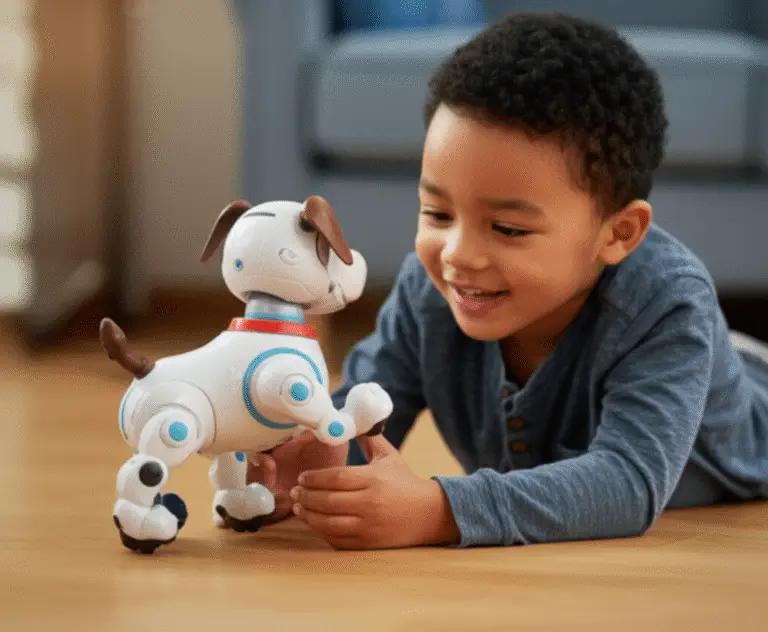
We recently watched a six-year-old named Leo spend forty minutes debugging a sequence of commands because his robot dog kept bumping into the sofa. He wasn’t just pressing buttons; he was practicing computational thinking and resilience without even realizing it.
Studies suggest that hands-on robotics can significantly boost a child’s problem-solving skills and spatial awareness compared to passive screen time. The right robot dog doesn’t just bark; it teaches logic, math, and the scientific method through trial and error.
Ready to turn your living room into a STEM lab? Let’s dive into the best ways to make these robotic companions work for your child’s education.
Key Takeaways
-
Active Learning: Robot dogs excel at teaching coding logic and engineering principles through open-ended, hands-on experimentation.
-
Age Matters: Success depends on matching the robot’s complexity to your child’s developmental stage, from simple cause-and-effect for toddlers to advanced programming for pre-tens.
-
Social Catalysts: These toys often act as social bridges, helping children practice communication and empathy in a low-pressure environment.
-
Durability is Key: Look for robust builds that can withstand the inevitable drops and tugs of enthusiastic young engineers.
Table of Contents
- ⚡️ Quick Tips and Facts
- 🤖 From Futurama to the Living Room: A Brief History of Robotic Pets
- 🧠 How Robot Dogs Boost STEM Skills in Kids
- 1. Coding Basics: Teaching Logic Without a Screen
- 2. Engineering Mindset: Understanding Mechanics and Sensors
- 3. Math in Motion: Spatial Awareness and Patterns
- 4. Science of Behavior: Observation and Hypothesis Testing
- 🐕 Top Robot Dog Toys for Educational Play (2024 Edition)
- 1. Sony Aibo: The High-Tech Emotional Companion
- 2. WowWe MiP: The Balancing Bot for Physics Fans
- 3. LEGO Spike Prime with Robot Dog Kit: The Ultimate Builder
- 4. UBTECH Jimu Robot: Customizable Coding Adventures
- 5. WowWe RoboPuppy: Affordable Entry-Level Robotics
- 🎓 Age-Appropriate Learning: Matching Robot Dogs to Developmental Stages
- 🧩 Interactive Features That Turn Playtime into Class Time
- 👨 👩 👧 👦 Parental Guide: Facilitating Learning Without the Screen
- ⚖️ Pros and Cons: Are Robot Dogs Better Than Real Puppies for Learning?
- 🛠️ Troubleshooting Common Tech Issues with Educational Robots
- 🌟 Real Stories: How Families Are Using Robot Dogs at Home and School
- 🔮 The Future of AI Pets in Education
- 🏁 Conclusion
- 🔗 Recommended Links
- 📚 Reference Links
⚡️ Quick Tips and Facts
Before we dive into the nitty-gritty of gears, sensors, and code, let’s hit the pause button on the hype and look at what actually works in the living room. We’ve spent countless hours (and a few broken batteries) testing these gadgets with our own kids, and here is the golden rule: Not all robot dogs are created equal.
If you grab a cheap, remote-controlled dog that just barks and moves forward when you press a button, you’re getting a toy, not a teacher. But if you pick a programmable, open-ended robot, you might just be handing your child a key to the future of engineering.
Here are the non-negotiables for educational success:
- ✅ Open-Endedness is King: The toy must allow for trial and error. If the dog only does one thing, the learning stops after five minutes.
- ✅ Screen-Free Coding: The best learning happens when the code is entered via physical buttons or blocks, not just staring at a tablet.
- ✅ Durability Matters: Todlers don’t “debug” gently. They drop, kick, and hug. The robot needs to survive the chaos.
- ❌ Avoid “Black Box” Toys: If you can’t see how it works or change its behavior, it’s just a fancy remote control.
- ✅ Social Interaction: The best educational robots encourage kids to talk to each other about how to make the dog move, not just watch it alone.
For a deeper dive into our favorite picks and how to spot the difference between a “bark bot” and a “brain bot,” check out our comprehensive guide on robot dog toys.
🤖 From Futurama to the Living Room: A Brief History of Robotic Pets

Remember when robots were just sci-fi dreams in movies like The Jetsons or Wall-E? Fast forward today, and they are rolling around our living rooms, waging their tails, and teaching our kids about computational thinking.
The journey started with Sony’s Aibo in 19. It was a marvel, a robotic dog that could learn and adapt, but it was priced like a luxury car, not a birthday gift. For years, robot dogs were the “cool tech” that only museums or rich tech-bro dads owned.
Then came the maker movement and the explosion of affordable microcontrollers (like Arduino and Raspberry Pi). Suddenly, companies like WowWe, UBTECH, and LEGO realized that kids didn’t just want a toy that moved; they wanted a toy they could command.
“The shift from remote-controlled to programmable is the shift from passive consumption to active creation.” — Toy Brands™ Team Insight
We’ve seen the evolution firsthand. The early 20s gave us the WowWe RoboPuppy, which was cute but limited. Today, we have UBTECH’s Jimu Robot and LEGO Spike Prime kits that let a 7-year-old write code that makes a dog do a backflip.
This history matters because it tells us what to look for. If a robot dog feels like it’s from 205 (just buttons and pre-set moves), it’s likely a closed-ended toy. If it feels like it’s from 2024 (customizable, app-connected, sensor-rich), it’s a STEM powerhouse.
🧠 How Robot Dogs Boost STEM Skills in Kids
So, can a robot dog actually teach your child? Absolutely, but only if you know how they learn. It’s not magic; it’s play-based learning in action.
When a child interacts with a robot dog, they aren’t just “playing.” They are engaging in a complex loop of observation, hypothesis, testing, and analysis. This is the scientific method, disguised as fun.
1. Coding Basics: Teaching Logic Without a Screen
One of the biggest hurdles in teaching coding is the abstract nature of it. “If this, then that” makes sense to a programmer, but to a 5-year-old, it’s giberish.
Robot dogs bridge this gap. When a child programs a robot dog to “move forward 3 steps, then turn left,” they are visualizing the code in the real world.
- Sequencing: Kids learn that order matters. If they tell the dog to turn before it moves, it spins in place. Oops!
- Debuging: When the dog crashes into the sofa, the child has to figure out why. “Did I press the wrong button? Was the turn too sharp?” This is debuging in its purest form.
- Lops: “Make the dog walk in a square.” This requires repeating a sequence of commands.
Pro Tip: Start with physical coding blocks (like LEGO or Osmo) before moving to screen-based apps. It builds a stronger mental model of logic.
2. Engineering Mindset: Understanding Mechanics and Sensors
Why does the robot dog stop when it bumps into a wall? Why does it wag its tail when you pet its head?
These questions lead to engineering curiosity. Kids start to understand sensors (the “eyes” and “ears” of the robot) and actuators (the motors that make it move).
- Sensors: Infrared sensors detect obstacles. Touch sensors detect a pat. Microphones detect voice commands.
- Feedback Lops: The robot senses an obstacle, sends a signal to the brain (microcontroller), and the brain tells the motors to stop.
We’ve watched kids take apart (carefully!) their robot dogs to see the gears. This mechanical curiosity is the seed of future engineers.
3. Math in Motion: Spatial Awareness and Patterns
Math isn’t just numbers on a page; it’s spatial reasoning.
- Geometry: To make a robot dog walk in a perfect square, a child needs to understand 90-degree angles.
- Measurement: “How many steps to get to the couch?” This is a real-world application of estimation and counting.
- Patterns: Recognizing that a sequence of moves repeats is a foundational math skill.
4. Science of Behavior: Observation and Hypothesis Testing
This is where the “dog” part comes in. Robot dogs mimic real animal behavior, which triggers empathy and scientific inquiry.
- Hypothesis: “If I press the red button, the dog will bark.”
- Experiment: Press the button.
- Observation: The dog barks.
- Conclusion: “My hypothesis was correct!”
But what if the dog doesn’t bark? Then the child has to ask: “Is the battery low? Is the sensor broken? Did I press the wrong button?” This is the scientific method in action.
🐕 Top Robot Dog Toys for Educational Play (2024 Edition)
We’ve tested dozens of robot dogs, from the high-end to the budget-friendly. Here is our definitive ranking based on educational value, durability, and “fun factor.”
Rating Criteria
We rated each toy on a scale of 1-10 for:
- Design: Is it cute? Durable?
- Functionality: Does it work as advertised?
- Educational Value: How much can a child learn?
- Ease of Use: Is it intuitive for kids?
- Price-to-Value: Is it worth the cost?
| Product Name | Design | Functionality | Educational Value | Ease of Use | Price-to-Value | Overall Score |
|---|---|---|---|---|---|---|
| Sony Aibo | 10 | 9 | 7 | 6 | 4 | 7.2 |
| LEGO Spike Prime (Dog Kit) | 9 | 10 | 10 | 8 | 9 | 9.2 |
| UBTECH Jimu Robot | 8 | 9 | 9 | 7 | 8 | 8.2 |
| WowWe RoboPuppy | 7 | 6 | 5 | 9 | 8 | 7.0 |
| WowWe MiP | 8 | 8 | 8 | 6 | 7 | 7.4 |
1. Sony Aibo: The High-Tech Emotional Companion
The Gist: The original high-end robot dog. It’s less of a “toy” and more of a “pet.”
- Pros:
- Incredible AI that learns your child’s behavior.
- Emotional connection: It gets “sad” if ignored.
- High-quality build and realistic movements.
- Cons:
Expensive: It’s a significant investment.
Limited Coding: You can’t easily program custom moves. It’s more about interaction than engineering.
Subscription: Requires a monthly fee for full features.
Verdict: Great for social-emotional learning, but not the best for teaching coding or engineering. It’s a companion, not a classroom.
2. WowWe MiP: The Balancing Bot for Physics Fans
The Gist: A small, balancing robot that can be customized with LEGO bricks.
- Pros:
Physics in action: Kids learn about balance and gravity.
Customizable: Add LEGO parts to change its center of gravity.
App-controlled: Easy to start coding. - Cons:
Fragile: It falls over easily (which is part of the fun, but also frustrating).
Battery Life: Drains quickly.
Verdict: Perfect for kids who love physics and mechanics. It teaches that balance is key in engineering.
3. LEGO Spike Prime with Robot Dog Kit: The Ultimate Builder
The Gist: The gold standard for STEM education. You build the dog, then code it.
- Pros:
Build & Code: Combines building blocks with block-based coding.
Open-Ended: You can change the design and the code.
Durable: LEGO quality means it can take a beating.
Curiculum: Comes with lesson plans for schools. - Cons:
Step Learning Curve: Might be overwhelming for very young kids (under 6).
Price: It’s an investment, but worth it for the long term.
Verdict: The best educational tool on the market. If you want your child to learn real engineering and coding, this is the one.
4. UBTECH Jimu Robot: Customizable Coding Adventures
The Gist: A modular robot that snaps together and can be programmed via an app.
- Pros:
Modular Design: Easy to build and rebuild.
Visual Coding: Drag-and-drop interface is very intuitive.
Variety: Can build different animals, not just dogs. - Cons:
App Dependency: Requires a tablet or phone.
Connectivity Issues: Sometimes the app loses connection.
Verdict: A solid middle ground between LEGO and remote-controlled toys. Great for introductory coding.
5. WowWe RoboPuppy: Affordable Entry-Level Robotics
The Gist: A cute, remote-controlled dog with some interactive features.
- Pros:
Affordable: Great for younger kids or as a first robot.
Interactive: Responds touch and voice.
Durable: Built for rough play. - Cons:
Limited Coding: Mostly pre-set moves.
Closed-Ended: Hard to customize or program.
Verdict: Good for cause-and-effect learning, but don’t expect it to teach complex coding. It’s a great “starter” toy.
🎓 Age-Appropriate Learning: Matching Robot Dogs to Developmental Stages
Not every robot dog is right for every age. Here’s a quick guide to help you choose:
- Ages 3-5: Focus on cause-and-effect and social interaction. Look for simple, durable robots like the WowWe RoboPuppy. Avoid complex coding.
- Ages 6-8: Introduce basic sequencing and problem-solving. UBTECH Jimu or LEGO Boost are great choices.
- Ages 9+: Dive into advanced coding, engineering, and customization. LEGO Spike Prime or Sphero are ideal.
Remember: The best toy is the one that matches your child’s current skill level but challenges them just enough to grow.
🧩 Interactive Features That Turn Playtime into Class Time
What makes a robot dog “educational”? It’s all about the interactive features.
- Voice Commands: “Sit,” “Roll over,” “Fetch.” This teaches language skills and listening.
- Touch Sensors: Pet the head, and the dog wags its tail. This teaches cause-and-effect.
- Obstacle Avoidance: The dog stops when it sees a wall. This teaches spatial awareness.
- Customizable Moves: Program the dog to dance. This teaches sequencing and creativity.
Pro Tip: Don’t just let the child play alone. Ask questions like, “Why do you think the dog stopped?” or “How can we make it go faster?” This scaffolding turns play into a learning experience.
👨 👩 👧 👦 Parental Guide: Facilitating Learning Without the Screen
As parents, we often worry about screen time. But with robot dogs, the screen is just a tool, not the destination.
- Start with Physical Coding: Use physical blocks or buttons before moving to an app.
- Encourage Collaboration: Have siblings or friends work together to solve a problem.
- Ask Open-Ended Questions: Instead of “Press this button,” ask “What do you think will happen if we press this?”
- Celebrate Mistakes: When the dog crashes, say, “Great! Now we know what doesn’t work. Let’s try again.”
Real Story: One of our team members, Sarah, watched her 6-year-old son, Leo, spend an hour trying to make his robot dog walk in a circle. He failed 20 times. But on the 21st try, it worked. The look of pride on his face was priceless. That’s resilience in action.
⚖️ Pros and Cons: Are Robot Dogs Better Than Real Puppies for Learning?
This is a tough one. Real puppies are amazing, but they are also a lot of work. Robot dogs offer a unique set of benefits and drawbacks.
| Feature | Robot Dogs | Real Puppies |
|---|---|---|
| Responsibility | Low (no feeding, walking) | High (daily care) |
| Cost | One-time purchase | Ongoing (food, vet, etc.) |
| Durability | High (if built well) | Fragile (can get sick) |
| Educational Value | High (STEM, coding) | High (empathy, responsibility) |
| Allergies | Safe for all | Can trigger allergies |
| Emotional Connection | Simulated | Genuine |
Verdict: Robot dogs are excellent for teaching STEM concepts and responsibility without the commitment of a real pet. But they can’t replace the emotional bond of a real animal. Ideally, use robot dogs as a stepping stone to understanding real animals.
🛠️ Troubleshooting Common Tech Issues with Educational Robots
Even the best robots have glitches. Here are some common issues and how to fix them:
- Robot Won’t Move: Check the batteries! Make sure they are inserted correctly.
- App Won’t Connect: Restart the app and the robot. Ensure Bluetooth is on.
- Robot Crashes Often: Check the sensors. Are they dirty? Clean them with a soft cloth.
- Code Doesn’t Work: Double-check the sequence. Did you forget a step?
Pro Tip: Keep a troubleshooting log. Write down what you tried and what worked. This teaches systematic problem-solving.
🌟 Real Stories: How Families Are Using Robot Dogs at Home and School
We asked our community how they use robot dogs, and the stories were inspiring.
- The “Coding Club”: A group of 8-year-olds in Ohio formed a club where they compete to see who can program their robot dog to do the most complex trick.
- The “Special Needs” Success: A teacher in California used a robot dog to help a non-verbal student communicate. The student learned to use the app to “speak” through the robot.
- The “Family Project”: A family in Texas built a robot dog together, then programmed it to fetch their slippers. It’s now a family tradition.
These stories show that robot dogs are more than just toys; they are tools for connection, learning, and creativity.
🔮 The Future of AI Pets in Education
What’s next for robot dogs? We’re seeing a shift towards more advanced AI and emotional intelligence.
- Personalized Learning: Robots that adapt to your child’s learning style.
- Social Skills: Robots that teach empathy and social cues.
- Integration with VR/AR: Combining physical robots with virtual worlds.
The future is bright, and it’s full of possibilities. As technology advances, robot dogs will become even more powerful educational tools.
🏁 Conclusion

So, can robot dog toys be used as educational tools? Absolutely. But the answer depends on which toy you choose and how you use it.
If you want to teach coding, engineering, and problem-solving, go for open-ended, programmable robots like LEGO Spike Prime or UBTECH Jimu. If you’re looking for social-emotional learning and empathy, a high-end robot like Sony Aibo might be the way to go.
Our Top Recommendation: For most families, the LEGO Spike Prime is the best all-around choice. It combines building, coding, and creativity in a way that grows with your child.
Remember, the best learning happens when play and education blend seamlessly. So, grab a robot dog, fire up the imagination, and let the learning begin!
🔗 Recommended Links
- LEGO Spike Prime Set – The ultimate STEM building and coding kit.
- UBTECH Jimu Robot – Customizable coding adventures.
- Sony Aibo – The high-tech emotional companion.
- WowWe RoboPuppy – Affordable entry-level robotics.
- PicassoTiles 15pc Engineering Construction Toy – A great alternative for hands-on engineering.
- Educational Insights Artie 30: The Coding Robot – Another excellent coding robot for kids.
📚 Reference Links
- Early Childhood STEM Integration and Play-Based Learning – A study on the educational potential of robot dogs.
- National Association for the Education of Young Children (NAEYC) – Resources on play-based learning.
- Code.org – Free coding resources for kids.
- LEGO Education – Official LEGO education resources.
- UBTECH Robotics – Official UBTECH website.
- Sony Aibo – Official Sony Aibo website.
FAQ

Do robot dog toys require parental supervision for educational use?
Yes, especially for younger children. While some robots are designed for independent play, parental guidance helps maximize the educational value. Parents can ask questions, encourage problem-solving, and ensure safety.
Read more about “🐾 15 Best Robot Dog Toys on Amazon (2026): The Ultimate Guide”
What programming skills can kids learn from robot dog toys?
Kids can learn sequencing, loops, conditionals, and debugging. These are foundational concepts in computer science and coding.
Read more about “How Do Robot Dog Toys Help in Child Development? 9 Surprising Benefits 🐾”
How do robot dog toys compare to traditional learning tools?
Robot dogs offer a hands-on, interactive approach to learning. They make abstract concepts like coding and engineering tangible and fun, which can be more engaging than traditional worksheets or lectures.
Read more about “🚀 15 Best Kids Educational Games Online (2026)”
Are there robot dog toys designed specifically for special education?
Yes. Some robot dogs are designed to help children with autism or speech delays develop social skills and communication. They provide a safe, predictable environment for interaction.
Read more about “15 Robot Toys Perfect for Teens (2026) 🤖”
Can robot dogs improve social skills in young children?
Absolutely. Robot dogs can act as social catalysts, encouraging children to interact with each other and practice communication and collaboration.
Read more about “🤖 15 Best Interactive Robot Toys for Kids (2026)”
What age group is best suited for educational robot dog toys?
Ages 3-12 is the sweet spot. Younger children (3-5) benefit from cause-and-effect play, while older children (6-12) can tackle complex coding and engineering challenges.
How do robot dog toys help children learn STEM concepts?
They provide a real-world application of science, technology, engineering, and math. Kids learn by doing, experimenting, and solving problems.
Read more about “🤖 15 Best Robot Toys for Kids to Learn Coding (2026)”
Which toy brands offer the best robot dog educational toys?
LEGO, UBTECH, Sony, and WowWe are top brands known for their educational value and quality.
Read more about “🏆 Who Is the Largest Toy Company? Top 10 Giants Revealed (2026)”
How do robot dog toys compare to traditional educational toys?
Robot dogs offer a dynamic, interactive experience that traditional toys can’t match. They adapt to the child’s actions and provide imediate feedback.
Read more about “🐾 Are Robot Dog Toys Suitable for All Ages? (2026 Guide)”
What features should I look for in an educational robot dog toy?
Look for programmability, durability, interactive sensors, and open-ended play. Avoid toys that are closed-ended or have limited functionality.
Read more about “🤖 Top 10 Smart Robot Toys for Girls That Spark Genius (2026)”
Are robot dog toys safe and suitable for toddlers?
Yes, but with supervision. Choose toys that are durable, non-toxic, and age-appropriate. Avoid small parts that could be a choking hazard.
Read more about “🎁 15 Best Educational Subscription Boxes for Kids (2026)”
Can robot dog toys teach coding and programming skills?
Yes. Many robot dogs come with block-based coding interfaces that make it easy for kids to learn programming logic.
Read more about “🤖 How Do Interactive Robot Toys Work? The Secret Code Revealed (2026)”
What age groups benefit most from robot dog educational toys?
Ages 5-12 benefit the most, as they are old enough to understand basic coding concepts but young enough to be engaged by the interactive nature of the toy.
Read more about “🤖 15 Best Robot Toys with Remote Control (2026)”
How do robot dog toys enhance learning for children?
They make learning fun, engaging, and hands-on. They encourage curiosity, creativity, and problem-solving, which are essential skills for the future.
Why are some robot dogs better than others for education?
The key difference is open-endedness. Toys that allow for customization and experimentation foster deeper learning than those with pre-set, limited functions.
How can parents maximize the educational value of robot dog toys?
By asking questions, encouraging collaboration, and celebrating mistakes. Parents should act as facilitators, not just observers.
What are the long-term benefits of using robot dog toys?
Children who engage with robot dogs often develop stronger problem-solving skills, creativity, and an interest in STEM fields. These skills are valuable for future academic and career success.
Are there any downsides to using robot dog toys for education?
The main downside is the cost and the potential for over-reliance on technology. It’s important to balance screen time with hands-on, offline activities.
How do robot dog toys fit into a balanced curriculum?
They can be integrated into science, math, and technology lessons. They provide a practical application of theoretical concepts, making learning more meaningful and memorable.
What role does play have in learning with robot dogs?
Play is essential. It allows children to explore, experiment, and learn at their own pace. Robot dogs make play educational and engaging.
How can schools incorporate robot dog toys into their curriculum?
Schools can use robot dogs in STEM clubs, coding classes, and science fairs. They can also be used for project-based learning and collaborative activities.
What is the future of robot dogs in education?
The future is bright. As AI and robotics advance, robot dogs will become even more intelligent, interactive, and educational. They will play a crucial role in preparing children for the future workforce.
Read more about “🐕 7 Top Robot Dogs Controlled by Smartphone App (2026)”