Support our educational content for free when you purchase through links on our site. Learn more
🤖 How Do Interactive Robot Toys Work? The Secret Code Revealed (2026)

Interactive robot toys work by instantly converting sensor data into pre-programed actions through a rapid Input → Process → Response loop, creating the illusion of life. You might wonder how do interactive robot toys work without a real brain, but the answer lies in their clever combination of microprocessors, sensors, and actuators that mimic biological reactions.
Imagine your child pating a robotic puppy, and it instantly whimpers and nuzzles their hand. It feels like magic, but it’s actually a split-second calculation where a pressure sensor triggers a motor and a sound file.
Did you know that the first robot dog, Sony’s AIBO, could learn from its environment, a feat that still amazes engineers today? While modern toys are more accessible, they rely on the same fundamental logic to create that heartwarming connection.
Key Takeaways
-
The Core Mechanism: Every interactive toy follows a strict Input → Process → Response cycle, where sensors gather data, a microprocessor decides the action, and motors or speakers execute it.
-
Sensors are Key: Without touch, sound, light, and motion sensors, a robot is just a static shell; these components act as the toy’s eyes and ears.
-
It’s Not Real AI: Most toys use conditional logic (if-then statements) rather than true artificial intelligence, meaning they react predictably based on their programming.
-
Power & Safety: Reliable rechargeable batteries and secure child-proof designs are essential for safe, long-lasting play.
-
👉 Shop Top Robot Toys: Amazon | Official Brand Sites
Table of Contents
- ⚡️ Quick Tips and Facts
- 🤖 A Brief History of Robot Toys: From Tin Wind-Ups to AI Companions
- 1. The Core Brain: How Microprocessors and Code Drive Robot Behavior
- 2. The Senses: Sensors That Detect Sound, Light, Touch, and Motion
- 3. The Reaction Loop: Turning Data into Movement and Sound
- 4. Powering the Play: Batteries, Charging Docks, and Energy Efficiency
- 5. Connected Play: Wi-Fi, Bluetooth, and the Role of the Internet in Robot Toys
- 6. The Psychology of Play: Why Kids Get Hooked on Interactive Robots
- 7. Limits of the Machine: What Interactive Robots Can’t Actually Do
- 8. Safety First: Child-Proofing, Data Privacy, and Physical Design Standards
- 9. Deep Dive: How Robotic Puppies and Kitties Mimic Real Animal Behavior
- 10. Troubleshooting 101: Fixing Common Glitches in Interactive Toys
- 1. Future Tech: Machine Learning and Adaptive AI in Next-Gen Toys
- 🎓 Final Thoughts for Parents: Choosing the Right Robot for Your Child
- Conclusion
- Recommended Links
- FAQ
- Reference Links
Before we dive into the nitty-gritty of gears, code, and sensors, let’s hit the ground running with some quick truths about the magical world of interactive robot toys. We’ve seen it all at Toy Brands™, from the clunky tin wind-ups of the past to the AI-driven companions of today.
- ✅ The Golden Rule: Every interactive toy follows a simple loop: Input → Process → Response. If your robot doesn’t react, check the batteries first!
- ✅ Sensors are the Eyes and Ears: Without sensors (touch, sound, light, motion), a robot is just a fancy paperweight.
- ✅ No “Real” Thinking: Despite what the marketing says, most toys don’t “think.” They follow pre-programed logic. If it seems smart, it’s just very good at following instructions.
- ✅ Power Matters: Rechargeable lithium-ion batteries are the standard for advanced bots, while AA/AAA batteries still rule the budget-friendly crowd.
- ✅ Safety First: Always check for secure battery compartments and volume limiters, especially for younger kids.
For a deeper look at how these technologies evolve, check out our guide on robot toys to see what’s trending this season.
Remember the days when “interactive” meant winding up a key and watching a tin robot wobble across the floor? That was the Golden Age of Mechanical Toys. But how did we get from there to a robot dog that can learn your name?
The Mechanical Era (1950s–1980s)
It started with spring-loaded mechanisms. Toys like the Furby (wait, Furby was later, but the spirit was there) or simple wind-up robots relied on gears and cams.
- How it worked: You wound a spring, storing potential energy. As the spring unwound, it turned gears that moved limbs.
- The Limitation: Zero interactivity. Once the spring ran out, the show was over.
The Electronic Revolution (190s–20s)
Enter the microchip. Suddenly, toys could “hear” a clap or “feel” a touch.
- The Game Changer: Sony’s AIBO (19) was the first robot pet to use AI to learn behaviors, though it was expensive.
- The Hit: Furby (198) introduced the concept of a toy that “grew” and changed language based on interaction, using simple voice recognition and sensors.
The AI & Connectivity Boom (2010s–Present)
Today, we have machine learning and Wi-Fi. Toys like Lona or Sphero can map rooms, recognize faces, and even be controlled via smartphone apps.
- The Shift: We moved from “pre-recorded” responses to adaptive behaviors.
- The Future: As we’ll see later, the line between a toy and a smart home device is blurring.
Did you know? The first YouTube video ever uploaded, “Me at the zoo,” was posted in 205, right as the interactive robot toy market was exploding with new tech. It’s a reminder that technology moves fast!
So, you’ve got a robot dog. It’s cute. It barks. But what’s actually happening inside its plastic skull?
Think of the microprocessor as the robot’s brain. It’s a tiny computer chip that runs the show. Without it, the robot is just a collection of wires and motors.
The Logic Loop: If This, Then That
Most interactive toys don’t use complex AI. They use conditional logic.
- The Code:
IF (touch_sensor == pressed) THEN (bark_sound = play). - The Reality: This is why your robot might bark when you pat its head, but not when you tap its tail. The code is specific.
From Simple Circuits to Neural Networks
- Entry-Level Toys: Use basic microcontrollers (like the Arduino Uno found in DIY kits). They are fast but limited to simple tasks.
- Advanced Toys: Use System on a Chip (SoC) processors (like those in smartphones) that can run neural networks. This allows for face recognition or voice commands.
Parent Pro Tip: If a toy feels “dumb” or repetitive, it’s likely running on a simple microcontroller with a limited memory bank. If it learns and adapts, it’s got a more powerful processor under the hood.
For more on how these brains are built, check out our category on Electronic Toys.
If the microprocessor is the brain, sensors are the senses. They are the eyes, ears, and skin of the robot. Let’s break down the most common types you’ll find in your child’s toy.
🎤 Microphones (Sound Sensors)
- What they do: Detect sound waves (claps, voices, music).
- How they work: They convert sound vibrations into electrical signals.
- Real-World Example: The Lona robot dog uses a microphone array to locate where a sound is coming from, allowing it to turn its head toward you.
- Limitation: They can be confused by background noise. A loud TV might trigger a “dance mode” when you just wanted quiet.
👆 Touch Sensors (Pressure & Capacitive)
- What they do: Detect physical contact.
- Types:
Mechanical: A button that clicks when pressed.
Capacitive: Detects the electrical charge of a human finger (like a smartphone screen). - Real-World Example: Zoomer pets have sensors on their heads and backs. A gentle pat might make them pur, while a hard shove makes them “angry.”
👁️ Optical Sensors (Light & Vision)
- What they do: Detect light levels or images.
- Types:
LDR (Light Dependent Resistor): Just knows if it’s dark or bright.
Infrared (IR): Detects heat or reflects light to measure distance (like a bat’s sonar).
Cameras: Capture actual images for face recognition. - Real-World Example: Sphero robots use IR sensors to follow a line on the floor or avoid obstacles.
🏃 Motion & Tilt Sensors (Accelerometers & Gyroscopes)
- What they do: Detect movement, orientation, and acceleration.
- How they work: They measure changes in velocity. If you tilt the robot, the sensor tells the brain to adjust the motors to stay upright.
- Real-World Example: Mars Rover toys use these to navigate rough terrain without falling over.
| Sensor Type | Detects | Common Use in Toys | Example Brand/Model |
|---|---|---|---|
| Microphone | Sound | Voice commands, clapping | Lona, Furby |
| Touch | Pressure | Peting, hugging | Zoomer, Hatchimals |
| Infrared | Distance/Heat | Obstacle avoidance | Sphero, RoboDog |
| Accelerometer | Motion/Tilt | Balancing, movement | Sphero, LEGO Boost |
| Camera | Images | Face recognition | Sony AIBO, WowWe |
We’ve talked about the brain (processor) and the senses (sensors). Now, let’s connect the dots. How does a robot go from “I heard a clap” to “I’m dancing”?
The Step-by-Step Process
- Detection: The microphone picks up a sound wave.
- Conversion: The sound is converted into a digital signal (1s and 0s).
- Processing: The microprocessor checks its code: “Is this a clap? Yes. Is the robot in ‘sleep mode’? No. Okay, trigger ‘Dance Mode’.”
- Execution: The processor sends electrical signals to the actuators (motors and speakers).
- Action: The motors spin to move the legs, and the speaker plays a beat.
The Role of Actuators
Actuators are the muscles. They turn electrical energy into physical movement.
- Servo Motors: Precise motors that can hold a position (great for head turns or arm movements).
- DC Motors: Continuous rotation motors (great for wheels or running).
- Speakers & LEDs: Actuators for sound and light.
Wait, why does my robot sometimes freeze?
Sometimes the processor is overwhelmed. If too many sensors fire at once (e.g., you shout, touch it, and shake it simultaneously), the code might get stuck in a loop. This is a classic logic conflict.
A robot is only as good as its power source. We’ve all been there: the toy is mid-dance, and suddenly… silence.
Battery Types: The Good, The Bad, and The Rechargeable
- AA/AAA Alkaline:
- ✅ Pros: Cheap, easy to find, no charging wait time.
- ❌ Cons: Expensive over time, environmental waste, voltage drops as they drain (robot gets slower).
- Rechargeable Li-Ion (Lithium-Ion):
- ✅ Pros: Consistent power, longer life, eco-friendly.
- ❌ Cons: Requires a charger, can degrade over years, safety risks if damaged.
Charging Docks: The “Home Base”
Many advanced toys, like Lona or Sony AIBO, come with a charging dock.
- How it works: The robot uses IR sensors or contact pins to find the dock when its battery is low.
- The Magic: It’s a self-regulating system. The robot knows when it’s “tired” and goes to sleep (charge) automatically.
Energy Efficiency Tips
- Sleep Modes: Most toys have a “sleep” function to save power when not in use.
- LED Brightness: Diming lights can extend battery life significantly.
- Motor Load: Heavy movements (like jumping) drain batteries faster than walking.
Parent Hack: If your toy uses AA batteries, consider buying a high-quality rechargeable NiMH battery pack and a smart charger. It saves money and keeps the robot running at full speed longer.
Not all robots are created equal. Some are offline islands, while others are connected hubs.
Bluetooth: The Local Connection
- What it does: Connects the toy to your phone or tablet for control or updates.
- Range: Short (usually 30-10 feet).
- Use Case: Controlling a Sphero ball via an app, or updating the firmware of a Lego Boost set.
- Privacy: Generally safe, as data doesn’t leave your home network.
Wi-Fi: The Global Connection
- What it does: Connects the toy to the internet.
- Features: Voice assistants (Alexa/Google), cloud updates, remote control from anywhere.
- Risks: Potential for hacking or data collection.
- Examples: Amazon Astro (though more of a home robot) or advanced AI pets that learn from the cloud.
Do You Need the Internet?
- No: Most basic interactive toys work perfectly fine offline.
- Yes: If you want voice recognition, cloud-based learning, or remote control.
⚠️ Safety Alert: Always check the privacy policy of connected toys. Some collect voice data or video feeds. Look for toys that offer a “local mode” if you’re concerned about privacy.
For more on safe tech for kids, visit our Parenting Tips and Advice section.
Why does a child spend hours talking to a plastic dog? It’s not just about the lights and sounds. It’s about emotional connection.
The “Eliza Effect”
This is the psychological phenomenon where humans attribute human-like emotions to machines.
- The Illusion: When a robot dog wags its tail, the child fels like the dog is happy.
- The Reality: The robot is just executing a command. But the emotional response in the child is real.
Social-Emotional Learning (SEL)
Interactive robots can be great tools for:
- Empathy: Caring for a “pet” teaches responsibility.
- Communication: Talking to a robot that responds encourages speech.
- Confidence: Mastering a robot’s commands gives a sense of achievement.
The “Uncanny Valley”
Sometimes, robots that look too human can be creepy. This is the Uncanny Valley.
- The Sweet Spot: Most successful toy robots (like Furby or Lona) are stylized and clearly robotic, avoiding the creepy factor.
Question: Can a robot ever truly replace a real pet? We’ll tackle this in the “Limits” section, but the short answer is: No, but it can be a great companion.
Let’s be real. Despite the hype, robots have hard limits.
No True Emotions
- Fact: Robots don’t feel love, sadness, or anger. They simulate these emotions through code.
- Implication: If your child is upset, a robot can’t offer genuine comfort. It can only play a pre-recorded “comforting” sound.
Limited Adaptability
- Fact: Most toys can’t learn new things outside their programming.
- Example: If you teach a robot a new trick, it won’t remember it unless it has machine learning capabilities (which most toys don’t).
Environmental Constraints
- Fact: Robots struggle with complex, unpredictable environments.
- Example: A robot dog might get stuck on a rug or confused by a sudden loud noise.
The “Real Pet” Gap
- Fact: Robots can’t provide the biological bond of a living animal.
- Quote: “They show simulated love by waging their tails or responding to your sound, which can reduce loneliness, but they can’t replace the unique bond you get with a real pet.”
Safety is our top priority at Toy Brands™. Here’s what to look for.
Physical Safety
- Choking Hazards: Small parts must be secure.
- Battery Compartments: Must be screw-locked to prevent ingestion.
- Volume Limits: Should not exceed 85dB to protect hearing.
Digital Safety
- Data Privacy: Check if the toy collects voice or video data.
- Parental Controls: Look for apps that allow you to disable microphones or cameras.
- Firmware Updates: Ensure the manufacturer provides regular security patches.
Certification Marks
- CE Mark: European safety standard.
- ASTM F963: US safety standard.
- CPSIA: Consumer Product Safety Improvement Act compliance.
Tip: Always read the manual! Some toys have specific age recommendations based on complexity and safety.
Let’s zoom in on the most popular category: Robot Pets. How do they mimic real animals?
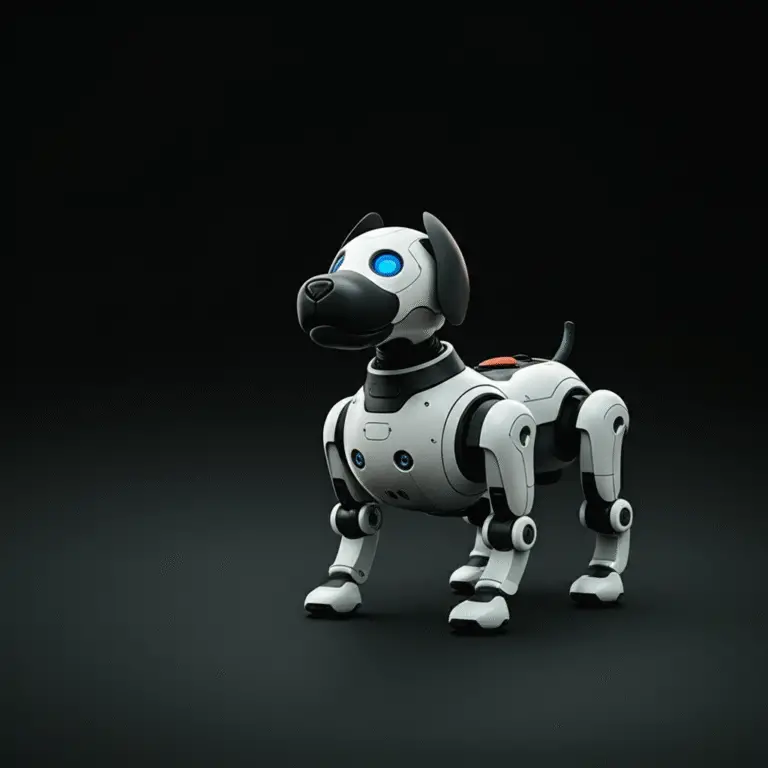
The Anatomy of a Robot Pet
- Head: Contains the brain, cameras, and microphones.
- Body: Houses the battery and main processor.
- Limbs: Use servo motors for walking, running, and tail waging.
- Sensors: Distributed across the body for touch and balance.
Mimicking Behavior
- Gait: Robots use inverse kinematics to calculate leg movements, making them walk smoothly.
- Sound: Pre-recorded barks, meows, and purs are triggered by specific inputs.
- Sleep: Robots enter a low-power mode, closing their eyes and slowing their breathing (simulated by LED lights).
Real-World Examples
- Sony AIBO: Uses advanced AI to learn and adapt.
- Lona: Uses IR sensors to follow you and avoid obstacles.
- Zoomer: Focuses on playful, energetic behavior.
Fun Fact: The Unitree Go2 robot dog can even climb stairs and jump over obstacles, thanks to its advanced gait algorithms!
Is your robot acting weird? Don’t panic. Here’s a quick guide.
Common Issues & Fixes
| Issue | Possible Cause | Fix |
|---|---|---|
| Won’t Turn On | Dead batteries | Replace or recharge batteries. |
| Unresponsive | Sensor blocked | Clean sensors with a soft cloth. |
| Stuck in Loop | Logic conflict | Reset the toy (hold power button). |
| No Sound | Volume muted | Check app settings or physical buttons. |
| Drifting | Calibrated incorrectly | Recalibrate via the app or manual. |
When to Call a Pro
If the robot is physically damaged (cracked case, exposed wires), stop using it immediately. Contact the manufacturer for support.
The future is here, and it’s smarter than ever.
Machine Learning (ML)
- What it is: The robot learns from your interactions.
- Example: A robot that learns your child’s favorite game and suggests it.
- Benefit: Personalized play experiences.
Adaptive AI
- What it is: The robot adapts to its environment in real-time.
- Example: A robot that changes its walking style on different surfaces (carpet vs. tile).
The Next Generation
We’re moving towards holographic robots, soft robotics (squishy, safe materials), and emotional AI that can better understand human feelings.
Prediction: In 5 years, every robot toy will have some form of adaptive AI. The question is: will they be too smart for their own good?
Choosing the right robot toy can be overwhelming. Here’s our expert checklist:
- Age Appropriateness: Match the complexity to your child’s age.
- Educational Value: Does it teach coding, problem-solving, or empathy?
- Durability: Can it withstand rough play?
- Safety: Are batteries secure? Is data privacy protected?
- Engagement: Will your child actually play with it?
Remember: The best toy is the one that sparks curiosity and joy. Don’t get caught up in the latest tech; focus on the play value.
Interactive robot toys are a fascinating blend of engineering, psychology, and play. From the simple Input → Process → Response loop to the complex AI-driven behaviors of today, these toys have come a long way.
While they can’t replace the bond of a real pet, they offer a unique form of companionship and a gateway to STEM learning. Whether you’re looking for a playful puppy, a coding robot, or a smart companion, there’s a robot out there for every child.
Our Recommendation:
- For Todlers: Stick to simple, durable toys with touch sensors and no internet.
- For School-Age Kids: Look for coding capabilities and adaptive behaviors.
- For Teens: Consider advanced AI and customizable platforms like WhalesBot or Sphero.
The future of play is bright, and it’s full of robots!
👉 Shop Top Robot Toys:
- Lona Robot Dog: Amazon | Official Site
- Sony AIBO: Amazon | Official Site
- Sphero RVR+: Amazon | Official Site
- WhalesBot AI Module: Amazon | Official Site
Recommended Books:
How do interactive robot toys get firmware updates?
Most modern toys connect via Bluetooth or Wi-Fi to a companion app. The app checks for updates and downloads the new firmware to the robot. Some high-end models, like Sony AIBO, update automatically when connected to the internet.
What are the ethical considerations of interactive robot toys?
The main concerns are data privacy (collecting voice/video data) and emotional dependency (children forming attachments to machines). Parents should monitor usage and choose toys with strong privacy policies.
How do interactive robot toys achieve realistic movements?
They use servo motors and inverse kinematics to calculate precise joint angles. Advanced models use machine learning to refine these movements over time.
Are interactive robot toys safe for toddlers and young children?
Yes, if they meet safety standards (ASTM, CE) and have secure battery compartments. Always supervise young children and choose age-appropriate models.
How do interactive robot toys connect to smart devices?
Through Bluetooth (short range) or Wi-Fi (internet). Some use NFC for quick pairing. Always check the app requirements before buying.
What role does artificial intelligence play interactive robot toys?
AI allows robots to learn from interactions, adapt to environments, and respond more naturally. It’s the difference between a pre-programed toy and a “smart” companion.
How do interactive robot toys teach coding skills?
They use block-based programming (like Scratch) or physical coding cards to teach logic, sequencing, and problem-solving. Kids see the immediate result of their code in the robot’s actions.
What features should I look for interactive robot toys for different age groups?
- Ages 3-6: Simple touch/sound sensors, durable design.
- Ages 7-10: Coding capabilities, obstacle avoidance.
- Ages 1+: Advanced AI, customization, text-based coding.
How do interactive robot toys improve learning and development?
They foster problem-solving, creativity, and social-emotional skills. They also introduce kids to STEM concepts in a fun, hands-on way.
Which toy brands offer the most advanced interactive robot toys?
Sony, WhalesBot, Sphero, Lona, and Unitree are leaders in the field.
How do interactive robot toys respond to voice commands?
They use microphones and speech recognition software to interpret commands. Some use cloud-based AI for better accuracy.
What are the benefits of interactive robot toys for children?
They encourage curiosity, technical skills, and empathy. They also provide a safe way to explore technology.
How do sensors in robot toys enhance play experience?
Sensors make the toy responsive and interactive, creating a more engaging and immersive experience.
What technologies power interactive robot toys?
Microprocessors, sensors, actuators, batteries, and AI algorithms are the core technologies.
- Sony AIBO: Official Website
- WhalesBot: Official Website
- Sphero: Official Website
- Lona: Official Website
- Unitree: Official Website
- How Do Robot Puppies Work? A Beginner’s Guide to Their Inner Technology | Lona Blog: Read Here
- Interactive Robot Toys for Kids: Wuffy Get
- Understanding Robotic Toys and Their Benefits: WhalesBot Blog