Support our educational content for free when you purchase through links on our site. Learn more
What Are the 10 Best Lego Robot Kits for Beginners? 🤖 (2025)


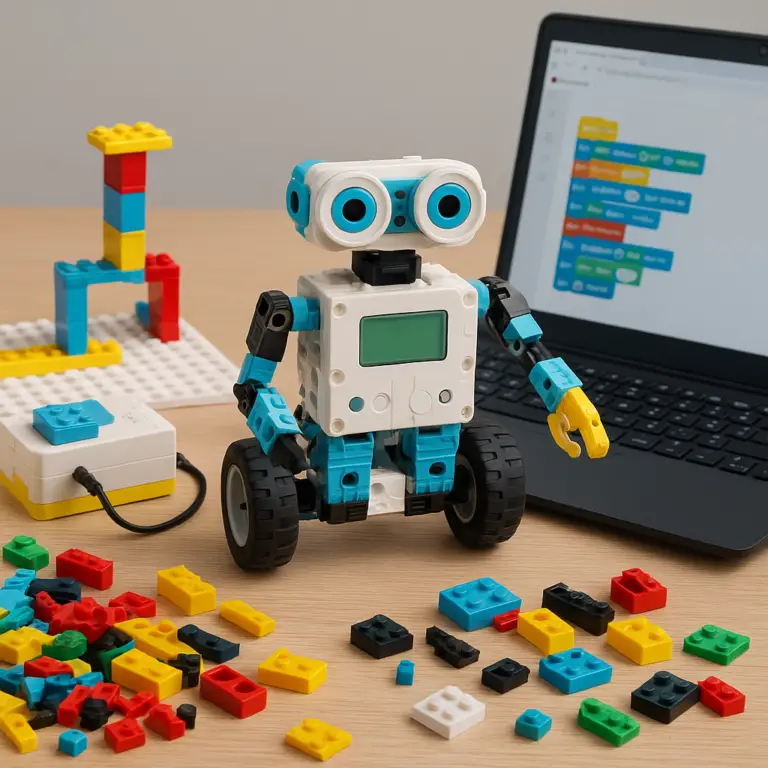
Are you ready to unlock a world where colorful bricks come to life with motors, sensors, and code? Whether you’re a parent hunting for the perfect STEM toy or a curious kid eager to build your first robot, choosing the right LEGO robot kit can feel like navigating a maze of gears and wires. But fear not! We’ve tested and rated the top 10 LEGO robot kits for beginners in 2025, from playful starters like the LEGO Boost Creative Toolbox to powerhouse sets like the Mindstorms Robot Inventor.
Did you know that LEGO robotics kits have been inspiring young engineers for over two decades, evolving from simple motorized models to sophisticated programmable machines? In this guide, we’ll walk you through everything you need to know—from picking the right kit for your child’s age and skill level, to programming tips, common challenges, and where to find authentic sets. Plus, stick around for our expert-backed recommendations on which kits deliver the most fun and learning without frustration.
Key Takeaways
- LEGO Boost Creative Toolbox is the best all-around beginner kit for ages 7-12, combining fun builds with easy, icon-based coding.
- LEGO Mindstorms Robot Inventor Kit suits older kids (10+) ready for a serious robotics challenge with advanced programming options.
- LEGO Education SPIKE Prime offers a curriculum-driven experience perfect for structured STEM learning.
- Visual block coding makes programming accessible and enjoyable for beginners—no prior experience needed!
- Authentic LEGO kits ensure quality, durability, and safety—avoid counterfeits by buying from official or trusted retailers.
👉 Shop LEGO Robot Kits on:
Table of Contents
- ⚡️ Quick Tips and Facts About Lego Robot Kits for Beginners
- 🤖 The Evolution of Lego Robotics: From Bricks to Bots
- 1. Top 10 Best Lego Robot Kits for Beginners in 2024
- How to Choose the Perfect Lego Robot Kit for Your Child’s Age and Skill Level
- Programming Lego Robots: Beginner-Friendly Coding Languages and Apps
- Building Tips and Tricks: How to Get the Most Out of Your Lego Robot Kit
- Common Challenges Beginners Face and How to Overcome Them
- Educational Benefits of Lego Robot Kits: STEM Learning Made Fun
- Where to Buy Authentic Lego Robot Kits and Avoid Counterfeits
- Maintaining and Upgrading Your Lego Robot Kit: Accessories and Expansion Packs
- Community and Online Resources: Join the Lego Robotics Fan Club!
- Conclusion: Which Lego Robot Kit Is the Best for Beginners?
- Recommended Links for Lego Robotics Enthusiasts
- FAQ: Your Burning Questions About Lego Robot Kits Answered
- Reference Links and Further Reading
Here is the body of the article, written according to your specifications.
⚡️ Quick Tips and Facts About Lego Robot Kits for Beginners
Welcome, fellow builders and parents! We’re the team of kids and parents at Toy Brands™, and we live and breathe toys. When it comes to combining the timeless joy of LEGO with the exciting world of robotics, we’ve practically seen it all. Getting started with a robot lego kit can feel like trying to build a spaceship with instructions written in an alien language. But don’t you worry! We’re here to be your mission control.
Before we dive deep, here’s a cheat sheet to get your circuits firing:
| Quick Fact 💡 | The Lowdown from Our Toy Lab 🧪 |
|---|---|
| What’s the best starting age? | Most beginner kits are aimed at ages 7-12, but simpler robotic elements can be found in sets for kids as young as 6. |
| Do you need coding skills? | Absolutely not! ✅ Most beginner kits use simple, drag-and-drop visual block coding that feels more like a game. |
| Are they just for boys? | Big ❌ on that one! Robotics is for everyone. These kits are fantastic Educational Toys that appeal to any kid who loves to create, solve problems, and have fun. |
| What’s the core concept? | It’s all about “Build, Code, Play.” You construct a model with bricks, motors, and sensors, then use an app to program its actions and bring it to life. |
| Are all kits the same? | Nope! They range from simple remote-controlled vehicles to complex, multi-build robots with sophisticated sensors. |
The most important thing to remember is that the goal is fun and exploration. It’s not about becoming a master coder overnight. It’s about watching your creation take its first wobbly steps or successfully grab an object. That “Aha!” moment is pure magic. ✨
🤖 The Evolution of Lego Robotics: From Bricks to Bots
Ever wonder how we got from simple, colorful bricks to programmable robots that can solve a Rubik’s Cube? It’s a wild story! For decades, LEGO was all about static creations. You built a castle, and it… well, it just sat there, looking majestic. But then, something incredible happened.
Back in the 1980s, the brilliant minds at LEGO teamed up with the MIT Media Lab. This partnership was the big bang that eventually led to the creation of LEGO Mindstorms in 1998. Suddenly, those classic Building Blocks and Sets had a brain! You could add motors to make things move and sensors to make them react. It was a game-changer, turning passive models into active, intelligent creations.
From the first programmable “RCX” brick to today’s sophisticated hubs with Bluetooth and advanced sensors, LEGO has consistently pushed the boundaries of what a toy can be. They’ve made robotics accessible, fun, and a cornerstone of STEM education for millions of kids worldwide.
1. Top 10 Best Lego Robot Kits for Beginners in 2024
Alright, let’s get to the main event! We’ve spent countless hours building, coding, and (occasionally) crashing these amazing bots to bring you our definitive list. We’ve rated them on what matters most to beginners and their parents.
1.1 Lego Mindstorms Robot Inventor Kit (51515)
This is the heavyweight champion of LEGO robotics, the direct descendant of that original MIT collaboration. It might seem intimidating, but it’s surprisingly beginner-friendly for older kids and tweens.
Toy Brands™ Rating:
| Feature | Rating (1-10) |
|---|---|
| Design & Build Quality | 10/10 |
| Functionality & Features | 9/10 |
| Educational Value | 10/10 |
| Fun Factor | 9/10 |
| Overall for Beginners | 8/10 (Best for ages 10+) |
What It Is
The Robot Inventor is a 5-in-1 building and coding experience. You can build five unique, personality-packed robots, from a walking giant named Blast to a ball-shooting bot named Tricky. The heart of the set is the intelligent Hub, which features a 5×5 LED matrix, a 6-axis gyro/accelerometer, and ports for multiple motors and sensors.
Who It’s For
This kit is perfect for the ambitious beginner, typically ages 10 and up. If your child has already mastered basic LEGO sets and is looking for a serious, long-term challenge that will grow with them, this is your holy grail.
The Good ✅
- Incredible Versatility: With five core models and endless possibilities for custom creations, this kit will keep kids engaged for months, if not years.
- Powerful Programming: The app uses a Scratch-based coding language that’s easy to start with but also supports text-based Python for when your skills advance.
- High-Quality Components: The motors and sensors are precise and powerful, allowing for complex and impressive robotic actions.
The Not-So-Good ❌
- Complexity Can Be Overwhelming: The sheer number of pieces (949 of them!) and the advanced capabilities can be a bit much for younger or less patient builders.
- Requires a Compatible Device: You absolutely need a tablet or computer that can run the Robot Inventor app.
Our 11-year-old tester, Maya, said, “Building Charlie the robot was so cool! I loved making him give me a high-five and dance. The coding was tricky at first, but the app made it feel like solving a puzzle.”
👉 CHECK PRICE on:
1.2 Lego Boost Creative Toolbox (17101)
If Mindstorms is the heavyweight champ, LEGO Boost is the fun, energetic, and super-approachable contender that wins everyone over with its charm. It’s the perfect first step into the world of coding and robotics.
Toy Brands™ Rating:
| Feature | Rating (1-10) |
|---|---|
| Design & Build Quality | 9/10 |
| Functionality & Features | 8/10 |
| Educational Value | 9/10 |
| Fun Factor | 10/10 |
| Overall for Beginners | 10/10 (Best for ages 7-12) |
What It Is
LEGO Boost is another 5-in-1 kit centered around a “Move Hub” brick that contains the motor, Bluetooth connectivity, and a tilt sensor. You can build Vernie the Robot, Frankie the Cat, a Guitar, a Rover, and even an “AutoBuilder” that constructs mini LEGO models. The magic is in the app-based instructions and coding.
As shown in the featured video, the experience is incredibly interactive. The app guides you through the build, and then you use a simple, icon-based, drag-and-drop coding interface to bring your creation to life. When you build Vernie, he literally talks to you through the app, asking you to “Let’s get started!” It’s this personality that makes Boost so special.
Who It’s For
This is our top recommendation for true beginners, especially kids in the 7 to 12 age range. It masterfully blends physical building with digital play in a way that never feels intimidating.
The Good ✅
- Extremely Beginner-Friendly: The app-led building and icon-based coding are intuitive and fun.
- Full of Personality: The models are designed to be characters, which makes kids instantly connect with them. Frankie the Cat purring is just adorable!
- Great Value: You get five distinct models and a ton of replayability in one box. It’s a fantastic introduction to core robotics concepts.
The Not-So-Good ❌
- App-Dependent: Like Mindstorms, the fun stops if you don’t have a compatible tablet. The Move Hub has no screen or buttons, so the app is essential.
- Less Powerful than Mindstorms: The single internal motor and external motor mean it can’t perform the same complex tasks as its bigger sibling.
👉 CHECK PRICE on:
1.3 Lego Education SPIKE Prime Set (45678)
Think of SPIKE Prime as the brilliant, straight-A student that’s also secretly really cool and creative. It’s part of LEGO’s Education line, but it’s an incredible kit for home use if you’re serious about STEAM learning.
Toy Brands™ Rating:
| Feature | Rating (1-10) |
|---|---|
| Design & Build Quality | 10/10 |
| Functionality & Features | 10/10 |
| Educational Value | 10/10 |
| Fun Factor | 8/10 |
| Overall for Beginners | 7/10 (Best for structured learners) |
What It Is
SPIKE Prime is a comprehensive STEAM learning tool designed for middle school students. It comes with a programmable Hub, motors, sensors, and a unique selection of brightly colored Technic elements. The app provides structured lesson plans and uses a Scratch-based coding platform, with Python also available for advanced users.
Who It’s For
This is for the family that wants a more structured, curriculum-guided approach to robotics. It’s ideal for homeschoolers or any child aged 10+ who thrives on project-based learning and wants to understand the “why” behind the technology.
The Good ✅
- Curriculum-Based: The lessons are well-designed and tie directly to real-world science and engineering principles.
- Excellent Components: The sensors (including color, distance, and force sensors) are top-notch.
- Organized Storage: It comes in a durable storage box with sorting trays, which is a huge plus for parents!
The Not-So-Good ❌
- Less “Playful” Vibe: The focus is more on education than open-ended play, which might not appeal to all kids.
- Higher Investment: It’s positioned as an educational tool and often has a price tag to match.
👉 Shop LEGO Education on:
1.4 Lego Technic App-Controlled Transformation Vehicle (42140)
What if you want the “robot” part without the “coding” part? LEGO has you covered! The Technic line includes some incredible remote-controlled vehicles that are robotic in function and an absolute blast to build and drive.
Toy Brands™ Rating:
| Feature | Rating (1-10) |
|---|---|
| Design & Build Quality | 10/10 |
| Functionality & Features | 8/10 |
| Educational Value | 7/10 (Focus on mechanics) |
| Fun Factor | 10/10 |
| Overall for Beginners | 9/10 (For non-coders) |
What It Is
This beast of a vehicle is a 2-in-1 build. On one side, it’s a sleek, aerodynamic racer. Flip it over (either by hand or by driving it into a wall!), and it transforms into a rugged exploration vehicle. It’s all controlled via the CONTROL+ app, which acts as a sophisticated remote control.
Who It’s For
This is for the kid (or adult!) who loves mechanical engineering and remote-controlled action. It’s a fantastic introduction to gearboxes, suspension, and motors without the added layer of programming. Perfect for ages 9+.
The Good ✅
- Instant Gratification: Once the build is done, the fun is immediate. No coding required!
- Incredibly Robust: This thing is designed to be crashed and flipped. It’s one of the most durable Electronic Toys we’ve tested.
- Teaches Complex Mechanics: The build itself is a masterclass in engineering.
The Not-So-Good ❌
- No Coding: If the goal is to learn programming, this isn’t the kit for you.
- Battery Hungry: Those powerful motors need a lot of juice, so have rechargeable batteries ready.
👉 CHECK PRICE on:
1.5 Other Noteworthy Lego Robot Kits
To round out our list, here are six more fantastic options that cater to different interests and age groups:
- Lego Star Wars Boost Droid Commander (75253): A must-have for Star Wars fans. You can build and code R2-D2, a Gonk Droid, and a Mouse Droid. It uses the same fun, accessible Boost technology.
- Lego Education WeDo 2.0 Core Set (45300): The perfect precursor to SPIKE Prime for younger kids (ages 7+). It focuses on basic science and engineering projects with simple, guided instructions.
- Lego Technic App-Controlled Cat D11 Bulldozer (42131): An epic build for older teens and adults. This highly detailed model uses the CONTROL+ app to mimic the functions of a real bulldozer. It’s more of a remote-control model, but its complexity is robotic in nature.
- Lego Super Mario Adventures with Mario Starter Course (71360): A robot in disguise! The interactive Mario figure has a color sensor, an LCD screen, and a speaker. He reacts to different bricks and movement, introducing the basic concept of “input/output” to the youngest builders (ages 6+). A great entry into the world of Collectible Toys.
- Lego City Mars Spacecraft Exploration Missions (60354): This innovative set has no paper instructions! You build along with an interactive story in an app, completing digital missions with your physical model. It’s a unique blend of storytelling and building.
- Lego Technic Liebherr R 9800 Excavator (42100): A legendary set for the most dedicated builders. With 2 smart hubs and 7 motors, this massive model is a true robotic masterpiece controlled by the CONTROL+ app. It’s an advanced build, but the result is one of the most impressive LEGO robots ever made.
How to Choose the Perfect Lego Robot Kit for Your Child’s Age and Skill Level
Feeling a bit of analysis paralysis? We get it. Choosing the right kit is crucial. Let’s break it down with some of our best Parenting Tips and Advice.
Ask yourself these questions:
- What’s their primary interest? Do they love characters and stories (Boost)? Are they fascinated by how machines work (Technic)? Or do they want to solve complex challenges (Mindstorms)?
- What’s their frustration tolerance? A complex build can be discouraging for a child who isn’t ready. It’s better to start simple and build confidence.
- What devices do you have? Check the app requirements for any kit you’re considering! Ensure your tablet or phone is compatible.
Here’s a simple guide:
| Age Group | Best Bet | Why It Works | Coding Style |
|---|---|---|---|
| 6-8 Years | LEGO Super Mario / LEGO Boost | Focuses on play and personality. The coding is very visual and icon-driven, making it feel like a game. | Icon-Based |
| 9-12 Years | LEGO Boost / LEGO Mindstorms | This is the sweet spot. Boost is a perfect start, while Mindstorms offers a bigger challenge for those ready to level up. | Block-Based (Scratch) |
| 13+ Years | LEGO Mindstorms / LEGO Technic CONTROL+ | At this age, they can handle the complexity of Mindstorms and appreciate the mechanical genius of the advanced Technic sets. | Block & Text-Based (Python) |
Programming Lego Robots: Beginner-Friendly Coding Languages and Apps
“Coding.” The word alone can make some parents shudder. Visions of complex text and confusing syntax dance in our heads. But here’s the secret: LEGO has made coding for kids incredibly fun and intuitive.
Most beginner kits don’t use text-based languages. Instead, they use visual block coding, often based on the Scratch platform developed by MIT. Here’s how it works:
- Drag and Drop: Instead of typing commands, you drag colorful blocks of code onto a canvas in the app.
- Puzzle Pieces: Each block is shaped like a puzzle piece. A “move forward” block will only connect to a block that makes sense next, like a “for 2 seconds” block. This makes it impossible to create a syntax error.
- From Simple to Complex: You can start by stringing two or three blocks together (e.g.,
Motor On->Wait 1 Second->Motor Off). As you get more confident, you can build long, complex sequences with loops, variables, and conditional logic (“if the sensor sees red, then stop”).
The main apps you’ll encounter are:
- LEGO Boost App: Uses very simple, icon-based blocks. Perfect for the youngest coders.
- Robot Inventor App & SPIKE App: Use a more advanced, Scratch-based language that shows the power of block coding.
- CONTROL+ App: This isn’t a coding app, but a sophisticated remote control that lets you drive and operate the complex functions of Technic models.
Building Tips and Tricks: How to Get the Most Out of Your Lego Robot Kit
Our team has built hundreds of these robots, and we’ve learned a few things along the way. Here are our top tips for a frustration-free build:
- Sort Your Pieces! We can’t stress this enough. Before you start, open the bags and sort the pieces by color and/or type into small bowls or a sorting tray. It will save you so much time hunting for that one tiny pin.
- Pay Attention to Orientation: The 3D instructions in the apps are great, but it’s easy to put a piece on backward. Double-check the orientation of beams and connectors at every step. One piece facing the wrong way can throw off the entire build.
- Test as You Go: When you complete a mechanical section, like a gearbox or an arm, test it manually. Does it move freely? If it feels stiff, go back and check the last few steps.
- Cable Management is Key: Don’t just let the wires from the motors and sensors dangle. The instructions usually show you how to route them neatly. Tidy cables prevent snagging and make your robot look way cooler.
- Don’t Be Afraid to Freestyle (Later): Build the main model according to the instructions first. Understand how it works. Then, take it apart and build something completely new! That’s where the real creativity begins.
Common Challenges Beginners Face and How to Overcome Them
Hitting a roadblock is part of the learning process! It’s not a failure; it’s a puzzle to be solved. Here are some common hiccups and how to fix them.
| The Problem 😫 | A Likely Culprit 🤔 | The Solution 💡 |
|---|---|---|
| “My robot won’t turn on!” | The batteries are low, or the Hub isn’t connected properly to the app via Bluetooth. | Check your batteries! Then, go into your device’s Bluetooth settings and the app itself to make sure the Hub is paired correctly. |
| “The motor is running, but the wheel/arm isn’t moving.” | A gear might be slipping, or an axle isn’t fully inserted into the motor. | Check all your connections. Make sure the axles are pushed in all the way and that the gears are meshing correctly. |
| “My code isn’t working the way I expect.” | This is the fun part! It’s a “bug.” The logic of your code might be flawed. | Break it down. Test each part of your code separately. Use the “print to console” or “display on screen” blocks (in Mindstorms/SPIKE) to see what the robot is thinking at each step. |
| “I’m missing a piece!” | It’s probably not missing. It’s likely hiding, or you may have used the wrong piece in an earlier step. | Retrace your last 10-20 steps. 99% of the time, you’ll find you used a dark gray pin where you should have used a black one. If it’s truly missing, LEGO’s customer service is fantastic about sending replacements. |
Remember, patience is your superpower. Take a break, have a snack, and come back with fresh eyes. You’ll solve it!
Educational Benefits of Lego Robot Kits: STEM Learning Made Fun
We love these kits because they are “stealth learning” at its finest. Kids are having so much fun they don’t even realize they’re absorbing key STEM (Science, Technology, Engineering, and Math) concepts.
- 🔬 Science: They learn about cause and effect, and how sensors can gather data about the environment (light, distance, color).
- 💻 Technology: They engage directly with programming, Bluetooth communication, and how hardware and software interact.
- 🔧 Engineering: They learn about structural integrity, gear ratios, levers, and the entire design process from idea to functional machine.
- ➕ Math: They intuitively grasp concepts like degrees of rotation, speed, time, and variables without ever touching a boring worksheet.
Beyond STEM, these kits also build crucial soft skills like problem-solving, critical thinking, resilience, and creativity. When a build doesn’t work, a child has to analyze the problem, form a hypothesis, and test a solution. That’s a skill for life, not just for toys.
Where to Buy Authentic Lego Robot Kits and Avoid Counterfeits
In the wild world of online shopping, imposters lurk. Knock-off “LEPIN” or other counterfeit sets can be tempting, but trust us, they’re not worth it. The plastic quality is poor, pieces don’t fit right, and the electronics can be unreliable or even unsafe.
To ensure you’re getting the real deal:
- ✅ Buy from the Official Source: The LEGO Official Website is the safest bet.
- ✅ Use Trusted Major Retailers: Retailers like Amazon (make sure the seller is “Amazon.com” or the official LEGO store on Amazon), Walmart, and Target are authorized dealers.
- ✅ Check the Box: Look for the official LEGO logo. The print quality should be sharp, and the box should be sealed with official LEGO tape.
- ❌ Avoid “Too Good to Be True” Deals: If a brand new Mindstorms kit is being sold for a fraction of its retail cost on a sketchy website, run the other way!
Authentic LEGO bricks are made to exacting standards. As noted by reviewers at TechGearLab, durability is key for longevity, and while some kits use materials like cardboard that can wear out, LEGO’s high-quality ABS plastic is designed to last for generations.
Maintaining and Upgrading Your Lego Robot Kit: Accessories and Expansion Packs
Your LEGO robot is a long-term investment in fun! Here’s how to keep it running smoothly and expand its horizons.
Maintenance 101
- Keep it Clean: Dust is the enemy of electronics and gears. Use a soft brush or a can of compressed air to clean your Hub and motors.
- Battery Care: Remove batteries from the Hub if you’re not going to use it for a long time to prevent corrosion. We highly recommend using rechargeable batteries to save money and the environment.
- Organize, Organize, Organize: Keep your special robotic pieces separate from your main LEGO collection. The original box with sorting trays (like the one with SPIKE Prime) is perfect for this.
Upgrading and Expanding
The best part about LEGO is that it’s a system. You can expand your robot kit indefinitely!
- Technic Pieces: The number one way to upgrade is to get more LEGO Technic pieces. Beams, gears, axles, and panels will allow you to build bigger, stronger, and more complex creations.
- Expansion Sets: While less common now, keep an eye out for official or third-party sensor and motor expansions.
- Combine Kits: Who says you can’t use your Mindstorms sensors with your LEGO Boost creation? With a little creativity, you can mix and match components to build the ultimate robot.
Community and Online Resources: Join the Lego Robotics Fan Club!
You’re not alone on your robotics journey! There’s a massive global community of builders eager to share ideas, offer help, and show off their amazing creations.
- LEGO Life App: A safe, moderated social media app from LEGO where kids can share photos of their builds.
- LEGO Ideas: A platform where you can submit your own designs and see incredible creations from other fans. Many official sets started out as LEGO Ideas projects!
- YouTube: This is a treasure trove. Search for your specific kit and you’ll find reviews, building tips, and tutorials for building alternative models.
- Fan Forums: Websites like Eurobricks and Brickset have dedicated forums for LEGO robotics where you can ask questions and learn from seasoned experts.
Diving into the community is the best way to find inspiration when you’re wondering, “What should I build next?” The answer is always just a click away.
Conclusion: Which Lego Robot Kit Is the Best for Beginners?

After our deep dive into the colorful, buzzing world of LEGO robot kits, what’s the final verdict? Well, it depends on your child’s age, interests, and how much coding adventure you’re ready to embark on together.
Lego Mindstorms Robot Inventor Kit is the powerhouse—perfect for kids 10 and up who want a serious challenge and a kit that grows with them. It’s packed with features, supports advanced coding, and offers endless creativity. The trade-off? It’s complex and requires a compatible device, so younger kids might find it overwhelming.
Lego Boost Creative Toolbox is the ultimate beginner’s gateway, especially for ages 7-12. It’s approachable, fun, and full of personality, with an app that makes coding feel like play. It’s less powerful than Mindstorms but far easier to master, making it our top pick for most families starting out.
Lego Education SPIKE Prime is a fantastic choice if you want a structured, curriculum-driven experience that blends education and creativity. It’s ideal for learners who thrive on guided projects and want to dive deeper into STEM concepts.
For those who prefer mechanical engineering without coding, Lego Technic App-Controlled Vehicles offer instant fun and robust builds, though they lack programming features.
So, what about those unanswered questions from earlier? Like, “Which kit will keep my kid engaged for months?” or “Can my little one really learn coding without frustration?” The answer is: Start with Boost for fun and confidence, then graduate to Mindstorms or SPIKE Prime for complexity and depth. And remember, the journey is just as exciting as the destination.
At Toy Brands™, we confidently recommend the Lego Boost Creative Toolbox as the best all-around beginner kit, with Mindstorms as the next step for serious young roboticists. Ready to build your first bot? Let’s get those bricks clicking!
Recommended Links for Lego Robotics Enthusiasts
Ready to grab your kit or dive deeper into the world of LEGO robotics? Here are some handy shopping links and resources:
-
Lego Mindstorms Robot Inventor Kit (51515):
Amazon | Walmart | LEGO Official Website -
Lego Boost Creative Toolbox (17101):
Amazon | Walmart | LEGO Official Website -
Lego Education SPIKE Prime Set (45678):
Amazon | LEGO Education Official -
Lego Technic App-Controlled Transformation Vehicle (42140):
Amazon | Walmart | LEGO Official Website -
Recommended Books on LEGO Robotics:
FAQ: Your Burning Questions About Lego Robot Kits Answered

What are the alternative brands to Lego for beginner robot kits?
While LEGO is the gold standard for quality and versatility, other beginner-friendly brands include Makeblock (mBot series), UBTECH (Jimu Robot kits), and 4M (Tin Can Robot). These kits often offer different building experiences and price points. For example, Makeblock’s mBot is praised for its affordability and educational value, though it may require more adult help during assembly. UBTECH’s Jimu robots come with app-based programming and are great for kids interested in storytelling through robotics. However, LEGO’s ecosystem and community support remain unmatched.
Read more about “🤖 Top 10 Smart Robot Toys for Girls That Inspire & Empower (2025)”
Where can I find reviews and comparisons of Lego robot kits for beginners?
Trusted sources include TechGearLab’s Best Kids Robot Kits, Toy Brands™, and educational blogs like Edutopia. YouTube channels such as “Brick Experiment Channel” and “The Brick Show” also provide hands-on reviews and build tutorials.
Read more about “🤖 16 Best Robot Toys for Kids to Learn Coding & Programming (2025)”
What are the best Lego robot kits for learning STEM principles?
The Lego Mindstorms Robot Inventor Kit and Lego Education SPIKE Prime are top picks for STEM learning. They integrate sensors, motors, and programming to teach real-world concepts in science, technology, engineering, and math. The Lego Boost Creative Toolbox is excellent for younger kids starting their STEM journey.
Do Lego robot kits for beginners require any prior coding experience?
Nope! LEGO kits use visual block-based coding that’s designed for beginners with no prior experience. The apps guide users step-by-step, making coding accessible and fun. As skills grow, some kits allow transitioning to text-based languages like Python.
What is the price range for beginner-friendly Lego robot kits?
Prices vary widely depending on complexity. Entry-level kits like Lego Boost are moderately priced, while advanced kits like Mindstorms and SPIKE Prime are a bigger investment. Remember, quality and educational value often justify the cost.
Read more about “Which LEGO Robot Is the Best? Top 5 Kits Compared 🤖 (2025)”
Are there Lego robot kits that can be programmed with a tablet or smartphone?
Yes! Most LEGO robot kits, including Boost, Mindstorms Robot Inventor, and SPIKE Prime, use Bluetooth to connect to apps on tablets and smartphones for building and programming.
What features should I look for in a beginner Lego robot kit?
Look for:
- Age-appropriate complexity
- Clear, app-based instructions
- Visual block coding interface
- Durable motors and sensors
- Expansion potential for future projects
Read more about “Why Was Mindstorms Discontinued? 7 Surprising Reasons (2025) 🤖”
What age are Lego robot kits suitable for beginners?
Most beginner kits target ages 7 to 12, with some simpler kits suitable for kids as young as 6. Advanced kits are better for ages 10+.
Read more about “Are There Robot Toys Suitable for Teenagers? 🤖 Top 7 Picks (2025)”
Which Lego robot kits are most suitable for kids aged 8-12?
Lego Boost Creative Toolbox is our top recommendation for this age group due to its engaging models and easy-to-use coding app. Lego Mindstorms Robot Inventor is suitable for the upper end of this range if the child is ready for a challenge.
How do Lego robot kits help develop STEM skills in children?
They provide hands-on experience with mechanical design, programming logic, sensor integration, and problem-solving. Kids learn by doing, which reinforces STEM concepts far better than passive learning.
Read more about “What Are the Top 10 Toys and Games Brands in the US? (2025) 🎲”
Are there affordable Lego robot kits for beginners on a budget?
While LEGO kits are generally premium-priced, Lego Boost offers good value with multiple models and coding features. For tighter budgets, consider starter kits like Lego Education WeDo 2.0 or look for certified pre-owned sets from reputable sellers.
Read more about “Where Can I Buy Affordable Robot Toys Online? 🤖 Top 10 Picks (2025)”
What are the differences between Lego Mindstorms and Lego Boost for beginners?
- Mindstorms is more advanced, with more sensors, motors, and programming options, suitable for older kids and those wanting a deep dive into robotics.
- Boost is simpler, more playful, and designed for younger beginners with less complex coding.
Can beginners easily program Lego robot kits without prior coding experience?
Yes! The apps use intuitive drag-and-drop block coding, making it easy for kids to start programming without any background knowledge.
What are the top-rated Lego robot kits recommended by educators?
Educators often recommend Lego Education SPIKE Prime for structured learning and Lego Boost for introducing younger students to robotics. Mindstorms is favored for advanced projects and competitions.
Reference Links and Further Reading
- LEGO Official Website — The definitive source for all LEGO products and updates.
- LEGO Education — Official educational resources and kits.
- TechGearLab: The Best Robot Kits of 2025 | Tested & Rated — In-depth reviews and comparisons of kids’ robot kits.
- MIT Scratch — The visual programming language used by many LEGO robotics kits.
- Toy Brands™ Robot Lego Category — More expert reviews and advice on LEGO robotics.
Ready to build your first robot? We can’t wait to hear about your adventures!