Support our educational content for free when you purchase through links on our site. Learn more
💸 How Much Does 1 Robot Cost? (2026 Price Guide)


The answer to how much does 1 robot cost ranges wildly from a pocket-friendly $20 toy to a life-changing $20,0+ humanoid that still needs a human babysitter. While a simple educational kit can spark a child’s love for STEM today, the dream of a full-size home assistant capable of folding laundry remains a $20,0 investment with a few privacy caveats.
We recently watched a friend unbox a $30 programmable robot, only to spend three hours just getting it to walk in a straight line without crashing into the coffee table. It was hilarious, but it highlighted a crucial truth: capability comes with a steep learning curve and a price tag.
According to industry reports, the gap between entry-level toys and industrial-grade humanoids is expanding faster than the tech itself. You aren’t just paying for metal and motors; you are paying for the software intelligence that keeps the robot from eating your cat.
Key Takeaways
- Price Tiers Vary Drastically: A basic toy robot costs $20–$50, while advanced humanoid prototypes like the 1X Neo or Unitree R1 range from $5,90 to $20,0+.
- Hidden Costs Matter: Don’t forget software subscriptions, battery replacements, and potential remote assistance fees that can add thousands to the total cost of ownership.
- Privacy Trade-offs: Many affordable home humanoids currently require human-in-the-loop remote viewing to perform complex tasks, raising significant privacy questions.
- Best Value for Families: For most households, educational robot kits (like LEGO or Sphero) offer the best balance of fun, learning, and affordability.
👉 Shop Top Robot Categories:
- Educational Kits: LEGO Robotics | Sphero
- Home Assistants: iRobot Romba | Ecovacs Debot
- Advanced Humanoids: Unitree Robotics | 1X Technologies
Table of Contents
- ⚡️ Quick Tips and Facts
- 🤖 The Evolution of Robot Pricing: From Sci-Fi Dreams to Real-World Wallets
- 💰 How Much Does 1 Robot Cost? Breaking Down the Price Tiers
- 🧠 Beyond the Sticker Price: Hidden Costs of Owning a Robot
- 🔍 Key Factors That Drive Up or Down Your Robot Bill
- 🛠️ Maintenance, Software, and Subscription Fees: The Ongoing Tab
- 🏆 Top Robot Brands and Their Current Price Points in 2024
- 🤔 Is Buying a Robot Worth It? A Family’s Honest Verdict
- 🚀 Future Outlook: Will Robot Prices Drop by 2026?
- 🏁 Conclusion
- 🔗 Recommended Links
- ❓ FAQ: Your Burning Questions About Robot Costs Answered
- 📚 Reference Links
⚡️ Quick Tips and Facts
Before we dive into the nitty-gritty of robot wallets, let’s hit the fast-forward button on the most critical takeaways. If you’re a parent wondering if you need to sell a kidney to get a robot for your kid, or an entrepreneur eyeing the next big thing, here’s the scoop:
- The Price Gap is Massive: We aren’t just talking about a few dollars difference. The gap between a fun, educational robot toy and a full-size humanoid that can fold laundry is roughly $50 to $20,0+. That’s a lot of allowance money!
- It’s Not Just the Sticker Price: Buying a robot is like buying a car; the purchase price is just the down payment. Maintenance, software subscriptions, and battery replacements can add up faster than you think.
- Humanoids are Still “Beta”: Many of the “home robots” you see in viral videos (like the 1X Neo) are currently in pre-order or beta stages. You might pay a deposit now, but the full delivery and final features might not land until 2026 or later.
- Privacy vs. Functionality: Some advanced robots require a human operator to remotely view your home via the robot’s cameras to help it learn tasks. Yes, a stranger might peek into your living room to help your robot pick up a sock.
- Educational Kits are the Sweet Spot: For most families, the best value lies in programmable robot kits that teach STEM skills without the $50,0 price tag.
For a deeper dive into the world of play, check out our guide on the best robot toy options for every age group.
🤖 The Evolution of Robot Pricing: From Sci-Fi Dreams to Real-World Wallets
Remember when robots were just glowing eyes in Star Wars or clunky metal men in Metropolis? Back then, the only cost was the price of a movie ticket. Fast forward today, and we are standing on the precipice of a robot revolution, but the price tags are enough to make even the most enthusiastic tech dad sweat.
The journey from “cool toy” to “household appliance” has been a bumpy ride. In the early 20s, we had Sony’s Aibo, a robotic dog that cost as much as a used car. It was a marvel, but it was also a luxury item for the ultra-wealthy. Fast forward to the 2010s, and we saw the rise of LEGO Mindstorms and Sphero, bringing robotics into the living room for under $20.
Now, in the mid-2020s, we are seeing the emergence of humanoid robots designed for actual labor. Companies like Unitree, 1X, and Tesla are pushing the boundaries, but the costs are still astronomical for the average consumer.
“There is no single humanoid robot cost because the market includes compact education products, developer platforms, home pre-orders, full-size hardware and enterprise deployments.” — RoboZaps
Why the confusion? Because the market is fragmented. You have educational bots for $50, research platforms for $10,0, and industrial workhorses for $250,0. It’s like asking “How much does a vehicle cost?” and getting answers ranging from a bicycle to a private jet.
💰 How Much Does 1 Robot Cost? Breaking Down the Price Tiers
Let’s get real. If you walk into a store asking for “a robot,” the clerk is going to look at you like you’ve asked for a unicorn. To give you a clear answer, we have to break this down into tiers. Think of it like buying a house: there’s a studio apartment, a family home, and a castle.
1. Toy Robots and Educational Kits: The $20 to $50 Entry Level
This is where most families start. These aren’t going to wash your dishes, but they will teach your kid how to code, understand logic, and have a blast.
- What you get: Simple movement, basic sensors, pre-programed actions, and sometimes coding capabilities via a tablet app.
- Real Examples:
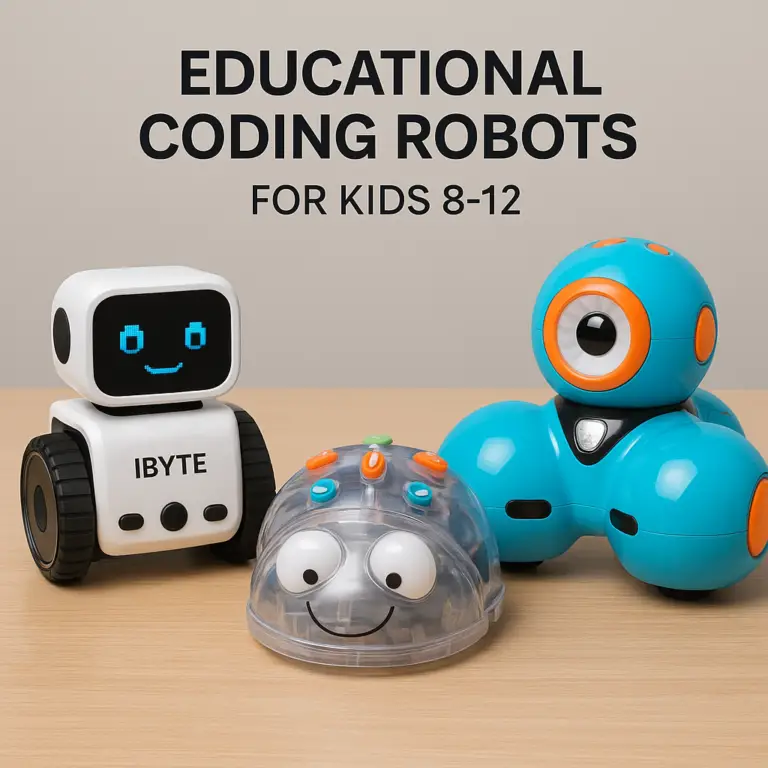
Sphero BOLT: A programmable ball that teaches coding logic.
LEGO Spike Prime: A building set that creates a robot you can program to move and interact.
Anki Cozmo (Legacy) / Vector: While Cozmo is discontinued, its spirit lives on in newer AI toys. - The Verdict: Perfect for kids aged 6-14. It’s the “driver’s ed” of robotics.
Comparison Table: Top Educational Robot Tiers
| Feature | Entry Level ($20-$50) | Mid-Range ($10-$30) | Advanced Edu ($40-$60) |
|---|---|---|---|
| Examples | LittleBits, Basic RC Bots | Sphero, Ozobot, LEGO Boost | LEGO Spike Prime, Makeblock mBot |
| Coding | Drag-and-drop (App) | Block-based (Scratch) | Python/Block Hybrid |
| Sensors | Basic (Touch, Light) | Color, Distance, Gyro | Advanced (Camera, IMU, Force) |
| Durability | Low (Fragile) | Medium | High (Modular) |
| Best For | Curiosity, Ages 5-8 | Logic, Ages 8-12 | STEM Projects, Ages 12+ |
👉 Shop Educational Robots on:
- LEGO: Amazon | LEGO Official
- Sphero: Amazon | Sphero Official
- Makeblock: Amazon | Makeblock Official
2. Consumer Home Assistants: The $50 to $3,0 Sweet Spot
Here is where things get tricky. You want a robot that can actually do something around the house, like vacuum, mop, or maybe even fetch a drink.
- What you get: Autonomous navigation, mapping, specialized tasks (cleaning, security), and sometimes voice interaction.
- Real Examples:
iRobot Romba j7+: The gold standard for vacuuming.
Ecovacs Debot: Great for mopping and vacuuming combos.
Lona: A pet-like robot that follows you around and plays games (more companion than worker). - The Catch: These are “single-task” robots. A vacuum robot can’t fold laundry. A lawn mower can’t wash dishes. They are specialized tools, not general-purpose helpers.
Parent Tip: If you are looking for a robot to help with chores, stick to these single-task units. They are reliable, affordable, and don’t require a PhD to operate.
3. Advanced Humanoid Protypes: The $10,0 to $10,0+ Frontier
This is the stuff of dreams (and nightmares). These are the robots that look like us, walk on two legs, and are supposed to do everything.
- What you get: Bipedal locomotion, dexterous hands, AI-driven decision making, and the ability to navigate human environments.
- Real Examples:
Unitree R1: The “affordable” humanoid starting around $5,90 (Standard) to $10,50 (EDU). It’s lightweight (25kg) and customizable.
1X Neo: A home-focused humanoid with a pre-order price of $20,0 (or a subscription model). It requires remote human assistance for complex tasks.
Unitree G1: A developer platform priced around $13,50. - The Reality Check: As noted in the WSJ review of the 1X Neo, these robots often need a “human in the loop.” A company representative might need to peer into your home via the robot’s cameras to help it figure out how to fold a shirt. Privacy is the trade-off for capability.
Comparison Table: Humanoid Robot Tiers (2024-2026 Outlook)
| Model | Estimated Price | Status | Key Feature | Limitation |
|---|---|---|---|---|
| Unitree R1 | $5,90 – $10,50 | Available/Pre-order | Ultra-lightweight (25kg) | Limited autonomy, requires setup |
| 1X Neo | $20,0 | Pre-order (2026) | Home-focused, AI software | Remote human assistance needed |
| Unitree G1 | $13,50 | Available | Developer platform | Not for general consumers |
| Tesla Optimus | $20,0 – $30,0 (Target) | Prototype | Mass production goal | Not yet available for sale |
| Boston Dynamics Atlas | ~$320,0 (Est.) | Enterprise/Research | High agility, parkour | Extremely expensive, not for home |
👉 Shop Humanoid Robots on:
- Unitree: Amazon Search | Unitree Official
- 1X Technologies: 1X Official (Pre-order only)
4. Industrial and Commercial Units: The $20,0 to $250,0+ Heavy Hitters
These aren’t for your living room. These are for factories, warehouses, and research labs.
- What you get: Heavy lifting, 24/7 operation, extreme durability, and integration with industrial systems.
- Real Examples:
Boston Dynamics Atlas: The parkour king. Used for research and heavy industry.
Agility Robotics Digit: Designed for logistics and warehouse automation.
Figure 03: A general-purpose robot aiming for industrial tasks. - The Cost: Prices are often “quote-only” and can easily exceed $250,0 when you factor integration, safety systems, and training.
🧠 Beyond the Sticker Price: Hidden Costs of Owning a Robot
You think you’re done paying once you swipe the card? Think again. Owning a robot is like owning a high-performance car; the gas, insurance, and repairs add up.
- Software Subscriptions: Many advanced robots require a monthly fee to unlock their full potential. For example, 1X Neo offers a $49/month subscription model. Over 5 years, that’s nearly $3,0 on top of the purchase price!
- Battery Replacement: Robot batteries degrade. A replacement for a high-end humanoid could cost $50 to $1,0.
- Maintenance and Repairs: If a robot arm breaks, you can’t just take it to a local mechanic. You might need to ship it back to the manufacturer, paying for shipping, customs, and labor.
- Integration Costs: For industrial robots, the cost of setting up the “workcell” (safety fencing, sensors, programming) can be equal to or higher than the robot itself.
“List price is only the entry ticket; total cost of ownership (TCO) includes integration, safety, training, and support.” — RoboZaps
🔍 Key Factors That Drive Up or Down Your Robot Bill
Why does one robot cost $50 and another $50,0? It comes down to a few critical factors:
- Degrees of Freedom (DoF): More joints mean more movement, but also more motors, sensors, and complexity. The Unitree R1 has 26 joints, which is a lot for a $5,90 robot, but it’s still limited compared to a $10,0 unit.
- AI and Autonomy: A robot that can “think” for itself requires powerful onboard computers and advanced software. This is the most expensive part.
- Build Quality: Industrial robots are built to survive drops, dust, and heavy loads. Toy robots are built to survive a toddler’s drop (hopefully).
- Brand Reputation: Established brands like Boston Dynamics command a premium for their reliability and support networks.
- Development Access: Some robots are sold as “EDU” versions, which are cheaper but have restricted features. The full “Pro” version might cost double.
🛠️ Maintenance, Software, and Subscription Fees: The Ongoing Tab
Let’s talk about the “subscription economy” creeping into robotics.
- The “Robot-as-a-Service” (RaaS) Model: Instead of buying a robot, you rent it. Figure and 1X are exploring models where you pay a monthly fee. This lowers the upfront cost but increases the long-term expense.
- Software Updates: Just like your phone, robots need updates. Some companies charge for major feature updates.
- Warranty: Always check the warranty. Does it cover accidental damage? What about software bugs?
Pro Tip: Before buying, ask: “What is the cost of ownership over 3 years?” If the subscription fees are high, the “cheap” robot might end up being the most expensive one.
🏆 Top Robot Brands and Their Current Price Points in 2024
Here is a snapshot of the major players and where they stand in the market:
- Unitree Robotics: The “DJI of Humanoids.” They are pushing prices down aggressively with the R1 ($5,90) and G1 ($13,50). They are the most accessible for hobbyists and researchers.
- 1X Technologies: Focused on the home. Their Neo robot is a game-changer for home assistance, but the $20,0 price tag and privacy concerns are hurdles.
- Tesla: The Optimus is the most anticipated robot. Elon Musk has targeted a price of $20,0–$30,0, but it’s not available yet.
- Boston Dynamics: The Atlas is the gold standard for agility, but it’s an enterprise product with a price tag likely over $30,0.
- Agility Robotics: The Digit is designed for logistics. Prices are quote-only, but estimates are in the $10,0+ range.
👉 Shop Top Robot Brands on:
- Unitree: Amazon | Unitree Official
- iRobot: Amazon | iRobot Official
- LEGO: Amazon | LEGO Official
🤔 Is Buying a Robot Worth It? A Family’s Honest Verdict
We’ve asked ourselves this question a thousand times. Is it worth it?
For Kids and Education: Absolutely YES. A $20 robot kit can spark a lifelong passion for STEM. It’s an investment in your child’s future.
For Home Chores: Maybe, but be careful. If you need a vacuum, get a Romba. If you need a robot to fold laundry, you might be waiting a few more years. The current “humanoid” robots are still in beta and require human supervision.
For Business: It depends on the ROI. If a robot can save you $50,0 a year in labor, a $10,0 robot is a no-brainer. But if you’re just buying it for the “cool factor,” you might be burning cash.
“The price that matters is the three-year cost of safely completing the target work.” — RoboZaps
We remember when we first tried to program a simple robot to follow a line. It took hours, and it kept crashing into the wall. But when it finally worked? Pure magic. That’s the value of robotics: the journey of learning, not just the destination.
🚀 Future Outlook: Will Robot Prices Drop by 2026?
The short answer: Yes, but slowly.
- Economies of Scale: As companies like Tesla and Unitree ramp up production, the cost of components (motors, sensors, batteries) will drop.
- Competition: More players entering the market will drive prices down.
- Technology: Advances in AI and battery tech will make robots more efficient and cheaper to build.
However, don’t expect a $5,0 robot that can do everything by 2026. The $20,0–$30,0 range for a basic home humanoid seems to be the target for the near future.
Watch this space: The Unitree R1 boxing competition in China is a sign that these robots are getting more capable, and as they get better, they might get cheaper.
🏁 Conclusion

So, how much does 1 robot cost? The answer is: It depends on what you want it to do.
If you want a toy for your kid, you can get started for under $50. If you want a vacuum, $50–$1,0 will do. If you want a humanoid that can fold your laundry, you’re looking at $20,0+ and a lot of patience.
The robot revolution is here, but it’s not a one-size-fits-all solution. For now, the best value for families lies in educational kits that teach skills and spark creativity. For businesses, the ROI is becoming clearer, but the upfront costs are still high.
Our Recommendation:
- For Parents: Start with a LEGO Spike Prime or Sphero. It’s affordable, educational, and fun.
- For Early Adopters: Keep an eye on Unitree and 1X, but be prepared for beta-stage limitations and privacy trade-offs.
- For Businesses: Calculate the Total Cost of Ownership (TCO) carefully. Don’t just look at the sticker price.
The future is bright, but it’s also expensive. Choose wisely, and enjoy the journey!
🔗 Recommended Links
Ready to take the plunge? Here are some of our top picks for robots and robotics kits:
- LEGO Spike Prime: Amazon | LEGO Official
- Sphero BOLT: Amazon | Sphero Official
- Unitree R1 (Pre-order/Info): Unitree Official
- 1X Neo (Pre-order): 1X Official
- iRobot Romba j7+: Amazon | iRobot Official
Books to Read:
- Life 3.0: Being Human in the Age of Artificial Intelligence by Max Tegmark – Amazon
- The Second Machine Age by Erik Brynjolfsson – Amazon
❓ FAQ: Your Burning Questions About Robot Costs Answered

Where can I find the best deals on robots for kids?
You can find the best deals on Amazon, Walmart, and directly from LEGO or Sphero during holiday sales (Black Friday, Cyber Monday). Keep an eye on educational toy sections for bundle deals.
Read more about “🤖 7 Best Robot Lego Sets for Kids (2026): Ultimate Guide”
Do robot prices vary based on brand reputation and features?
Absolutely. A robot from Boston Dynamics will cost significantly more than a generic brand due to R&D, reliability, and support. Features like AI autonomy, dexterous hands, and advanced sensors also drive up the price.
Read more about “🤖 How Much Do Robo Dogs Cost? (2026 Price Guide & Top Picks)”
What is the cost difference between a robot kit and a pre-asembled robot?
Robot kits (like LEGO Mindstorms) are generally cheaper ($150–$40) because you assemble them yourself. Pre-asembled robots (like Sphero or iRobot) are more expensive ($20–$1,0+) but ready to use out of the box.
Are there affordable robot kits available for educational purposes?
Yes! Makeblock mBot and LEGO Spike Essential are great affordable options for schools and home learning, often ranging from $10 to $30.
Read more about “🤖 15 Best Robot Toys for Kids (2026): From Coding Bots to AI Friends”
How much do advanced humanoid robots cost?
Advanced humanoid robots like the Unitree G1 or 1X Neo range from $13,50 to $20,0+. Enterprise models like Boston Dynamics Atlas can exceed $30,0.
Read more about “🤖 Top 10 Educational Coding Robots for Kids 8-12 (2026)”
What is the average price range for a simple toy robot?
Simple toy robots, like RC cars or basic programmable bots, range from $20 to $10.
Read more about “15 Must-Have Robot Toy Features for Kids (2026) 🤖”
How does the complexity of a robot affect its price?
Complexity is the biggest driver of cost. More joints, better sensors, and advanced AI require expensive components and software, pushing prices from hundreds to hundreds of thousands.
Read more about “🐾 What Is the Most Realistic Robot Dog? 2026’s Top 5 Picks”
What factors influence the cost of a robot?
Key factors include brand reputation, build quality, software capabilities, battery life, and after-sales support.
Read more about “How Much Is a Robot Dog? 🐾 7 Best Models & Prices (2026)”
Are robots cheaper than humans?
In the long run, yes, for repetitive tasks. A robot might cost $50,0 upfront but can work 24/7 for years. However, for complex, creative, or unpredictable tasks, humans are still more cost-effective.
How much do robots cost a lot?
Robots that cost “a lot” are typically industrial or research-grade humanoids, ranging from $10,0 to $50,0+.
What is the cost of AI robot?
An “AI robot” can range from $50 (a smart vacuum) to $20,0+ (a humanoid with advanced AI). The cost depends on the level of autonomy and intelligence.
Read more about “How Do Robot Dog Toys Help in Child Development? 9 Surprising Benefits 🐾”
How much will Elon Musk robot cost?
Elon Musk’s Tesla Optimus is targeted to cost $20,0–$30,0 when it goes into mass production, but it is not yet available for purchase.
How much is a 1 robot?
The cost of “1 robot” varies wildly. A toy robot is $50, a home assistant is $1,0, and a humanoid is $20,0+. It all depends on what you need it to do.
Read more about “🐾 Top 7 Robot Dog Toy Brands for Kids (2026)”
📚 Reference Links
- RoboZaps: Humanoid Robot Price in 2026: List Prices, Quotes & Total Cost
- Unitree Robotics: Humanoid Robot Products
- 1X Technologies: Neo Robot Overview
- Wall Street Journal: I Tried the First Humanoid Home Robot. It Got Weird. (Note: Link to WSJ article for context on 1X Neo)
- Boston Dynamics: Atlas Robot
- Tesla: Tesla Optimus
- Roland Berger: 2026 Study on Robot Operating Costs (General reference for TCO estimates)