Support our educational content for free when you purchase through links on our site. Learn more
Do Bitzee Toys Boost Kids’ Learning? 🧠

Do Bitzee toys promote learning and cognitive development in kids? They can offer playful practice with cause and effect, memory, hand movements, and imagination—but they’re not proven educational tools, and any learning depends on how a child plays.
A child might tilt a Bitzee, watch its virtual pet react, then proudly announce, “I figured out what it wanted!” That little moment can spark curiosity and conversation. The toy supplies the prompt; a child’s experimenting—and a grown-up’s questions—can add the learning.
Key Takeaways
- Bitzee may create learning opportunities through interactive play, pretend pet care, and mini-games.
- There’s no product-specific evidence reviewed here proving Bitzee boosts cognitive development or improves skills beyond play.
- Adult conversation can enrich the experience: Ask what your child noticed, tried, or imagines about the pet.
- It’s electronic, even if marketed as screen-free. Balance it with books, building, outdoor activities, and open-ended play.
- Choose Bitzee for your child’s interests, not solely for educational claims; check the edition’s age guidance and safety information.
- Explore product details: Bitzee on Spin Master | Bitzee Magicals Edition at Maziply
Table of Contents
- ⚡️ Quick Tips and Facts
- 🧸 What Are Bitzee Toys? A Quick Look at the Interactive Digital Pet
- How Bitzee Works: Touch, Tilt, Feed, and Play
- Bitzee Versions and Editions: What Changes Between Models?
- 🧠 Do Bitzee Toys Promote Learning and Cognitive Development?
- Cause and Effect, Memory, and Problem-Solving Skills
- Attention, Focus, and Following Instructions
- Imagination, Creativity, and Pretend Play
- Responsibility, Empathy, and Social-Emotional Learning
- Fine-Motor Skills and Hand-Eye Coordination
- 🎮 How Bitzee’s Games and Pet-Care Activities Support Learning
- Mini-Games, Challenges, and Rewards
- Caring for a Virtual Pet: Feeding, Bathing, and Bedtime
- Collecting Characters and Exploring Different Outcomes
- 📚 What Child-Development Research Says About Digital and Pretend Play
- Where Interactive Toys Can Help
- Why Adult Guidance and Real-World Play Still Matter
- 👧🧒 Best Ages for Bitzee: Is It Right for Your Child?
- Age Recommendations and Readiness Signs
- How Bitzee May Suit Different Ages and Play Styles
- Bitzee for Kids With Different Learning Needs
- ⚖️ Benefits and Drawbacks of Bitzee Toys
- Potential Learning Benefits
- Limitations Parents Should Know
- Is Bitzee Screen-Free? Understanding Its Display and Play
- 🔍 Bitzee Compared With Other Digital Pets and Learning Toys
- Bitzee vs. Tamagotchi
- Bitzee vs. Plush Pets and Open-Ended Toys
- Bitzee vs. Educational Apps and Video Games
- 👨 👩 👧 How Parents Can Make Bitzee Play More Educational
- Conversation Starters and Thinking Questions
- Balancing Digital Pet Play With Books, Outdoor Time, and Free Play
- Setting Healthy Play Limits and Avoiding Frustration
- 🔋 Practical Details: Batteries, Durability, Cleaning, and Care
- Battery Needs and Everyday Use
- Handling, Storage, and Cleaning Tips
- Safety, Small Parts, and Responsible Use
- 🎁 Is Bitzee a Good Gift for Learning and Play?
- Who Is Most Likely to Enjoy It?
- Questions to Ask Before Choosing an Edition
- ✅ Final Verdict: Do Bitzee Toys Support Kids’ Learning?
- Conclusion
- Recommended Links
- FAQ
- Do Bitzee toys help with cognitive development?
- Are Bitzee toys educational or mainly for entertainment?
- What age is Bitzee best for?
- Can Bitzee teach kids responsibility?
- Does Bitzee count as screen time?
- How much should kids play with Bitzee?
- Is Bitzee suitable for toddlers?
- Can kids play Bitzee without adult help?
- Reference Links
⚡️ Quick Tips and Facts
- Short answer: Bitzee can give kids practice with simple cause and effect, remembering steps, hand movements, and imaginative play. But it is best understood as an interactive toy with possible learning opportunities, not a proven educational program.
- The original Bitzee Interactive Digital Pet is designed for ages 5+ and responds touch and movement. Specific features vary by edition, so check the packaging and the Spin Master Bitzee product information.
- “Screen-free” means Bitzee doesn’t use a conventional flat screen like a tablet. It is still an electronic toy, so it isn’t the same as unpluged play.
- Caring tasks may invite children to practise routines and notice a pet’s needs. They do not teach real pet-care responsibility on their own.
- Parents can get more learning value by asking questions, taking turns, and connecting the toy’s pretend needs to real-life ideas.
- The American Academy of Pediatrics recommends considering the quality and context of children’s media use, alongside sleep, physical activity, family time, and other healthy routines. AAP guidance on media and children
- Toy Brands™ family takeaway: Bitzee can be a fun addition to a varied toy shelf, especially for kids who enjoy collecting, pretend play, and responsive gadgets. It shouldn’t replace books, building toys, outdoor play, or back-and-forth conversation.
At a glance
| Question | Our practical answer |
|---|---|
| Can Bitzee support learning? | It may offer practice with simple thinking, attention, motor actions, and pretend play. |
| Is it scientifically proven to improve cognition? | We didn’t find evidence of measured Bitzee-specific learning outcomes in the product descriptions reviewed. |
| Is it a true digital screen? | It is marketed as screen-free, but it remains an electronic toy with a visual display effect. |
| Best way to use it? | Keep sessions balanced, explore together, and talk about what your child is doing. |
| Who should skip it? | Families seeking a fully open-ended toy, no electronics, or a structured curriculum may prefer another option. |
🧸 What Are Bitzee Toys? A Quick Look at the Interactive Digital Pet
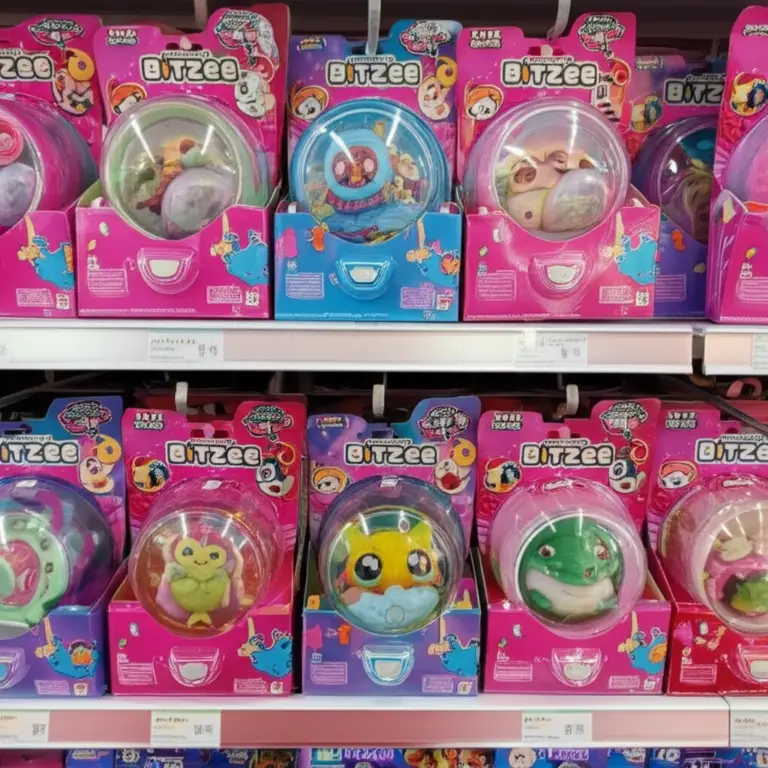
For our wider hands-on-style overview of the product line, see our Bitzee guide. Bitzee is a series of electronic toys from Spin Master that puts a virtual pet inside a small handheld pod. Children interact with the character using gestures such as touching, tapping, tilting, and shaking, depending on the model.
Retail listings describe the original Bitzee as a toy for children ages 5 and up, with virtual pets that can grow through different stages and respond to care and play. The Maziply product listing presents those routines as opportunities for nurturing and discovery. That is a seller’s description of potential benefits, not a clinical study showing that Bitzee improves a particular skill.
Bitzee belongs in the broad family of electronic toys, but it borows from classic pretend play: a child imagines that the toy has needs, moods, and a personality. The little pod makes the pet portable; the child’s imagination does much of the heavy lifting. 🐾
How Bitzee Works: Touch, Tilt, Feed, and Play
The exact controls depend on the edition. Generally, children follow on-device prompts and use the controls or gestures to interact with the character, play activities, and respond to its needs. The original product’s marketing emphasizes touch and movement; the Magicals edition adds a fantasy-character collecting and progression theme. Spin Master’s Bitzee page and Maziply’s Magicals listing provide edition-specific details.
A typical play loop may look like this:
- Notice a prompt: The pet signals that it wants attention or a particular activity.
- Choose an action: The child selects a suitable response, such as feeding or playing.
- Make a gesture or use a control: Touching or moving the pod triggers a reaction.
- Observe what happens: The pet responds, and the child sees how the action affected play.
- Repeat, explore, or try a mini-game: The toy may reward further interaction with characters or items.
That sequence can give a child a small, low-stakes chance to practise noticing, choosing, acting, and observing. It’s a useful play pattern, though not unique to Bitzee: board games, pretend kitchens, and even a tower of blocks can teach cause and effect too.
Bitzee Versions and Editions: What Changes Between Models?
Bitzee models differ in their characters, games, themes, and collecting features. Always check the specific product page rather than assuming every edition works exactly like the original.
| Version or listing | What product descriptions emphasize | Possible play appeal |
|---|---|---|
| Original Bitzee | Virtual animals, care interactions, growth, and mini-games | Pets, routines, and familiar animal play |
| Bitzee Magicals | Fantasy characters, collection, gems, and character-specific activities | Unicorns, dragons, magical creatures, and collecting |
| Bitzee Dog House | Dog-themed design and interactive pet play, as described by sellers | Children drawn to dogs and pet-care pretend play |
Maziply’s Magicals listing describes 20 magical characters and a progression system involving care, mini-games, and collectible gems. Treat those as edition-specific advertised features, not universal Bitzee features. See the Magicals product listing.
Before choosing an edition, check:
- The recommended age and any safety warnings.
- The included characters and games.
- Whether it requires batteries and whether they are included.
- The instructions for controls, sound, and care routines.
- The retailer’s current product details, since listings and packaging can change.
🧠 Do Bitzee Toys Promote Learning and Cognitive Development?
Potentialy, in small and informal ways. Bitzee play can give children chances to practise thinking skills, but we should separate a toy creating a learning opportunity from evidence that the toy produces lasting developmental gains.
The product pages we reviewed describe possible benefits such as problem-solving, responsibility, motor-skill practice, memory, and imagination. Those descriptions are useful for understanding how the toy is intended to be played, but they do not report controlled research, test scores, or measured developmental outcomes. Maziply’s original listing calls the toy a place where “learning and play go hand in hand”; that’s a cheerful product summary, not proof of an educational effect. Maziply’s original Bitzee listing
To put the claim in perspective, the National Association for the Education of Young Children (NAEYC) describes play as an important context for children’s learning and development. That supports the value of play broadly, but it doesn’t establish that this specific toy improves cognition.
| Skill or area | How Bitzee might offer practice | What it does not prove |
|---|---|---|
| Cause and effect | A child performs an action and observes a pet’s reaction | General improvement in reasoning across other situations |
| Memory | A child may recall how to respond to prompts or use controls | A lasting boost in memory ability |
| Problem-solving | A child may decide what action to take during a game or care routine | Formal problem-solving instruction |
| Attention | A child may focus while following a prompt or mini-game | Improved attention span outside the activity |
| Fine-motor practice | Touching, pressing, or moving the device uses hand movements | A measured improvement in coordination |
| Creativity | A child may make up stories about the pet | That the toy alone builds creativity |
Cause and Effect, Memory, and Problem-Solving Skills
When a child touches a control and sees a response, they can observe a simple action-and-outcome relationship. If a mini-game has a goal, they may try a strategy, see whether it works, and adjust. That is a small form of practice in planning and learning from feedback.
The cognitive upside depends on the child’s participation. A child who actively predicts what might happen is doing more thinking than one who only repeats a button press without much attention. Try asking:
- “What do you think the pet wants?”
- “What happened when you tilted it?”
- “What could you try next?”
- “How did you figure that out?”
These questions resemble the kind of guided conversation encouraged in high-quality play. They don’t magically transform a toy into a lesson, but they make the child’s thinking visible. The Harvard Center on the Developing Child explains how children’s development is shaped by responsive interactions and experiences; the source is about development broadly, not Bitzee specifically.
Attention, Focus, and Following Instructions
Following a prompt or completing a short activity may give a child a reason to focus briefly and remember what to do. This can be useful practice, especially for kids who enjoy clear, immediate feedback.
But short bursts of attention in an exciting game don’t automatically translate into stronger sustained attention in homework, reading, or classroom activities. We’d call Bitzee a possible practice opportunity, not an attention-training tool. If a child gets frustrated by unclear controls or rapid prompts, slow down, consult the instructions, or choose a calmer activity.
Imagination, Creativity, and Pretend Play
The toy supplies characters and reactions; children supply the story. A Bitzee character might become a brave explorer, a sleepy baby animal, or the star of a whole imaginary pet salon. That kind of storytelling can make play more expressive.
Parents can extend the story beyond the device:
- Draw a home for the pet.
- Invent a name, personality, and favourite game.
- Tell a beginning-middle-end story about the character.
- Build a tiny pretend habitat using blocks or recycled craft materials.
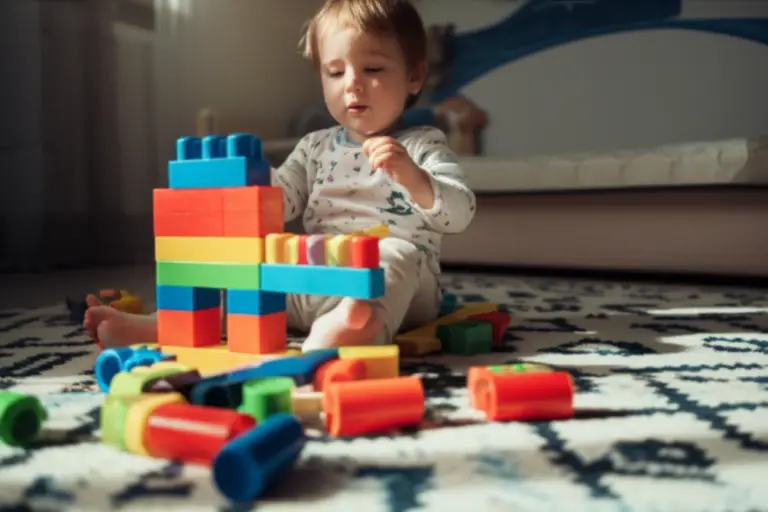
For children who like creating and constructing, pairing Bitzee with building blocks and sets can turn a compact electronic toy into a springboard for a much bigger pretend world. The block castle does not need a software update. 🏰
Responsibility, Empathy, and Social-Emotional Learning
A virtual pet’s prompts may invite a child to notice needs and respond with care. That can support pretend practice in nurturing, particularly when an adult helps the child talk about feelings and choices.
There’s a key distinction, though: feeding a digital character is not the same as taking care of a real animal. A real pet needs ongoing, adult-supervised care, and children’s responsibilities must be appropriate to their age. The American Academy of Child and Adolescent Psychiatry’s guidance on pets discusses children and pet ownership; it is a useful reminder that real-life care involves real needs and adult oversight.
For empathy practice, try language such as: “Your pet seems unhappy. What clues helped you notice?” Then connect the pretend situation to people: “How might we tell when a friend needs help?” The conversation matters more than the toy’s claim to teach empathy.
Fine-Motor Skills and Hand-Eye Coordination
Touching, pressing, and moving a handheld toy involve small hand movements. Mini-games may also ask a child to coordinate an action with something they see. These activities can offer hands-on motor practice, but product descriptions alone cannot establish that the toy improves hand-eye coordination.
For a broader range of hand skills, mix electronic play with drawing, cutting paper with child-safe scissors, puzzles, threading activities, and building toys. The American Academy of Pediatrics offers age-stage guidance for school-age children, including the value of varied activities and family support.
🎮 How Bitzee’s Games and Pet-Care Activities Support Learning
Bitzee blends pretend care with short interactions and, in some editions, mini-games and collecting. That combination can hold a child’s interest, but the learning potential comes from what the child does with it, not just what the packaging promises.
A helpful way to think about the play is as three layers:
| Layer | Child’s experience | Possible learning opportunity |
|---|---|---|
| Interaction | Touching, tilting, or using controls | Motor planning and cause-and-effect exploration |
| Care | Responding to a pet’s prompts | Routine, attention, and pretend nurturing |
| Play and collecting | Trying games or exploring characters | Memory, goal-setting, storytelling, and curiosity |
The seller for the Magicals edition highlights care, character progression, and mini-games. These details explain the product’s design, but they should be read as feature descriptions, not independent developmental research. Maziply’s Magicals listing
Mini-Games, Challenges, and Rewards
A mini-game gives a child a goal and feedback. Depending on the activity, kids may need to watch, react, remember a sequence, or try a different approach. That can make play feel satisfyingly purposeful: “I tried this, and something happened!”
For a more thoughtful play session:
- Let your child explore first. Resist the urge to explain every control immediately.
- Ask for a prediction. “What do you think this button or movement will do?”
- Watch for strategy. Notice whether your child repeats, adapts, or asks for help.
- Invite reflection. “Which part was easiest? What would you try next time?”
- Stop before frustration takes over. Learning is harder when the toy has become a tiny plastic argument.
If the game is mostly rapid reaction, don’t overstate its educational value. A short, enjoyable challenge is perfectly fine as entertainment.
Caring for a Virtual Pet: Feeding, Bathing, and Bedtime
Some Bitzee product descriptions include pet-care actions such as feeding, playing, and helping the character rest. The precise activities depend on the model. The original listing describes a cycle of interaction and care; the Magicals edition adds its own character and progression features. Original Bitzee listing · Magicals listing
A parent can use pretend care to talk about routines:
- “What tells you the pet needs something?”
- “What do we do when it’s time to rest?”
- “How is taking care of a toy different from caring for a living pet?”
That last question is especially valuable. It keeps the fun without blurring the difference between a responsive gadget and animal that depends on people. For family guidance on children’s play and routines, see our parenting tips and advice.
Collecting Characters and Exploring Different Outcomes
Collectible characters can encourage exploration: children may be curious about what comes next or enjoy completing a set. In the Magicals edition, Maziply describes a collection of 20 fantasy characters and a system involving gems and character growth. Product details from Maziply
Collecting can be fun, but it is not automatically a learning benefit. Some children enjoy the discovery; others may focus so heavily on “getting them all” that play becomes a chase for the next reward. If your child seems stuck on unlocking everything, gently shift the focus:
- “Which character has the funniest personality?”
- “Can you make up a story for this one?”
- “What would you design if you could invent a new pet?”
That takes collecting from “more, more, more” toward curiosity and creativity.
📚 What Child-Development Research Says About Digital and Pretend Play
Research supports the value of play and responsive adult-child interaction broadly. It does not let us claim that Bitzee itself has proven cognitive benefits. That distinction is essential: a toy can create a good setting for practice without being a validated intervention.
The NAEYC’s play guidance discusses play as a central part of young children’s learning. The AAP’s media guidance encourages families to consider content, context, and how media fits alongside other parts of life. Neither source tests Bitzee.
Where Interactive Toys Can Help
Interactive toys can make cause and effect easy to see: an action produces an immediate response. That feedback may help children stay engaged and try new actions. A virtual pet can also prompt pretend scenarios, which adults can expand through conversation and storytelling.
The strongest potential benefits are likely to come when:
- The child is actively choosing and experimenting.
- The toy’s activity is appropriate for the child’s age and interests.
- An adult or another child adds conversation, turn-taking, or imagination.
- The toy is one of many play options, rather than the default activity all day.
Why Adult Guidance and Real-World Play Still Matter
A toy cannot replace the responsive give-and-take of a caring adult. When a parent follows a child’s idea, asks an open-ended question, or helps them recover from frustration, the adult is adding something the toy cannot supply.
Real-world play also provides different experiences: running, building, drawing, negotiating rules, and handling materials. The AAP’s healthy media guidance can help families think about balance. For more practical family ideas, browse our parenting tips and advice.
👧🧒 Best Ages for Bitzee: Is It Right for Your Child?
Product descriptions for the original Bitzee and Magicals editions list an age recommendation of 5+. Follow the age grading and safety instructions on the exact product you’re considering. Age labels are useful guides, not a promise that every five-year-old will love it or that every younger child will understand it. Spin Master Bitzee · Maziply Magicals listing
Age Recommendations and Readiness Signs
A child may be ready to enjoy Bitzee if they can:
- Follow simple on-device directions with limited help.
- Handle a small electronic toy carefully.
- Enjoy pretend play, animals, collecting, or short challenges.
- Stay reasonably comfortable when a toy’s response is not immediate.
The original product listing warns about small parts and says it is not suitable for children under 3. Always confirm the warning on the specific edition and packaging. Maziply product information
How Bitzee May Suit Different Ages and Play Styles
| Child’s interests or play style | Likely fit | Parent perspective |
|---|---|---|
| Loves virtual pets and pretend care | Stronger fit | The pet theme may invite storytelling and routine play |
| Enjoys collecting characters | Stronger fit | Check whether collecting stays fun rather than stressful |
| Prefers building or making things | Mixed fit | Pair with blocks, crafts, or open-ended toys |
| Dislikes sounds or electronic prompts | Weaker fit | Try the toy in person if possible, and check sound controls |
| Wants a fully screen-free, non-electronic toy | Weaker fit | Bitzee is electronic even though it avoids a conventional screen |
| Gets frustrated by small controls or instructions | Depends | A grown-up may need to help with setup and early play |
Bitzee for Kids With Different Learning Needs
Children vary widely in how they respond to lights, sounds, movement, and changing prompts. One child may find the interaction engaging; another may find it distracting or confusing. The toy is not a therapy or special-education product, and we found no product-specific evidence that it is designed to meet particular learning needs.
Before buying, consider:
- Whether the child enjoys tactile and electronic play.
- Whether audio, visual effects, or unpredictable responses could be overwhelming.
- Whether they can comfortably use the controls.
- Whether a familiar adult can help them learn the routine.
- Whether an occupational therapist, teacher, or other professional has suggested particular play adaptations.
For individualized advice, ask the child’s care team or educator. The AAP’s developmental and behavioral guidance is a starting point for families, but it cannot assess whether a specific toy is right for a particular child.
⚖️ Benefits and Drawbacks of Bitzee Toys
We like to judge a toy by what children can actually do with it—not just by the number of features on the box. Here’s our balanced take.
| Potential benefit ✅ | Potential drawback ❌ |
|---|---|
| Responsive play can hold a child’s interest | Features and controls may take time to learn |
| Pet-care themes can inspire pretend nurturing | Virtual care is not real pet-care experience |
| Short games may invite planning and trying again | Mini-games aren’t automatically educational |
| Collecting can spark curiosity | Unlocking may turn into reward-chasing for some kids |
| Portable format is convenient | Small electronic toys need careful handling |
| No conventional tablet or phone screen is required | It is still an electronic device, not an unpluged toy |
Potential Learning Benefits
The most credible benefits are oportunities to practise, not guarantees of development. Bitzee may invite a child to:
- Use simple cause-and-effect reasoning.
- Remember a familiar sequence or control.
- Make small hand movements while playing.
- Invent characters and stories.
- Take turns or talk about a shared activity with someone else.
These are everyday play opportunities. A good puzzle or pretend-play set may support similar kinds of exploration in a different way.
Limitations Parents Should Know
- No Bitzee-specific learning proof: Product descriptions list developmental possibilities but do not provide quantified outcomes or independent testing.
- Limited transfer: A child’s success inside a mini-game does not automatically mean a broader skill has improved.
- Electronic prompts can lead the play: Some children may focus on following the toy rather than creating their own story.
- Engagement varies: One child may be fascinated; another may play for five minutes and return to cardboard-box engineering.
- Age and safety matter: Follow the exact product’s age grading and warnings.
Is Bitzee Screen-Free? Understanding Its Display and Play
Bitzee is marketed as a screen-free digital pet, meaning it does not use a conventional flat screen like a smartphone or tablet. It still has electronic components and a visual effect that displays the character. So, “screen-free” should not be mistaken for “non-electronic” or “the same as pretend play with no device.”
For families tracking media and device habits, the most useful question is not only “Does it have a screen?” but also “How does it fit into my child’s day?” The AAP’s media guidance encourages a broader view of healthy routines.
🔍 Bitzee Compared With Other Digital Pets and Learning Toys
There’s no single best type of toy. Bitzee’s main draw is its compact digital-pet format; other toys may offer more open-ended storytelling, physical construction, or structured learning.
| Toy type | What play usually involves | Potential advantage | Potential trade-off |
|---|---|---|---|
| Bitzee | Electronic pet interactions, care, and edition-dependent games | Responsive, portable, collectible play | Requires electronics and may be less open-ended |
| Tamagotchi | Digital pet care using a small electronic device | Familiar virtual-pet routine | Features vary by model and may be more menu-driven |
| Plush pet | Pretend care and storytelling | No batteries or electronic prompts | The child supplies all responses and scenarios |
| Building set | Constructing models or free-building | Spatial exploration and hands-on problem-solving | May need more pieces, space, or adult help |
| Educational game or app | Guided digital tasks | Can provide structured activities | Uses a screen and quality varies by app |
Bitzee vs. Tamagotchi
Both are digital-pet toys, but their controls, characters, and play systems differ by model. Bitzee emphasizes a pod with touch and movement interactions; Tamagotchi devices typically use their own buttons and screen-based interface. Compare the specific editions, not just the brand names. Spin Master Bitzee · Bandai Tamagotchi
Neither brand should be treated as proven cognitive training based only on product descriptions. Choose based on the child’s interests, sensory preferences, and comfort with the controls.
Bitzee vs. Plush Pets and Open-Ended Toys
A plush animal or doll offers fewer built-in prompts but more room for a child to invent what happens next. Bitzee offers reactions and a defined play loop; a plush toy offers a blank page. Neither is inherently more educational.
A lovely middle ground is to pair them: the Bitzee pet can “visit” a plush friend, and the child becomes the storyteller. Add blocks for a home and the toy has accidentally joined a tiny architectural firm. For hands-on alternatives, browse our building blocks and sets and educational toys.
Bitzee vs. Educational Apps and Video Games
Educational apps may offer structured content, but quality varies and they involve conventional screen use. Bitzee is a handheld physical toy with electronic interactions, not a curriculum app. Compare the actual activity, the child’s engagement, and the balance with other experiences—not simply the word “educational” on a product page.
The AAP’s guidance for families is more useful than blanket claims that all digital play is good or bad: context, content, and family routines matter.
👨 👩 👧 How Parents Can Make Bitzee Play More Educational
You don’t need flash cards or a lesson plan. A few curious questions can turn a quick play session into richer conversation. Our Toy Brands™ parent approach is simple: follow the child’s interest, keep it light, and let the toy be one part of play—not the whole playroom.
Conversation Starters and Thinking Questions
Try one question at a time. A quiz show host hiding behind the sofa is not required.
- Predict: “What do you think will happen if you move it?”
- Explain: “How did you know what the pet wanted?”
- Compare: “Which character acts differently? What makes you think so?”
- Imagine: “If your pet could visit the park, what would it do first?”
- Reflect: “What did you try when the game got tricky?”
- Connect: “How do we help a real friend when they need something?”
The NAEYC play resources offer broader context for how play and adult interaction support learning.
Balancing Digital Pet Play With Books, Outdoor Time, and Free Play
Rather than treating Bitzee as a stand-alone learning tool, build a varied play menu:
- Read a story about animals or fantasy creatures.
- Draw a Bitzee character or invent a new one.
- Build a habitat from blocks.
- Play outside and look for real animals or signs of nature.
- Take turns creating a story with a sibling or adult.
- Leave time for unstructured play, too.
These activities support different experiences and help the child move between electronic interaction, movement, conversation, and imagination. Our educational toy category and building sets category offer ideas for complementary play.
Setting Healthy Play Limits and Avoiding Frustration
There’s no universal number of minutes that fits every family or every child. Keep an eye on whether Bitzee is crowding out sleep, movement, family routines, or other play. The AP’s family media guidance can help you consider the whole day rather than fixating one toy.
A few practical habits:
- Choose a natural stopping point, such as finishing a game or care task.
- Give a calm heads-up before play ends.
- Store the toy in a predictable place so it doesn’t become a constant negotiation.
- Help with controls or instructions if confusion is driving frustration.
- Watch your child’s mood: If play is causing repeated distress, pause and try something else.
🔋 Practical Details: Batteries, Durability, Cleaning, and Care
Specifications can differ across versions and retailers, so check the listing for the exact model. The original Bitzee product page states that the toy uses 3 AA batteries and includes them; confirm this against the packaging and current product listing before purchase. Maziply original Bitzee listing
Battery Needs and Everyday Use
Before opening the toy, read the manufacturer’s instructions for battery type, replacement, and safe handling. Keep loose batteries away from young children, and have an adult manage replacements. The U.S. Consumer Product Safety Commission’s battery safety guidance explains precautions for battery-operated toys.
Handling, Storage, and Cleaning Tips
- Follow the manufacturer’s instructions for cleaning; don’t assume an electronic toy is washable.
- Keep it away from water, sand, and food spills unless the product instructions say otherwise.
- Store it where it won’t be crushed at the bottom of a backpack.
- Avoid rough shaking or impact beyond the gestures the instructions recommend.
- Keep the instruction leaflet: future-you may appreciate the controls diagram.
Safety, Small Parts, and Responsible Use
Check the exact edition’s age grade, small-parts warning, and handling instructions. The original listing warns of a choking hazard and says it is not intended for children under 3. Safety information may vary by product and market, so use the packaging as the final authority. Maziply original product details
For general toy safety, review the CPSC toy safety information.
🎁 Is Bitzee a Good Gift for Learning and Play?
Bitzee can be a good gift for a child who enjoys virtual pets, collecting, fantasy characters, or interactive gadgets. It is less suitable if the family specifically wants an unpluged toy or a structured educational product with clear curriculum goals.
Who Is Most Likely to Enjoy It?
Likely to enjoy it:
- Kids who love animals, fantasy creatures, or pretend pet care.
- Children interested in discovering characters and mini-games.
- Families looking for a compact electronic toy for short play sessions.
- Children who enjoy responsive toys and simple routines.
Maybe not the best match:
- Children who prefer making and building over following device prompts.
- Kids sensitive to electronic sounds or visual effects.
- Families looking for a toy with independently verified learning outcomes.
- Children who are not ready to handle the recommended age grade.
Questions to Ask Before Choosing an Edition
Before buying, check:
- Is this the original, Magicals, or another Bitzee edition?
- What characters and activities does that edition include?
- What is the recommended age?
- What batteries does it need, and are they included?
- Does the child like small interactive gadgets?
- Is the family comfortable with an electronic toy that is marketed as screen-free?
For product features, compare the official Bitzee brand page with the retailer’s current details. For Magicals edition information, see Maziply’s product listing.
✅ Final Verdict: Do Bitzee Toys Support Kids’ Learning?
Yes, Bitzee can support learning in the modest sense that play gives children chances to practise skills. No, we can’t responsibly call it a proven cognitive-development tool based on the product descriptions available.
Our parents-and-kids verdict:
- Best for: Children who enjoy virtual pets, collecting, imaginative stories, and responsive play.
- Potential strengths: Cause-and-effect exploration, short problem-solving opportunities, pretend care, and hand movements.
- Main limitations: No Bitzee-specific outcome evidence, electronic prompts can steer play, and benefits depend on how the child engages.
- Best use: A fun part of a varied play routine, with adults adding conversation when it feels natural.
A child may play Bitzee for a week, invent a whole saga for a purple unicorn, and then rediscover cardboard boxes. That’s not a failed toy; it’s childhood being gloriously unpredictable. If you choose Bitzee, choose it for the play your child is likely to enjoy, and treat learning as a welcome possibility—not a guarantee.
Recommended Links
- Bitzee Interactive Digital Pet: Amazon | Walmart | Spin Master Official Website
- Bitzee Magicals Edition Interactive Digital Pet: Amazon | Walmart | Maziply
- Tamagotchi: Amazon | Bandai Official Website
- LEGO building sets: Amazon | LEGO Official Website
- Books about play and child development: The Power of Play by David Elkind | Playful Parenting by Lawrence J. Cohen
FAQ
Do Bitzee toys help children develop emotional intelligence and empathy?
They may give children a pretend opportunity to notice a character’s needs and respond. That can prompt conversations about feelings and care, particularly with an adult’s help. However, product descriptions do not establish that Bitzee improves emotional intelligence or empathy. Use questions about the pet’s feelings as a starting point, then connect them to real-life kindness and relationships.
Do interactive digital pets help kids practise patience and self-regulation?
A child may practise waiting for a response, following a routine, or coping with a game that takes a few tries. Those are possible moments of practice, not proof of a lasting improvement in self-regulation. Adults can help by naming feelings, taking a break when frustration rises, and modelling a calm response.
Are Bitzee toys worth it for educational value?
They may be worth considering if your child enjoys the play features and you value a portable interactive pet. We would not buy Bitzee solely on the promise of educational gains: the product information reviewed does not provide measured evidence of improved cognitive development. Choose it for engagement and fun, with learning as a possible bonus.
Read more about “🤖 Top 15 Robot Toy Brands for Adults & Collectibles (2026)”
Are Bitzee toys suitable for children with special learning needs?
It depends on the child. Sound, movement, visual effects, and small controls may be engaging for some children and uncomfortable for others. Bitzee is not described as a therapy or special-education device, and product-specific research for particular learning needs was not provided. If you’re unsure, consult the child’s teacher or care professional and check the toy’s instructions before buying.
Read more about “🐕 Which is the Best Robotic Dog? Top 15 Picks for 2026”
How do Bitzee toys compare to other educational toy brands for cognitive growth?
Bitzee offers electronic-pet play and edition-dependent games; building toys offer construction; puzzles offer challenge and pattern exploration; pretend-play toys leave more details to the child. Those formats support different kinds of play, and we would not rank them by guaranteed cognitive growth without reliable, product-specific evidence. Match the toy to the child’s interests and offer variety.
What cognitive skills do kids develop by using Bitzee toys regularly?
Regular use may give children practice with simple cause and effect, recalling controls or routines, attending to prompts, and trying strategies in mini-games. It may also prompt storytelling. Practice is not the same as a proven developmental outcome: we did not find Bitzee-specific studies showing that these skills improve beyond play.
Can Bitzee toys improve hand-eye coordination in kids?
Touching and moving the device can involve hand movements and visual attention. That may provide some practice, but product descriptions don’t prove a measured improvement in hand-eye coordination. For varied motor play, include drawing, puzzles, blocks, outdoor activities, and other hands-on toys.
Read more about “Unleash Fun! 8 Best Interactive Dog Toys for Kids (2026) 🐶”
Does Bitzee count as screen time?
Bitzee is marketed as screen-free because it does not use a conventional flat screen like a phone or tablet. It is still an electronic toy with a visual display effect. Families can consider its role in the child’s overall day rather than assuming that “screen-free” means “non-digital.”
Read more about “30+ Best Toy and Game Brands in the US (2026) 🎲”
What age is Bitzee best for?
The original Bitzee and Magicals product listings reviewed recommend it for children ages 5 and up. Follow the age recommendation and safety instructions on the specific edition you plan to buy.
Read more about “🛒 Can I Buy Bitzee Toys Online or In Stores? (2026)”
Can Bitzee teach kids real responsibility for pets?
It can introduce pretend routines, but it cannot teach the full responsibility of caring for a living animal. Real pets have needs that do not switch off when play ends. Adults remain responsible for animal welfare and should assign children only age-appropriate, supervised tasks.
Read more about “🐾 Bitzee Toy Features: 7 Ways It Beats Traditional Digital Pets (2026)”
Reference Links
- Spin Master: Bitzee — official brand information.
- Maziply: Bitzee Interactive Digital Pet — product features and seller-provided details.
- Maziply: Bitzee Magicals Edition Interactive Digital Pet — edition-specific character and play information.
- National Association for the Education of Young Children: Play — overview of play in early learning.
- American Academy of Pediatrics: Media and Children — family guidance on media use.
- Harvard Center on the Developing Child: Brain Architecture — overview of how early experiences shape development.
- American Academy of Child and Adolescent Psychiatry: Pets and Children — guidance on children and pets.
- U.S. Consumer Product Safety Commission: Battery-Operated Toys — battery safety guidance.
- U.S. Consumer Product Safety Commission: Toy Safety — general toy safety information.