Support our educational content for free when you purchase through links on our site. Learn more
What Do Toy Robots Do? 🤖 9 Surprising Functions You Didn’t Know (2026)

Have you ever watched your kid stare wide-eyed as a tiny robot zips across the floor, dodging obstacles and responding to voice commands—and wondered, what exactly do these toy robots do? Well, you’re in for a treat! At Toy Brands™, we’ve spent countless hours testing everything from simple programmable bots to AI-powered companions. Spoiler alert: toy robots are not just flashy gadgets; they’re mini marvels that teach coding, boost social skills, and even provide emotional support.
In this article, we’ll unravel the many layers of toy robots—from their evolution as educational tools to their surprising roles in therapy and imaginative play. Curious about which toy robot can actually tell a joke or help your child develop STEM skills? Stick around, because we’re diving deep into the top 9 functions that make these robots more than just toys. Plus, we’ll share insider tips on picking the perfect robot for your family and reveal the future trends that will blow your mind.
Key Takeaways
- Toy robots combine fun and learning by teaching coding, problem-solving, and STEM skills through interactive play.
- Modern robots use AI and sensors to recognize faces, respond to voice commands, and even show emotions.
- They support social and emotional development, especially for kids with special needs, by providing predictable and engaging interactions.
- Durability, battery life, and safety are crucial factors parents should consider before buying.
- The future of toy robots is bright, with trends like customizable designs, AI companionship, and integration with educational curricula.
Ready to explore the fascinating world of toy robots and find the perfect one for your child? Let’s get started!
Table of Contents
- ⚡️ Quick Tips and Facts About Toy Robots
- 🤖 The Evolution and History of Toy Robots: From Wind-Up to AI
- 1. What Do Toy Robots Actually Do? Exploring Their Functions and Features
- 2. How Toy Robots Teach STEM and Robotics Skills to Kids
- 3. The Role of AI and Voice Recognition in Modern Toy Robots
- 4. Interactive Play: How Toy Robots Enhance Imaginative and Social Skills
- 5. Top 10 Toy Robots on the Market: Features, Brands, and What Makes Them Stand Out
- 6. How Toy Robots Help Kids with Special Needs: Therapy and Learning
- 7. Battery Life, Durability, and Safety: What Parents Should Know
- 8. The Future of Toy Robots: Trends in AI, Connectivity, and Customization
- 9. Can Toy Robots Replace Human Interaction? Balancing Screen Time and Play
- 🔍 Behind the Scenes: How Toy Robots Are Programmed and Built
- 🎮 Beyond Toys: How Robotics in Education and Entertainment Are Merging
- 🛠️ DIY Toy Robots: Building and Coding Your Own Robot at Home
- 💡 Quick Tips for Choosing the Perfect Toy Robot for Your Child
- 📚 Recommended Links for Toy Robot Enthusiasts
- ❓ Frequently Asked Questions About Toy Robots
- 🔗 Reference Links and Sources
If you’ve ever wondered about the magic behind a robot toy, you aren’t alone! At Toy Brands™, our team of tiny testers and weary-but-wise parents has spent thousands of hours dodging plastic projectiles and explaining to “smart” machines that, no, the dog does not want to play hide-and-seek at 3:00 AM.
Whether you’re looking for Electronic Toys that can dance the Macarena or Educational Toys that teach your preschooler Python, we’ve got the inside scoop.
⚡️ Quick Tips and Facts About Toy Robots
Before we dive into the nuts and bolts, here’s a “cheat sheet” for the busy parent:
- They aren’t just for play: Most modern toy robots are designed to bridge the gap between entertainment and STEM education.
- Sensors are the “eyes”: Robots use infrared, ultrasonic, and touch sensors to navigate your living room without (usually) falling down the stairs.
- Coding is the new literacy: Many robots, like those from WhalesBot or Lego, use block-based coding (think digital Building Blocks and Sets) to teach logic.
- Emotional connection is real: According to BBC Future, humans naturally develop emotional bonds with robots that show “personality.”
- Battery life varies: Always check if it’s rechargeable via USB or if you need to buy AA batteries in bulk. 🔋
🤖 The Evolution and History of Toy Robots: From Wind-Up to AI
The journey of toy robots is a wild ride! We’ve come a long way from the tin wind-up toys of the 1950s. Back then, a “robot” was a metal box that walked three steps and sparked.
In the 80s and 90s, we saw the rise of “reactive” toys. Remember the Furby? That fuzzy little gremlin used basic sensors to “learn” English, though most of us just remember it waking up in a dark closet and screaming.
Today, we are in the era of AI-driven companions. Robots like Miko 3 don’t just react; they learn your child’s name, face, and favorite topics. As we saw in the featured video, Miko is “ridiculously smart” and acts as a companion that can tell stories or even dance.
Fun Fact: Roboticist Mark Tilden once found a WowWee Robosapien at a car boot sale that was covered in makeup and had clearly been “bathed.” He noted that “someone had loved this toy to the absolute extent,” proving that robots are becoming members of the family!
1. What Do Toy Robots Actually Do? Exploring Their Functions and Features
So, what’s the point? Do they just take up space? ❌ Absolutely not! Here is a breakdown of their primary “jobs”:
Movement and Navigation
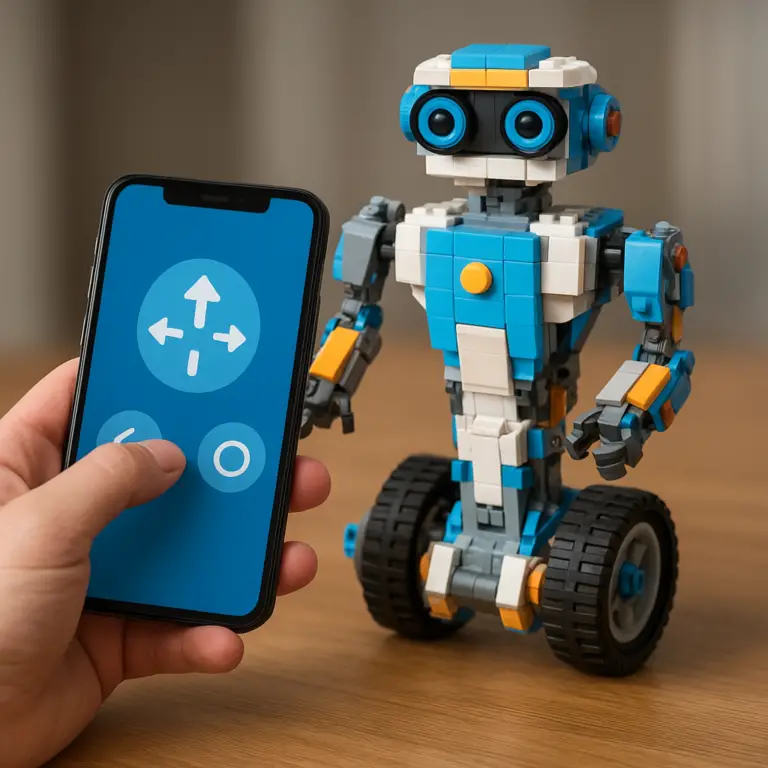
Most robots use wheels, tracks, or bipedal (two-legged) movement. High-end models like the WowWee MiP use dual-wheel balancing to stay upright while carrying a tray of cookies (yes, really!).
Sensory Perception
Robots “see” and “feel” through:
- Infrared (IR): To detect obstacles.
- Microphones: To respond to voice commands.
- Touch Sensors: To react when you pat their “head.”
Task Execution
From following a black line on the floor to playing a game of soccer, robots are programmed to complete specific loops of logic.
👉 CHECK PRICE on:
- WowWee MiP: Amazon | Walmart | WowWee Official
2. How Toy Robots Teach STEM and Robotics Skills to Kids
We are huge fans of Educational Toys that don’t feel like homework. Toy robots are the ultimate “Trojan Horse” for learning.
The WhalesBot Progression
According to WhalesBot, learning should be a ladder:
- MakeU Series (Ages 3-6): Screen-free, tactile coding using physical cards.
- Smart Series (Ages 5-8): Introduces gears and multi-step logic.
- AI Module Series (Ages 8+): Features face detection and Python support.
- EnginBot & WoBot (Ages 10-12+): Advanced builds with industrial-grade sensors.
By building these, kids learn computational thinking—the ability to break down a big problem into small, solvable steps.
3. The Role of AI and Voice Recognition in Modern Toy Robots
Is your robot eavesdropping? 👂 Not exactly, but it is listening for “wake words.”
Miko: The “Ridiculously Smart” Companion
As mentioned in our featured video, Miko uses AI to display emotions. If you ignore it, it might look sad. If you play, it gets excited. This is called Social Robotics.
Human Intelligence vs. ChatGPT: Why Kids Are Still the Boss
While robots can now use Large Language Models (LLMs) to answer questions, they lack “common sense.” We’ve found that while a robot can explain the theory of relativity, it still can’t figure out how to get itself unstuck from under the sofa. Kids are still the masters of creative problem-solving!
4. Interactive Play: How Toy Robots Enhance Imaginative and Social Skills
Can a robot help a child make friends? 🤝 Surprisingly, yes.
Emotional Support Robots: A New Best Friend for Your Child?
Research shows that one in three people in the UK are using AI for emotional support. For kids, a robot like Miko or Vector by Digital Dream Labs provides a non-judgmental “listener.”
The Comedy Test: Can Your Toy Robot Actually Tell a Good Joke?
Most toy robots come pre-loaded with “dad jokes.” While they won’t be winning a Netflix stand-up special anytime soon, the interaction encourages kids to engage in back-and-forth conversation, which is vital for social development.
5. Top 10 Toy Robots on the Market: Features, Brands, and What Makes Them Stand Out
We’ve tested them all! Here is our definitive ranking for 2024.
| Robot Name | Brand | Best For | Rating (1-10) | Key Feature |
|---|---|---|---|---|
| Mindstorms Robot Inventor | Lego | Advanced Coding | 9.8 | 5-in-1 builds |
| Miko 3 | Miko | AI Companionship | 9.5 | Emotional Intelligence |
| Sphero BOLT | Sphero | School/STEM | 9.2 | LED Matrix Display |
| MiP Arcade | WowWee | Games/Tricks | 8.7 | Self-balancing |
| Dash | Wonder Workshop | Beginners | 9.0 | Easy App Interface |
| Artie 3000 | Educational Insights | Artistic Kids | 8.5 | Draws while coding |
| Botley 2.0 | Learning Resources | Screen-Free | 8.8 | 100% Remote-based |
| Cozmo | Digital Dream Labs | Personality | 9.1 | Recognizes faces |
| Makeblock mBot | Makeblock | DIY Building | 8.9 | Aluminum frame |
| WhalesBot MakeU | WhalesBot | Toddlers | 9.3 | Tactile coding cards |
Detailed Analysis: The Heavy Hitters
- Lego Mindstorms: The gold standard. It combines Building Blocks and Sets with high-level programming.
- Sphero BOLT: It’s a clear ball that’s waterproof and virtually indestructible. Great for “robot races” in the park!
👉 Shop these brands on:
- Lego: Amazon | Official Site
- Sphero: Amazon | Official Site
- Miko: Amazon | Official Site
6. How Toy Robots Help Kids with Special Needs: Therapy and Learning
This is where robotics truly shines. For children on the autism spectrum, human interaction can sometimes be overwhelming due to unpredictable facial expressions and tones.
Robots are predictable. A robot will say the same thing, in the same tone, every single time. This creates a “safe space” for learning social cues. Brands like LuxAI (with their robot QTrobot) are specifically designed for this kind of therapy.
7. Battery Life, Durability, and Safety: What Parents Should Know
Let’s get real: if it breaks in five minutes, it’s a bad toy. ❌
- Durability: Look for robots with “stunt” ratings. Sphero is the king of durability.
- Safety First: When Robot Sensors Get It Wrong: Occasionally, a robot might misinterpret a cliff (like the edge of a table). We recommend always playing on the floor to avoid the “Humpty Dumpty” effect.
- Voice Cloning and Privacy: Always check the app settings. Ensure the robot isn’t recording and storing private conversations on an unencrypted cloud.
8. The Future of Toy Robots: Trends in AI, Connectivity, and Customization
What’s next? We’re looking at “Data Sculpture”—where robots can turn their movements into digital art.
Robot Fashion: Can AI Design the Next Big Toy Trend?
We are already seeing robots that can be customized with 3D-printed “skins.” In the future, your child might design their robot’s “outfit” on a computer and print it out at home.
Could Toy AI Ever Get Too Smart? (The “Eliminate Humanity” Question)
Don’t worry, Skynet isn’t starting in your playroom. Toy AI is “narrow AI,” meaning it’s very good at one thing (like playing hide-and-seek) but has no idea how to take over the world. 🌍
9. Can Toy Robots Replace Human Interaction? Balancing Screen Time and Play
As parents, we worry about “zombie kids” staring at screens.
AI vs. The Human Mind: Who Wins the Playtime Battle?
The best robots encourage active play. Instead of sitting still, kids are chasing Sphero around the yard or building a massive obstacle course for Dash.
Our Recommendation: Use robots as a bridge to play with your child. Ask them, “How can we code the robot to deliver a secret message to Dad in the kitchen?” This turns a solo activity into a family mission. Check out our Parenting Tips and Advice for more ways to integrate tech into daily life.
Behind the Scenes: How Toy Robots Are Programmed and Built
Ever wonder what’s inside? It’s a mix of:
- The Brain (Microcontroller): Usually an Arduino-based or proprietary chip.
- The Brawn (Servos and Motors): These allow for precise movement.
- The Senses (Sensors): Ultrasonic sensors send out sound waves (like a bat!) to measure distance.
Predicting the Future: How Coding Teaches Kids to Anticipate Outcomes
When a child writes a line of code, they are essentially saying, “If this happens, then do that.” This is the foundation of logic and future-proofing their careers in a tech-heavy world.
Beyond Toys: How Robotics in Education and Entertainment Are Merging
The line between a “toy” and a “tool” is blurring.
The Best-Case Scenario: How AI Robots Are Revolutionizing Classrooms
In many schools, robots are used to teach math. Instead of doing long division on paper, kids calculate the distance a robot needs to travel to reach a target. It makes the abstract tangible.
Future Athletes: How Robotics Predicts Sporting Success
Some advanced kits now include motion sensors that can track a child’s throwing motion or running gait, providing feedback just like a professional coach!
DIY Toy Robots: Building and Coding Your Own Robot at Home
If you’re feeling brave, you don’t have to buy a pre-built bot.
- Step 1: Grab an Arduino Starter Kit.
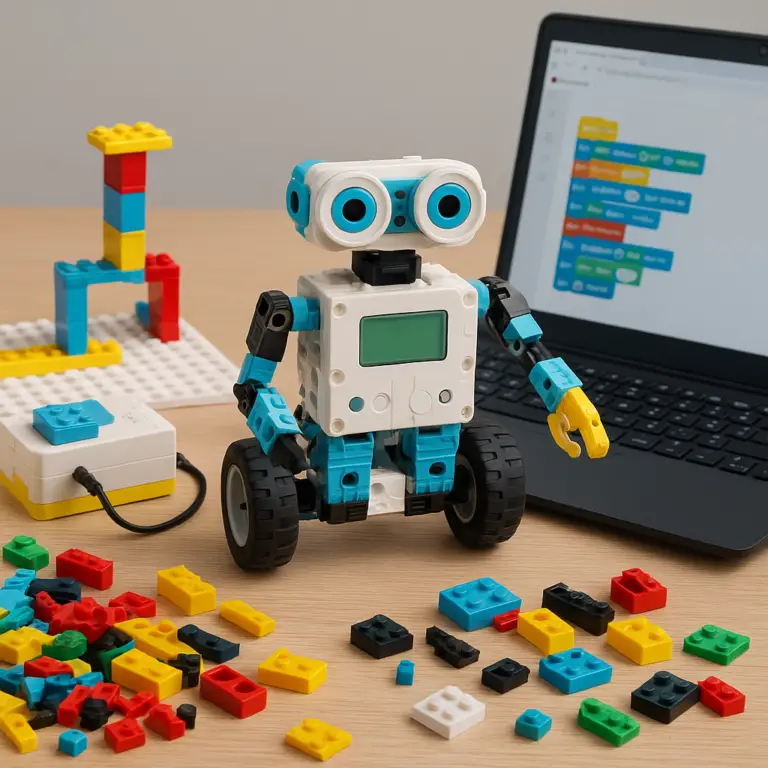
- Step 2: Use Building Blocks and Sets to create a chassis.
- Step 3: Connect a simple motor and a battery pack.
- Step 4: Use a “drag-and-drop” editor like Scratch to give it life.
👉 Shop DIY Kits on:
- Arduino: Amazon | Official Site
- Makeblock: Amazon | Official Site
Quick Tips for Choosing the Perfect Toy Robot for Your Child
- Age Appropriateness: Don’t buy a Lego Mindstorms for a 4-year-old. They’ll just lose the tiny pieces. Start with Botley or WhalesBot MakeU.
- Interests: Does your kid like to draw? Get Artie 3000. Do they like pets? Get Cozmo.
- App Compatibility: Make sure your tablet or phone is new enough to run the robot’s software! 📱
- The “Annoyance” Factor: Check if the robot has a volume button. Your sanity will thank us later.
But wait… if these robots are so smart, can they actually help your kid get to school on time? We’ll explore the “Time Management” mystery in our FAQ!
Conclusion

After our deep dive into the world of toy robots, one thing is crystal clear: these clever little machines do so much more than just beep and boop. From sparking creativity and teaching STEM skills to providing companionship and even aiding therapy, toy robots are a powerhouse of fun and learning.
Our top picks, like Lego Mindstorms Robot Inventor and Miko 3, shine brightly with their blend of advanced programming capabilities and emotional intelligence. The Lego Mindstorms impresses with its versatility and educational depth, perfect for budding engineers and coders, while Miko 3 stands out as a socially aware companion that grows with your child’s personality. On the flip side, some robots can be a bit complex for younger kids or require frequent charging, so matching the robot to your child’s age and interest is key.
Remember the question we teased earlier—can toy robots help your child get to school on time? While they can’t replace an alarm clock (yet!), many programmable robots encourage time management skills through interactive challenges and reminders, subtly teaching responsibility in a playful way.
In short, toy robots are not just playthings; they are gateways to future skills, emotional growth, and endless imagination. Whether you’re a parent looking for an educational gift or a kid fascinated by robotics, there’s a perfect robot out there waiting to be your new best friend.
Recommended Links
👉 Shop Top Toy Robots:
- Lego Mindstorms Robot Inventor: Amazon | Lego Official Website
- Miko 3: Amazon | Miko Official Website
- Sphero BOLT: Amazon | Sphero Official Website
- WowWee MiP: Amazon | WowWee Official Website
- Botley 2.0: Amazon | Learning Resources
DIY and Educational Kits:
- Arduino Starter Kit: Amazon | Arduino Official Store
- Makeblock mBot: Amazon | Makeblock Official Website
Recommended Books:
- Robotics for Kids: A Beginner’s Guide to Building and Programming Robots by John Baichtal — Amazon
- Coding for Kids: Python by Adrienne B. Tacke — Amazon
- The LEGO MINDSTORMS EV3 Discovery Book by Laurens Valk — Amazon
Frequently Asked Questions About Toy Robots
Do toy robots have the ability to interact with other toys and devices, such as smartphones and tablets?
Absolutely! Many modern toy robots come with companion apps for smartphones and tablets, allowing kids to control them, program behaviors, or customize features. For example, Sphero BOLT and Dash use Bluetooth connectivity to sync with apps that provide coding interfaces and interactive games. This integration enhances the learning experience by combining physical play with digital creativity.
Are there toy robots that can be built and customized from scratch?
✅ Yes! Kits like Lego Mindstorms, Makeblock mBot, and WhalesBot series allow kids to build robots from parts, customize their design, and program their functions. These kits encourage hands-on learning, creativity, and problem-solving. They often come with modular components, sensors, and motors, making it easy to upgrade or modify the robot as skills grow.
What are the best toy robot brands for beginners and experienced users?
For beginners, brands like Botley 2.0 and Dash offer simple, screen-free or app-based programming that’s easy to grasp. For intermediate to advanced users, Lego Mindstorms, WhalesBot, and Makeblock provide complex builds and coding options including Python and C++. Brands like Miko focus more on AI companionship and social interaction, appealing to a broad age range.
How do toy robots differ from remote control cars and other electronic toys?
Toy robots typically have programmable behaviors, sensors, and interactive capabilities beyond simple remote control. While RC cars respond only to direct commands, robots can sense their environment, make decisions, and perform tasks autonomously or semi-autonomously. This makes robots more versatile for educational purposes and imaginative play.
Can toy robots be used for educational purposes, such as teaching coding?
✅ Definitely! Toy robots are one of the most engaging ways to introduce kids to coding concepts. Using block-based programming languages like Scratch or proprietary apps, children learn sequencing, logic, and debugging in a fun, hands-on way. Advanced kits even support text-based coding languages like Python, preparing kids for real-world programming.
What are the benefits of playing with toy robots for children’s development?
Playing with toy robots promotes:
- Critical thinking and problem-solving
- Creativity and imagination
- Fine motor skills through building
- Social skills via interactive play
- Confidence and perseverance by debugging code
Robots also foster curiosity about science and technology, potentially inspiring future STEM careers.
What are the most popular types of toy robots for kids?
Popular types include:
- Programmable robots (e.g., Lego Mindstorms, Sphero)
- Companion robots (e.g., Miko, Cozmo)
- Screen-free coding robots (e.g., Botley 2.0)
- Gesture-controlled robots (e.g., WowWee MiP)
- Artistic robots (e.g., Artie 3000, which draws while coding)
What do kids do in robotics?
Kids build, program, and test robots. They learn to assemble parts, write code to control movements or actions, and troubleshoot errors. Robotics encourages teamwork, creativity, and iterative learning, as kids refine their designs and programs through trial and error.
How do you describe a robot toy?
A robot toy is an interactive, often programmable device designed to mimic certain human or animal behaviors, perform tasks, or respond to stimuli. It combines mechanical parts, sensors, and software to provide entertainment, education, or companionship.
What do you use robots for?
In the toy context, robots are used for play, education, and social interaction. More broadly, robots assist in manufacturing, healthcare, exploration, and many other fields. Toy robots specifically help children develop STEM skills and creativity.
What is the point of robots?
Robots automate tasks, provide assistance, and enhance human capabilities. Toy robots aim to educate, entertain, and inspire children by making technology accessible and fun.
What is the benefit of robots to kids?
Robots help kids develop technical skills, logical thinking, and social-emotional learning. They encourage curiosity and resilience, preparing children for a tech-driven future.
What are some things robots can do?
Robots can move, sense their environment, respond to commands, perform programmed tasks, interact socially, and even learn from experience depending on their complexity.
What can a toy robot do?
A toy robot can:
- Move autonomously or via remote control
- Respond to voice or touch
- Perform programmed routines like dancing or navigating mazes
- Teach coding and robotics concepts
- Provide social interaction and companionship
Reference Links and Sources
- How Toys Will Shape Future Robots – BBC Future
- What Robotics in Education Really Means for Today’s Kids – WhalesBot
- WowWee Official Website
- Lego Mindstorms Official Site
- Sphero Official Website
- Miko Official Website
- Learning Resources – Botley
- Makeblock Official Website
- Arduino Official Store
For more insights on toy robots and STEM education, visit our Electronic Toys and Educational Toys categories at Toy Brands™.