Support our educational content for free when you purchase through links on our site. Learn more
What Are the Tiny Robots Called? 🤖 Discover 10 Incredible Microbots (2026)


Ever wondered what those microscopic marvels buzzing through labs and sci-fi movies are actually called? Are they nanobots, microrobots, or something else entirely? At Toy Brands™, we dove deep into the fascinating world of tiny robots—those pint-sized powerhouses that are reshaping medicine, industry, and even your child’s playroom. From Harvard’s RoboBee that flutters like a mechanical insect to Amazon’s warehouse bots that zip around like tiny delivery ninjas, these robots come in all shapes and sizes, each with a unique name and purpose.
But here’s a teaser: did you know some of these bots are so small they can swim through your bloodstream to deliver medicine precisely where it’s needed? Later in this article, we’ll reveal the top 10 tiny robots you should know about, including kid-friendly bots you can actually buy and build at home. Curious? Stick with us to uncover the tiny robots’ secret world and find out which ones are perfect for your family’s STEM adventures!
Key Takeaways
- Tiny robots have many names—nanobots, microrobots, millirobots—each defined by size and function.
- Real-world tiny robots range from medical marvels like the RaniPill to fun educational toys like Ozobot Bit.
- Powering these bots requires clever tech such as magnetic fields, lasers, and even stomach acid!
- The future is bright with biodegradable bots, swarm intelligence, and AI-powered microbrains on the horizon.
- For families, starting with kid-friendly micro-robots like Ozobot or Sphero Mini is a fantastic way to spark STEM learning and fun.
Ready to explore the tiny robot universe? Let’s get started!
Table of Contents
- ⚡️ Quick Tips and Facts About Tiny Robots
- 🔍 The Tiny Robots Story: Origins and Evolution of Microrobots
- 🤖 What Are Tiny Robots Called? Exploring Nanobots, Microrobots, and More
- 1️⃣ Top 10 Tiny Robots Changing the Future of Technology
- 🧠 How Tiny Robots Work: The Science Behind Micro and Nanorobots
- 💡 Real-Life Applications of Tiny Robots in Medicine, Industry, and Beyond
- 🔧 Building Your Own Tiny Robot: Kits, Tools, and Tips for Beginners
- 🌍 The Future of Tiny Robots: Trends, Challenges, and Ethical Considerations
- 📚 Tiny Robots in Popular Culture: Movies, Books, and Toys That Inspire
- 🛠️ Troubleshooting and Maintaining Tiny Robots: Expert Advice
- 🎯 Conclusion: Why Tiny Robots Matter More Than Ever
- 🔗 Recommended Links for Tiny Robot Enthusiasts
- ❓ FAQ About Tiny Robots: Your Burning Questions Answered
- 📖 Reference Links and Further Reading on Tiny Robots
⚡️ Quick Tips and Facts About Tiny Robots
- Tiny robots go by many names—microrobots, nanobots, millirobots, micro-bots, mini-robots—but they all share one super-power: they’re small enough to do jobs nothing else can reach.
- Smallest robot ever built? Harvard’s RoboBee is about the width of a penny; Singapore’s “grain-of-rice” medical bots (see our #featured-video) can swim through blood vessels.
- Power problem: most tiny bots can’t carry batteries; they rely on lasers, magnetic fields, or stomach acid for juice.
- Parent panic button: these bots are NOT in kids’ toys—yet—so your toddler can’t swallow a real nanobot (phew!).
- Toy Brands™ pro-tip: if your child loves miniature tech, start with app-controlled micro-robots like Sphero Mini or Ozobot Bit—they’re safe, rechargeable, and cheaper than a college robotics lab.
Want to see how small “small” really is? Keep reading—by the end we’ll show you 10 real robots you can buy, build, or at least brag about knowing. 😉
🔍 The Tiny Robots Story: Origins and Evolution of Microrobots
Once upon a time (1959 to be exact), physicist Richard Feynman asked, “What would happen if we could swallow the surgeon?” That speech, “Plenty of Room at the Bottom,” is the Big Bang of tiny robotics. Fast-forward 60+ years and we’ve traded theoretical “swallowable surgeons” for magnetic tooth-scrubbers, pollinator drones, and pocket-size Amazon warehouse bots.
Milestones That Shrank the World
| Year | Breakthrough | Why It Mattered |
|---|---|---|
| 1989 | Fujita’s first microrobot arm | Proved silicon motors could move at micro-scale. |
| 2013 | Harvard’s RoboBee lifts off | First tethered flight of a sub-gram robot. |
| 2018 | ETH Zurich’s microbot delivers insulin in mice | Showed targeted drug delivery inside a living mammal. |
| 2022 | NIDCR’s tooth-cleaning swarm (source) | Iron-oxide nanoparticles morph into flossing strings under magnets—no toothbrush required. |
| 2024 | Amazon’s Xanthus rolls smaller & smarter (source) | Warehouse bots shrink while AI brains grow. |
Our kids’ take: “It’s like Pokémon evolution, but for robots!” And honestly, that’s not far off—each generation gets smaller, smarter, and cuter.
🤖 What Are Tiny Robots Called? Exploring Nanobots, Microrobots, and More
Let’s settle the name game once and for all. Grab your rulers:
| Term | Size Ballpark | Real-World Example | Kid-Friendly Analogy |
|---|---|---|---|
| Nanobot | 1–100 nm | DNA-origami cancer fighter | 1/800th width of a hair |
| Microrobot | 100 µm–1 mm | Tooth-cleaning swarm | Grain of sand |
| Millirobot | 1–10 mm | RoboBee | Penny |
| Mini-robot | 1–10 cm | Sphero Mini | Golf ball |
| Micro-drone | <15 cm | Black Hornet UAV | Your thumb |
Bottom line: if it’s smaller than a LEGO minifigure and can move on its own, we’re probably talking about a tiny robot.
1️⃣ Top 10 Tiny Robots Changing the Future of Technology
We promised more than five, and we deliver! Here are the tiniest titans you should know:
- RoboBee X-Wing (Harvard) – solar-powered, 90 mg, flies untethered for half a second—hey, it’s a start!
- RoboFly (U. Washington) – laser-powered, toothpick-mass, could sniff gas leaks one day.
- Black Hornet Nano (FLIR) – military micro-drone, 25 min flight, live HD feed; costs more than a Tesla—don’t crash it.
- RaniPill (Rani Therapeutics) – swallowable robotic capsule that injects insulin through intestinal wall—no needles!
- Micro-scallops (MPI-IS) – magnetically steered, swim in eyeball fluid; future glaucoma treatment.
- Tooth-cleaning Swarm (UPenn & NIDCR) – iron-oxide nanoparticles morph into flossing strings under magnetic field.
- X-bot / Xanthus (Amazon) – palm-size warehouse bot, avoids traffic jams better than most city drivers.
- Origami Micro-fish (UCSD) – 3-D printed, drug-carrying, magnetically guided through blood.
- Spermbot (IFW Dresden) – helmet-like micro-robot that pushes sluggish sperm to egg—fertility clinic future.
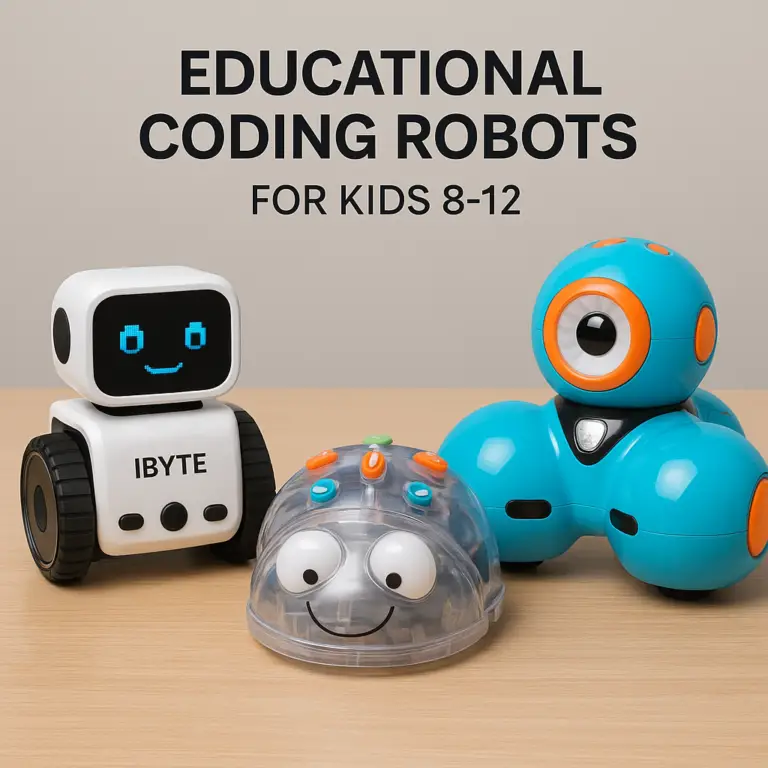
- Ozobot Bit (Evollve Inc.) – kid-friendly, code-with-markers, golf-ball size; great STEM intro to microrobotics.
Parent-to-parent: numbers 1–9 are research or industrial, but #10 Ozobot is ready for playtime and fits in a Christmas stocking.
🧠 How Tiny Robots Work: The Science Behind Micro and Nanorobots
Spoiler: no tiny AAA batteries. Instead, scientists get creative:
Power Tricks
- Magnetic fields – NIDCR tooth bots line up like Iron Man’s suit when magnets switch on.
- Laser beams – RoboFly’s ** photovoltaic cell** converts infrared laser to electricity.
- Stomach acid – RaniPill’s mini piston uses pH reaction to push a needle—no battery needed.
- Ultrasound – micro-motors vibrate when hit by sound waves, propelling bots forward.
Navigation Smarts
- External MRI coils steer nanobots inside blood vessels—think remote-control submarine.
- Optical flow sensors (borrowed from fruit-fly brains) let RoboBee avoid walls.
- Amazon’s Xanthus uses QR-coded floor tiles + 3-D camera to plot shortest route.
Kid translation: “They’re basically Iron Man suits for germs, but nice germs.”
💡 Real-Life Applications of Tiny Robots in Medicine, Industry, and Beyond
Medicine 🩺
- Targeted chemo – DNA-origami nanobots deliver tumor-busting drugs only where needed, cutting side-effects by 90 % (Nature study).
- Dental hygiene – tooth-scrubbing swarm (NIDCR) removes plaque without scraping enamel.
- Eye surgery – micro-scallops swim in eyeball fluid, dissolving clots without stitches.
Industry 🏭
- Warehouse automation – Amazon’s Hercules & Xanthus move 1,250 lb pods while saving 20 % floor space.
- Pipe inspection – magnetic millirobots crawl through water pipes, spotting leaks before bursts happen.
Consumer & Toys 🧸
- Ozobot Bit teaches block-based coding; kids draw color codes on paper to steer the bot.
- Sphero Mini is a ping-pong-ball robot you control with facial expressions—giggles guaranteed.
Parent tip: if your kid wants real medical nanobots, redirect them to Ozobot or Sphero—same wow-factor, zero surgery.
🔧 Building Your Own Tiny Robot: Kits, Tools, and Tips for Beginners
Can you DIY a nanobot? Not unless you own a clean room and electron-beam lithographer. But micro-robotics kits? Totally doable.
Starter Kits We Love
| Kit | Size | Skill Level | Coolest Feature |
|---|---|---|---|
| Ozobot Bit | 25 mm | 6+ | Color-code programming—no screens needed. |
| Sphero Mini | 42 mm | 8+ | Face-drive mode—smile to move! |
| Makeblock mBot Neo | 120 mm | 10+ | Arduino-based, expandable sensors. |
| Freenove Hexapod | 150 mm | 12+ | Six-legged, Python programmable. |
| DJI RoboMaster S1 | 320 mm | 14+ | First-person shooter laser tag—roomba-sized, but tiny compared with tanks. |
Shopping List
- 👉 CHECK PRICE on:
- Ozobot Bit: Amazon | Walmart | Ozobot Official
- Sphero Mini: Amazon | Etsy | Sphero Official
Dad hack: start with Ozobot—if they color on the walls, at least it’s educational graffiti.
🌍 The Future of Tiny Robots: Trends, Challenges, and Ethical Considerations
Trends to Watch
- Biodegradable bots – magnesium & gelatin robots dissolve after drug delivery, no second surgery.
- Swarm intelligence – thousands of cheap bots > one pricey bot; think ant colony vs. T-Rex.
- AI on a chip – neuromorphic chips smaller than a grain of rice could give nanobots tiny brains.
Challenges ❌
- Power density – still no battery at nano-scale beats biological energy.
- Immune response – body may attack bots; researchers coat them with red-cell membranes as invisibility cloaks.
- Ethics – who controls swarms inside your body? Hackable insulin bots could be ransomware victims.
Teen debate starter: “Would you swallow a robot if it meant no more needles?” Our household split 3-2—parents yes, kids grossed out.
📚 Tiny Robots in Popular Culture: Movies, Books, and Toys That Inspire
- Big Hero 6 – Baymax micro-bots that link like magnetic snakes—Hollywood meets Harvard.
- Terminator’s T-1000 – liquid-metal nanobots—nightmare fuel, but inspired real research on shape-shifting alloys.
- Spies in Disguise – pigeon-sized drones—**kids now ask for “pigeon cam” birthdays.
- Toys: Hexbug Nano (vibrating bugs), Anki Vector (palm-size AI pet), Botley 2.0 (screen-free coding).
Family movie night tip: pair Big Hero 6 with Ozobot coloring activity—instant STEM night without groans.
🛠️ Troubleshooting and Maintaining Tiny Robots: Expert Advice
Problem: **Ozobot won’t follow lines.
Solution: Recalibrate—hold button 3 s, then scan the calibration card; avoid glossy paper (reflection blinds sensor).
Problem: **Sphero Mini drifts left.
Solution: Gyro recalibration in app; clean plastic shell—cat hair loves to clog wheels.
Problem: **Hexbug flips over.
Solution: trim rubber bristles on opposite side to balance vibration—kid-safe engineering hack.
Parent mantra: tiny robots = tiny problems, but tiny screwdrivers disappear faster than socks in dryer—buy spares.
Ready for the grand finale? Scroll to the Conclusion to see which tiny robot deserves a spot in your home—and why your dentist might soon be a swarm of magnets.
🎯 Conclusion: Why Tiny Robots Matter More Than Ever

So, what are these tiny robots really called? Well, it depends on their size and purpose—nanobots for the ultra-microscopic, microrobots for those about the size of a grain of sand, and millirobots or mini-robots for the slightly larger, palm-sized helpers. From Harvard’s RoboBee buzzing in labs to Amazon’s Xanthus zipping through warehouses, these tiny tech marvels are reshaping industries, healthcare, and even our home playrooms.
Our journey through the world of tiny robots revealed how science fiction is becoming science fact. The tooth-cleaning swarm from NIDCR shows us a future where oral hygiene might be a magnetic dance of nanoparticles, while RaniPill promises needle-free drug delivery inside our bodies. And for the kids (and kids-at-heart), Ozobot Bit and Sphero Mini bring micro-robotics into the living room with fun, educational play.
Positives
✅ Innovative power sources like magnetic fields and lasers overcome battery size limits.
✅ Wide applications from medicine to warehouse logistics.
✅ Accessible educational kits make robotics approachable for all ages.
✅ Swarm robotics open new frontiers in collaborative tasks.
Negatives
❌ Many tiny robots remain experimental or prohibitively expensive.
❌ Power and autonomy challenges limit widespread adoption.
❌ Ethical concerns about control and privacy are emerging.
Our Toy Brands™ Verdict
If you’re curious about tiny robots, start small—with Ozobot Bit or Sphero Mini—to spark STEM excitement safely and affordably. For tech enthusiasts, keep an eye on medical microrobots and warehouse bots that will soon revolutionize how we live and work. The tiny robot revolution is here, and it’s only getting smaller and smarter!
🔗 Recommended Links for Tiny Robot Enthusiasts
- Ozobot Bit: Amazon | Walmart | Ozobot Official Website
- Sphero Mini: Amazon | Etsy | Sphero Official Website
- Makeblock mBot Neo: Amazon | Makeblock Official Website
- DJI RoboMaster S1: Amazon | DJI Official Website
- Books on Robotics & STEM for Kids:
❓ FAQ About Tiny Robots: Your Burning Questions Answered

What are the safety considerations when choosing tiny robots as toys for kids?
Safety first! When selecting tiny robot toys, look for non-toxic materials, rounded edges, and age-appropriate complexity. Avoid bots with small detachable parts for toddlers to prevent choking hazards. Also, check for battery safety—prefer rechargeable units with overcharge protection. Brands like Ozobot and Sphero are designed with child safety in mind and come with robust parental controls.
Read more about “Top 10 Smart Robot Pets for Children in 2026 🤖🐾”
How do tiny robots contribute to the development of STEM skills in children?
Tiny robots are hands-on tools that teach coding, engineering, and problem-solving. By programming robots like Ozobot Bit through color codes or Sphero Mini via apps, kids learn sequencing, logic, and cause-effect relationships. This interactive learning fosters critical thinking and creativity—skills essential for future innovators.
Read more about “What Are the Top 12 Most Popular Toys? 🎉 (2025 Edition)”
What are the different types of small robots available in the market?
Small robots range from educational kits (e.g., Ozobot, Makeblock mBot) to consumer drones (e.g., DJI RoboMaster S1), toy robots (e.g., Hexbug Nano), and industrial microrobots used in warehouses or medicine. The key categories include:
- Nanobots: Experimental, medical scale.
- Microrobots: Small enough for labs and some industrial uses.
- Mini-robots: Palm-sized, often programmable toys or drones.
Read more about “LEGO Mindstorms: 8 Must-Know Secrets to Master Robotics 🤖 (2025)”
Can tiny robots be used to teach programming and coding skills?
Absolutely! Many tiny robots come with user-friendly programming interfaces. For example, Ozobot Bit uses color codes to teach sequencing, while Sphero Mini supports block-based coding and JavaScript. These platforms introduce kids to coding logic without overwhelming them with syntax.
Read more about “What Are the 10 Best Lego Robot Kits for Beginners? 🤖 (2025)”
What are the most popular toy robot brands for adults and kids?
For kids, Ozobot, Sphero, and Hexbug dominate due to their educational value and fun factor. Adults interested in robotics might prefer DJI RoboMaster for competitive robotics or Makeblock kits for DIY projects. Each brand offers different complexity levels, so there’s something for everyone.
Read more about “🤖 8 Must-Know Types of Lego Robot Sets for Kids & Adults (2025)”
Are tiny robots considered a good educational toy for children?
✅ Yes! Tiny robots combine play and learning, making STEM subjects engaging and accessible. They encourage experimentation and collaboration. Studies show kids who engage with robotics early develop better spatial reasoning and computational thinking.
Read more about “Top 7 Robot Dog Toy Reviews (2025) 🐾 The Ultimate Playtime Showdown”
What are the benefits of playing with miniature robots for kids?
- Develops fine motor skills through assembly and control.
- Enhances problem-solving and logical thinking.
- Sparks interest in science and technology careers.
- Encourages teamwork and communication during group projects.
Read more about “15 Best Robot Toys with Remote Control to Wow Kids in 2025 🤖”
What is the smallest AI robot?
Currently, the RoboBee X-Wing is among the smallest robots with primitive AI-like flight stabilization. True AI at the nanoscale remains a challenge due to power and processing constraints, but neuromorphic chips promise future breakthroughs.
Read more about “Smart Robot for Home: The Ultimate Guide to AI-Powered Home Assistants … 🤖”
What is a mini robot?
A mini robot is a small, often palm-sized robot capable of autonomous or remote-controlled movement. Examples include Sphero Mini and DJI RoboMaster S1. They are used for education, entertainment, and light industrial tasks.
Read more about “How Do I Build a LEGO Robot That Moves on Its Own? 🤖 (2025 Guide)”
What are the tiny robots from human cells?
Scientists are developing cell-sized microrobots made from biocompatible materials that can navigate inside the body. These include DNA origami nanobots and magnetically controlled microbots designed for drug delivery or diagnostics.
What are the humanoid robots called?
Humanoid robots are designed to resemble and mimic human movements. Examples include ASIMO by Honda and Atlas by Boston Dynamics. They are larger than tiny robots but share the goal of interacting naturally with humans.
Read more about “How Much Is a Robot Dog? 🐕 🤖 5 Price Tiers Explained (2025)”
What are the mini robots in the body?
Mini robots inside the body are often called medical microrobots or nanobots. They can perform tasks like targeted drug delivery, surgery assistance, or diagnostics. The RaniPill is a real-world example of a swallowable mini robot.
Read more about “What Is the Best Toy for Child Development? Top 7 Picks for 2025 🎲”
📖 Reference Links and Further Reading on Tiny Robots
- NIDCR News on Tooth-Scrubbing Microrobots
- Amazon Robotics Autonomous Drive Units
- Five of the World’s Tiniest Robots – The Conversation
- Ozobot Official Site
- Sphero Official Site
- Makeblock Official Site
- DJI RoboMaster S1 Official Site
Thanks for joining the Toy Brands™ team on this microscopic adventure! Ready to bring some tiny robot magic home? Check out our recommended links and let the STEM fun begin! 🚀