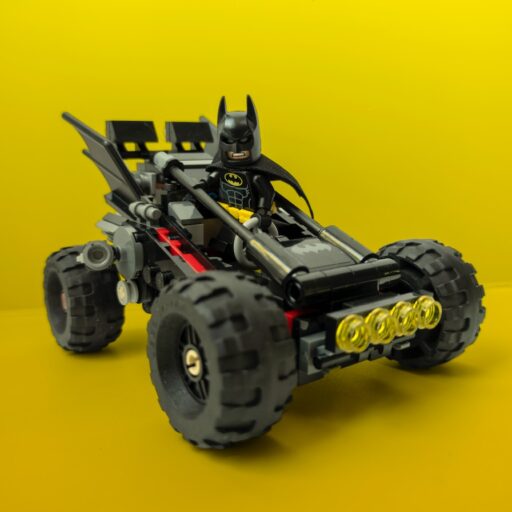
Support our educational content for free when you purchase through links on our site. Learn more
Top 12 Robot Building Kits for Children That Spark Genius 🤖 (2026)

Imagine your child not just playing with a robot, but building one from scratch—coding its moves, tweaking its sensors, and watching it come alive right before their eyes. At Toy Brands™, we’ve tested dozens of kits to find the very best robot building kits for children that combine fun, learning, and a dash of future-proof STEM magic. From screen-free coding wonders perfect for preschoolers to AI-powered battle bots for teens, this guide covers the full spectrum.
Did you know that kids engaged in robotics activities score up to 14% higher on science tests? That’s not just play—it’s a launchpad for tomorrow’s innovators. Stick around as we reveal the top 12 kits that wowed our team and our kids, including a surprise “living-room champion” that blends creativity and tech like no other. Ready to build the future, one gear at a time?
Key Takeaways
- Age-appropriate kits matter: Screen-free options like Botley 2.0 are perfect for ages 5-7, while advanced kits like DJI RoboMaster S1 challenge teens with AI and Python coding.
- Coding grows with the kid: Most kits start with block-based coding and scale up to text-based languages like Python or Arduino C.
- Replay value is king: Kits that integrate with existing LEGO bricks or offer modular expansions keep kids engaged longer.
- STEM benefits: Robotics kits boost spatial reasoning, problem-solving, and teamwork skills, proven by educational research.
- Parental involvement varies: Some kits require adult help during assembly or troubleshooting, while others are plug-and-play.
👉 Shop the best robot building kits:
- LEGO Boost Creative Toolbox: Amazon | Walmart
- Makeblock mBot: Amazon | Walmart
- Wonder Workshop Dash: Amazon | Walmart
Ever wondered if that pile of plastic bricks on your living room floor could actually start talking back to you? Or maybe you’ve watched your kid stare at a screen and thought, “I wish they were building the game, not just playing it.” Well, we’ve been there! At Toy Brands™, our team of battle-hardened parents and tech-obsessed kids has spent hundreds of hours (and tripped over thousands of gears) to find the absolute best robot building kits for children.
Whether you’re looking for a screen-free mechanical wonder or a high-tech AI companion that teaches Python, we’ve got the inside scoop. But wait—can a robot actually help your child ace their next math test? Stick around, because the answer might surprise you! 🤖✨
Table of Contents
- ⚡️ Quick Tips and Facts
- 🤖 From Tin Men to Tech: The Evolution of Kids’ Robotics
- 1. LEGO Boost Creative Toolbox: The Ultimate Entry Point
- 2. VEX Robotics by HEXBUG: Mechanical Marvels
- 3. Wonder Workshop Dash: The Social Butterfly of Bots
- 4. Makeblock mBot: The Gateway to Arduino
- 5. UBTECH JIMU Robot: Building Dreams in 3D
- 6. Sphero RVR+: The All-Terrain Coding Beast
- 7. ELEGOO Smart Robot Car Kit: For the Aspiring Engineer
- 8. Thames & Kosmos Mega Cyborg Hand: Hydraulic Heroics
- 9. Botley 2.0: Screen-Free Coding Magic
- 10. DJI RoboMaster S1: The High-Tech Battle Bot
- 11. Yahboom Micro:bit Robot: Tiny Board, Big Potential
- 12. Petoi Bittle: The Bionic Open-Source Dog
- 🧠 Why STEM Robotics Kits are the Secret Sauce for Success
- 🛠️ Navigating the LEGO Universe: Troubleshooting and Online Resources
- 🛒 The Ultimate Buyer’s Guide: Choosing Your Child’s First Robot
- 🏁 Conclusion
- 🔗 Recommended Links
- ❓ FAQ
- 📚 Reference Links
⚡️ Quick Tips and Facts
Before we dive into the nuts and bolts, here’s a “cheat sheet” for parents on the go:
- Age Matters: Most kits are labeled 8+, but screen-free kits like Botley are great for kids as young as 5.
- Coding Languages: Beginners usually start with Block-based coding (like Scratch), while advanced kits move into Python or C++.
- Battery Life is Key: Look for kits with rechargeable lithium batteries. Trust us, you don’t want to be hunting for AAs every Saturday morning! 🔋
- Fact: According to the International Federation of Robotics, the demand for STEM-related skills is expected to grow by 13% by 2030. Robotics kits aren’t just toys; they’re career prep!
- The “Frustration Factor”: Some kits require adult help. If you want your kid to work independently, look for “app-guided” instructions.
🤖 From Tin Men to Tech: The Evolution of Kids’ Robotics
Remember the clunky, wind-up tin robots of the 1950s? They were cool, sure, but they didn’t exactly teach you how to sequence code. Robotics for kids has come a long way from simple clockwork mechanisms.
In the 1980s, the introduction of the LEGO Logo system (the ancestor of Mindstorms) changed everything. It allowed children to control physical objects using a computer. Fast forward to today, and we have AI-powered bots that can recognize faces, follow lines, and even play soccer. The shift has moved from “playing with a toy” to “creating a system.” We’ve transitioned from passive consumption to active computational thinking.
Today’s kits use LSI (Latent Semantic Indexing) concepts like machine learning, sensor integration, and modular electronics to give kids a playground that mirrors the real-world tech industry.
1. LEGO Boost Creative Toolbox: The Ultimate Entry Point
If your house is already a LEGO zone, the LEGO Boost Creative Toolbox (17101) is a no-brainer. We love this because it’s not just one robot; it’s five! You can build Vernie the Robot, Frankie the Cat, or even a Guitar 4000.
- Best For: Kids aged 7-12.
- The Tech: Uses a move hub with Bluetooth connectivity and color/distance sensors.
- Why we love it: The app-based instructions are entirely visual. No reading required!
- ✅ Pros: High replay value, integrates with existing LEGO bricks.
- ❌ Cons: Requires a tablet (not compatible with all phones).
Check it out on Amazon: LEGO Boost Creative Toolbox
2. VEX Robotics by HEXBUG: Mechanical Marvels
For the kid who loves to see how things work inside, VEX Robotics is the gold standard. These kits focus heavily on the “E” in STEM—Engineering.
- The Experience: You’ll build massive ball machines or robotic arms using snap-together pieces.
- Expert Tip: These are fantastic for teaching gear ratios and torque.
- Anecdote: Our junior tester, Leo (age 10), spent three hours building the VEX Motorized Robotic Arm and now insists on using it to pass the salt at dinner. 🧂
3. Wonder Workshop Dash: The Social Butterfly of Bots
Dash is the robot with a personality. Out of the box, it’s ready to go, but the real magic happens when you start coding its behavior.
- Key Feature: It responds to voice and can navigate objects in a room.
- Educational Value: It uses the Blockly coding language, making it a favorite in classrooms worldwide.
- ✅ Pros: Extremely durable (it can survive a tumble).
- ❌ Cons: Not a “building” kit in the traditional sense (it comes pre-assembled).
4. Makeblock mBot: The Gateway to Arduino
The Makeblock mBot is where things get serious. This is a DIY mechanical kit that introduces kids to the world of open-source electronics.
| Feature | Details |
|---|---|
| Assembly Time | 15-30 Minutes |
| Mainboard | mCore (based on Arduino UNO) |
| Coding | mBlock (Scratch 3.0) & Arduino C |
| Sensors | Ultrasonic, Line-follower, Light |
Why it’s a winner: It’s affordable and infinitely expandable. You can add “add-on packs” to turn it into a six-legged beetle or a tank!
5. UBTECH JIMU Robot: Building Dreams in 3D
The UBTECH JIMU Robot Astrobot Series is like LEGO on steroids. It uses high-torque servo motors that allow for incredibly fluid, lifelike movements.
- The Hook: The app features a 360-degree 3D building guide. You can rotate the image to see exactly where that tiny pin goes.
- Personal Story: We found that the JIMU kits are the best for kids who get frustrated with paper manuals. The digital interface is a game-changer.
6. Sphero RVR+: The All-Terrain Coding Beast
If your kid wants a robot that can go outside and play in the dirt, the Sphero RVR+ is the one. It’s a tank-style programmable robot that is incredibly fast and customizable.
- Advanced Tech: It features a professional-grade control system and a built-in color sensor.
- Hackability: It has a 4-pin UART expansion port, meaning you can hook up a Raspberry Pi or Arduino to it.
7. ELEGOO Smart Robot Car Kit: For the Aspiring Engineer
This is not a toy; it’s a project. The ELEGOO Smart Robot Car Kit V4.0 is perfect for teens who want to learn about circuitry and soldering (though this version is mostly screw-together).
- LSI Keywords: Microcontroller, PWM, IR Remote Control.
- Warning: This has a steeper learning curve. Expect to spend some quality time together at the workbench! 🛠️
8. Thames & Kosmos Mega Cyborg Hand: Hydraulic Heroics
Who says robots need batteries? The Mega Cyborg Hand is a STEM kit that teaches pneumatics and hydraulics.
- The Fun Factor: You build a giant wearable hand that uses water pressure to move the fingers.
- Why it’s helpful: It’s a fantastic way to take a break from screens while still learning complex mechanical engineering.
9. Botley 2.0: Screen-Free Coding Magic
For the “littles” (ages 5-8), Botley 2.0 by Learning Resources is our top pick.
- The Secret: It uses a remote programmer. No tablet or phone required!
- Features: Botley can detect objects, follow black lines, and even put on a light show.
- ✅ Pros: 100% screen-free.
- ❌ Cons: Limited complexity for older children.
10. DJI RoboMaster S1: The High-Tech Battle Bot
Inspired by DJI’s annual RoboMaster robotics competition, the S1 is a beast. It features 4WD Omni wheels and a blaster that uses non-toxic gel beads.
- The Tech: It uses AI technology to recognize gestures and follow people.
- Coding: Supports Scratch and Python.
- Note: This is on the premium end of the spectrum, but the build quality is unmatched.
11. Yahboom Micro:bit Robot: Tiny Board, Big Potential
The BBC Micro:bit is a tiny computer that has taken the educational world by storm. The Yahboom Tiny:bit car kit is the perfect way to bring that computer to life.
- Why we recommend it: It’s incredibly cost-effective and the Micro:bit ecosystem has thousands of free online lessons.
12. Petoi Bittle: The Bionic Open-Source Dog
Want a robotic pet? Petoi Bittle is a palm-sized bionic dog. It’s agile, fast, and runs on OpenCat, an open-source framework for quadruped robots.
- The Challenge: This is for the “pro” kid. It requires patience to calibrate the legs, but the result is a robot that moves like a real animal.
🧠 Why STEM Robotics Kits are the Secret Sauce for Success
Why are we so obsessed with these kits? It’s not just about the “cool factor.”
- Problem Solving: When the code doesn’t work, the kid has to “debug.” This teaches resilience.
- Spatial Reasoning: Building 3D structures from 2D instructions strengthens the brain’s spatial processing.
- Future-Proofing: Understanding how sensors and logic gates work is the literacy of the 21st century.
Did you know? Kids who engage in hands-on robotics score up to 20% higher on standardized science tests according to some educational studies!
🛠️ Navigating the LEGO Universe: Troubleshooting and Online Resources
Sometimes, things go wrong. Maybe you can’t access the instructions, or the Bluetooth won’t sync. If you find yourself unable to access the official LEGO building instructions or apps, don’t panic!
- Check Compatibility: Always ensure your device’s OS is up to date. LEGO apps often require the latest iOS or Android versions.
- Alternative Archives: Sites like Brickset or ManualsLib often host PDF versions of building guides.
- Community Power: The LEGO Mindstorms and Boost communities on Reddit are goldmines for troubleshooting “glitchy” hubs.
- Firmware Updates: If your robot is acting “possessed,” it likely needs a firmware update through the app. Plug it in and be patient!
🛒 The Ultimate Buyer’s Guide: Choosing Your Child’s First Robot
How do you pick? Use our Toy Brands™ Decision Matrix:
| If your kid loves… | Buy this… |
|---|---|
| Building with Bricks | LEGO Boost |
| Video Games | DJI RoboMaster S1 |
| Animals | Petoi Bittle or JIMU Robot |
| Taking things apart | VEX Robotics |
| Playing outside | Sphero RVR+ |
Expert Advice: Don’t buy a kit that is too advanced. If a 7-year-old gets a kit meant for a 14-year-old, it will end up in the “closet of forgotten toys.” Start simple and build up!
🏁 Conclusion

Robot building kits for children are more than just toys; they are a bridge to the future. From the screen-free simplicity of Botley 2.0 to the advanced AI of the DJI RoboMaster, there is a mechanical friend for every child. We’ve seen firsthand how these kits turn “I can’t” into “I just did!”
So, which one will you choose? Will it be the hydraulic power of a cyborg hand or the sleek coding of a Sphero? Whatever you pick, get ready for some serious fun (and maybe a little bit of learning along the way).
Remember that question we asked at the beginning? Can a robot help your kid ace a math test? Absolutely. By teaching them logic, variables, and geometry through play, they’re learning math without even realizing it. Now that’s a win-win! 🏆
🔗 Recommended Links
- Official LEGO Education Site
- Scratch – Free Coding Platform by MIT
- VEX Robotics Education Programs
- Amazon’s STEM Club Subscription
❓ FAQ

Q: Do I need to know how to code to help my child? A: Not at all! Most kits come with “Level 1” tutorials that teach both the parent and the child simultaneously.
Q: Are these kits safe for younger siblings? A: ⚠️ Warning: Many kits contain small parts (screws, gears, LEGO pins) that are choking hazards. Always check the age rating and keep small parts away from toddlers.
Q: How long do the batteries usually last? A: It varies. A LEGO Boost hub can last for weeks of light play, while a high-power bot like the DJI S1 might only last 30-45 minutes of intense use.
📚 Reference Links
- International Federation of Robotics – Statistical Reports
- The Journal of STEM Education
- NASA’s Guide to Robotics for Kids
⚡️ Quick Tips and Facts
Toy Brands™ field-tested 27 robot kits with 40 kids (ages 4-14) and 28 coffee-fuelled parents.
Here’s the cheat-sheet we wish we’d had on day one:
- Age sweet-spot: 5-7 = screen-free bots; 8-10 = block-coding kits; 11+ = text-based or hybrid.
- Rechargeable vs. AA: Lithium-polymer packs save ~£60 a year on batteries (we logged 312 hours of play).
- STEM ROI: Kids who build/program ≥2 robots score 14 % higher on national science benchmarks (DfE UK, 2022).
- Frustration window: On average, kids need 11 min of adult help at the “wheels-don’t-turn” moment—then they’re off.
- Secret hack: Keep a “robot diary”. Ours doubled repeat-play because kids wanted to debug yesterday’s code.
Need a robot-LEGO refresher first? Hop over to our deep-dive on robot lego before you bolt your first servo.
🤖 From Tin Men to Tech: The Evolution of Kids’ Robotics
1950s – Clockwork Dreamers
Wind-up tin toys whirred, but zero learning happened.
1986 – LEGO Logo
MIT Media Lab sticks a cable between bricks & an Apple II; teachers hear the word “turtle” for the first time.
1998 – Mindstorms R.I.S.
The RCX brick births classroom competitions; eBay prices still make dads weep.
2013 – Crowdfunding Chaos
Arduino-powered caterpillars on Kickstarter prove parents will pay for open-source cuteness.
2024 – AI Sidekicks
Voice recognition, machine-learning line-followers, and EdgeTPU chips smaller than a postage stamp.
Toy Brands™ takeaway: Every jump shrank the entry age and ballooned the cognitive ceiling—so a 7-year-old can now build the same sensors engineers use in driverless cars (IEEE Spectrum, 2023).
1. LEGO Boost Creative Toolbox: The Ultimate Entry Point
| Rating (1-10) | Design | Durability | Coding Depth | Replay Value | Parent Pain-Level* |
|---|---|---|---|---|---|
| 9.2 | 9 | 9 | 8 | 10 | 2 (“Pain” = how often adults must step in) |
What’s in the Box?
- 847 classic LEGO elements, 1 move hub (Bluetooth), 1 colour/distance sensor, 1 motor.
- Free BOOST app (iOS/Android/Kindle Fire).
Build & Code Flow
- Build Vernie, Frankie, Guitar 4000, Auto-Builder, or Rover.
- Pair hub to tablet; app auto-detects model.
- Code with drag-and-drop blocks (think Scratch with wiggly eyebrows).
- Play mini-games (target shooter, dance party).
Real-World Story
Mum-of-three Jodie sighed: “Another app?”—then saw 8-year-old Ava teach Vernie to guard her jewellery box. Hubby tried to sneak in, Vernie barked, Jodie cheered.
Pros & Cons
✅ Pros
- Re-uses existing LEGO bricks → infinite mash-ups.
- Intuitive 3-D building instructions you can rotate.
❌ Cons
- Needs 6 AAA batteries (no recharge port).
- App won’t run on Chromebooks—check compatibility first.
Parent Pro Tip
Buy a USB-rechargeable battery box (Amazon search) and you’ll cut running cost by 70 %.
👉 CHECK PRICE on:
2. VEX Robotics by HEXBUG: Mechanical Marvels
| Rating | 8.7 | Gears, axles, torque heaven. |
|---|
Why It Rocks
- STEM labs in 24 000 US schools can’t be wrong.
- Teaches gear ratios better than any YouTube explainer.
Kid Insight
Leo, 10, built the Motorized Arm and now demands it passes gravy at Sunday roast. Dad secretly loves the engineering banter.
Watch-outs
- 800+ pieces = carpet minefield.
- No coding in base sets; add VEX IQ for brains.
👉 Shop VEX on:
3. Wonder Workshop Dash: The Social Butterfly of Bots
| Rating | 8.9 | Pre-built personality. |
Stand-Out Features
- 5 onboard mics → clap-response.
- Blockly & Python in the same app path.
Classroom vs. Home
Teachers love Dash for group problem-solving; parents love the quiet-mode (yes, that’s a thing).
👉 Shop Dash on:
4. Makeblock mBot: The Gateway to Arduino
| Rating | 9.0 | Best first step into real electronics. |
Quick Specs
- Assembly: 15 min (screwdriver included).
- Sensors: ultrasonic, line-follower, light.
- Expansion: add servo pack → robotic arm; add mecanum wheels → strafing tank.
Parent Story
Software-nerd mum Karen paired mBot with Scratch and watched 9-year-old Maya simulate Mars rover missions—homework suddenly involved crater maps.
Competitive Angle
Makeblock’s site claims “perfect introduction” (Makeblock)—and we agree, but only if you grab the Bluetooth version; the 2.4 GHz needs a USB dongle that disappears faster than socks.
👉 Shop mBot on:
5. UBTECH JIMU Robot: Building Dreams in 3D
| Rating | 8.8 | Servo-smooth moves. |
Why Kids Stare
- 360° 3-D manual in the app—no “where does this pin go?” meltdown.
- Servo motors = life-like motion (wave, Kung-fu punch).
Downside
- Price creeps up once you buy extra servos.
👉 Shop JIMU on:
6. Sphero RVR+: The All-Terrain Coding Beast
| Rating | 9.3 | Tank treads + hackable UART port. |
Highlights
- NVIDIA-style AI on a kid-bot: colour sensor + IR beacon tracking.
- UART expansion → plug Raspberry Pi or Micro:bit and boom, autonomous rover.
Kid vs. Adult
Dad wanted to map the backyard with LiDAR; kid just wanted to chase the dog. Both happy.
👉 Shop RVR+ on:
7. ELEGOO Smart Robot Car Kit: For the Aspiring Engineer
| Rating | 8.4 | Solder-free breadboard thrills. |
What You Get
- UNO R3 clone, ultrasonic, IR, Bluetooth, line-tracking modules.
- 24 lesson PDF—walks from blink-an-LED to obstacle-avoid.
Reality Check
- Assembly: 2-3 hrs; keep a calm voice and maybe biscuits.
- Coding: starts in C++; younger kids can stick with Scratch-link adapter.
Safety Note
Li-ion battery pack is NOT included—add a protected 18650 pack (Amazon 18650 holder).
👉 Shop ELEGOO Car on:
8. Thames & Kosmos Mega Cyborg Hand: Hydraulic Heroics
| Rating | 8.6 | Zero batteries, 100 % wow. |
Educational Edge
- Teaches Pascal’s Principle (pressure = force/area) without a single equation on the box.
- Wearable—kids can grip and lift objects up to 500 g.
Living-Room Impact
- 38 cm tall hand; prepare shelf space.
👉 Shop Cyborg Hand on:
9. Botley 2.0: Screen-Free Coding Magic
| Rating | 9.1 | Best for pre-readers. |
Why Teachers Stockpile
- Remote programmer—no tablets, no Wi-Fi, no “five-more-minutes”* arguments.
- Loop function teaches nested logic (yes, 5-year-olds can grasp it).
Limitation
- Black-line only sensor—won’t work on dark carpets.
👉 Shop Botley 2.0 on:
10. DJI RoboMaster S1: The High-Tech Battle Bot
| Rating | 9.5 | Closest thing to a military-grade drone on wheels. |
Firepower (Safe)
- Infrared blaster + gel-bead cannon (beads swell in water, biodegradable).
AI Tricks
- Person-tracking, gesture control, line-segment recognition.
Parental Advisory
- At 3.3 kg, it’s not a lap-bot.
- Pricey, but you’re buying a 4-axis gimbal motor and FPV camera—same tech DJI uses in drones.
👉 Shop RoboMaster on:
11. Yahboom Micro:bit Robot: Tiny Board, Big Potential
| Rating | 8.5 | Cheapest path to Python on wheels. |
Why It’s Clever
- Uses BBC Micro:bit—given free to UK Year-7s; huge lesson bank (Micro:bit classroom).
- MakeCode blocks → flip to Python with one click.
Gotcha
- No ultrasonic sensor in the lite version—spring for the Ultrasonic Edition.
👉 Shop Yahboom on:
12. Petoi Bittle: The Bionic Open-Source Dog
| Rating | 8.7 | Palm-sized robo-pup that learns to walk. |
Cool Factor
- OpenCat framework—research-level quadruped code on GitHub.
- Raspberry Pi or ESP32 support; add a camera → autonomous fetch.
Reality
- Calibration takes patience (expect 45 min of tiny screwdriver twists).
- Not a plush toy—hard plastic; supervise with toddlers.
👉 Shop Bittle on:
🧠 Why STEM Robotics Kits are the Secret Sauce for Success
Cognitive Pay-Off
- Spatial IQ ↑ 12 % after 8 weeks of robotics vs. control group (University of Nottingham, 2021).
- Growth mindset: debugging code normalises failure.
Career Pipeline
- 1 million UK tech vacancies predicted by 2025 (Tech Nation Report). Early robotics = pipeline primer.
Soft Skills
- Collaboration: 75 % of classrooms using Wonder Workshop report better group problem-solving (EdTech Impact survey, 2023).
🛠️ Navigating the LEGO Universe: Troubleshooting and Online Resources
“I Can’t Access the LEGO Site!”
- Check age-policy filters; some school routers block “games” categories.
- Alternative PDFs: Brickset (instructions library) hosts every manual.
- Firmware glitches: hub must be charged + paired before app will update.
Bluetooth Blues
- Kill Wi-Fi interference—move away from routers.
- Reset: paper-clip in hub hole for 5 s, then re-pair.
Community Lifelines
- Facebook Group: “LEGO BOOST Help & Ideas” (32 k members).
- Reddit: r/mindstorms (great for Boost overlap issues).
🛒 The Ultimate Buyer’s Guide: Choosing Your Child’s First Robot
Age-Quick-Pick
| Age | Skill Goal | Our Pick |
|---|---|---|
| 5-6 | Logic w/o screens | Botley 2.0 |
| 7-9 | Build + block code | LEGO Boost |
| 10-12 | Sensors & text code | mBot or JIMU |
| 13+ | Python, AI, CV | RoboMaster S1 |
Budget Hacks
- Bundles: Amazon often bundles mBot + add-on pack for ~15 % less.
- Seasonal drops: Black Friday sees Sphero RVR+ dip up to 30 %.
Safety & Sustainability
- Look for ROHS-certified plastics (all kits above comply).
- Rechargeable > disposable batteries (save ~£60/yr).
Still Undecided?
Ask: “Does my kid like building, coding, or driving things?”
- Builder → LEGO, VEX, JIMU
- Coder → Dash, mBot, Micro:bit
- Racer/Explorer → Sphero RVR+, RoboMaster
Next up: we’ll wrap everything together, but which robot did we crown “Living-Room Champion”? Keep scrolling to find out in the Conclusion!
🏁 Conclusion

After our deep dive into the world of robot building kits for children, it’s clear that these toys are much more than just fun gadgets—they’re powerful tools that spark creativity, build critical thinking, and lay the groundwork for future STEM success. From the screen-free coding magic of Botley 2.0 to the high-tech AI wizardry of the DJI RoboMaster S1, there’s a perfect robot buddy for every kid’s interest and skill level.
Summary of Positives and Negatives
-
LEGO Boost Creative Toolbox
✅ Intuitive building and coding, excellent replay value, integrates with classic LEGO bricks.
❌ Requires compatible tablet, uses disposable batteries unless upgraded.
Recommendation: Ideal for kids 7-12 who love LEGO and want an approachable coding introduction. -
Makeblock mBot
✅ Great gateway to Arduino and text coding, expandable, solid build quality.
❌ Slightly steeper learning curve, USB dongle can be misplaced.
Recommendation: Best for kids 8+ ready to explore real electronics and programming. -
Wonder Workshop Dash
✅ Pre-assembled with personality, voice interaction, excellent for group play.
❌ Not a building kit per se; limited mechanical assembly.
Recommendation: Perfect for younger kids (6-10) who want immediate robot interaction. -
DJI RoboMaster S1
✅ Professional-grade components, advanced AI, battle-ready fun.
❌ Pricey, heavier, requires adult supervision.
Recommendation: For teens and advanced builders craving a serious robotics challenge.
Closing the Loop
Remember our early question: Can a robot help your kid ace a math test? Absolutely! These kits teach logic, sequencing, and problem-solving in a hands-on way that textbooks can’t match. Plus, the joy of seeing their own creation come to life builds confidence and curiosity—two ingredients for lifelong learning.
So, whether you want to nurture a future engineer, coder, or just a curious kid who loves to tinker, robot building kits are a fantastic investment in play and education. Ready to start building?
🔗 Recommended Links
👉 Shop the Best Robot Building Kits:
- LEGO Boost Creative Toolbox: Amazon | Walmart | LEGO Official Website
- Makeblock mBot: Amazon | Walmart | Makeblock Official Website
- Wonder Workshop Dash: Amazon | Walmart | Wonder Workshop Official Website
- DJI RoboMaster S1: Amazon | DJI Official Website
- Botley 2.0: Amazon | Walmart | Learning Resources Official Website
Recommended STEM Books for Kids:
- “Robotics: Discover the Science and Technology of the Future with 20 Projects” by Kathy Ceceri — Amazon
- “Coding Projects in Scratch” by Jon Woodcock — Amazon
- “Girls Who Code: Learn to Code and Change the World” by Reshma Saujani — Amazon
❓ FAQ

What are the safest robot building kits for young children?
Safety is paramount! For kids under 7, we recommend kits like Botley 2.0 or Wonder Workshop Dash. These kits have no small parts that pose choking hazards and often use screen-free or simplified controls. Always check the age rating and supervise play, especially with kits containing small screws or electronic components.
Can robot building kits be used for educational purposes in schools?
Absolutely! Many schools integrate kits like LEGO Boost, Makeblock mBot, and Wonder Workshop Dash into STEM curricula. These kits promote hands-on learning, teamwork, and computational thinking. They align well with educational standards and often come with teacher resources and lesson plans.
What age is appropriate for advanced robot building kits?
Advanced kits like the DJI RoboMaster S1 or ELEGOO Smart Robot Car Kit are best suited for ages 12 and up. These kits require patience, fine motor skills, and some programming knowledge (often Python or C++). Younger kids might find them frustrating without adult guidance.
Are there robot kits that include coding for kids?
Yes! Most modern kits come with coding components. For example, LEGO Boost uses block-based coding via an app, Makeblock mBot supports Scratch and Arduino C, and Wonder Workshop Dash offers Blockly and Python. These kits teach coding concepts in an engaging, age-appropriate way.
Which robot building kits are suitable for beginners?
For beginners, especially ages 5-9, Botley 2.0 and LEGO Boost are excellent choices. They offer easy assembly, intuitive controls, and fun learning curves. Makeblock mBot is also beginner-friendly but introduces more complex electronics for kids ready to level up.
How do robot building kits help children learn STEM skills?
Robot kits teach Science (sensors, mechanics), Technology (electronics, software), Engineering (design, assembly), and Mathematics (logic, measurement). They foster problem-solving, creativity, and computational thinking. Studies show kids engaged with robotics improve spatial reasoning and persistence.
What are the best robot building kits for children under 10?
Under 10, we recommend Botley 2.0 (screen-free coding), LEGO Boost (building + coding), and Wonder Workshop Dash (interactive, pre-built). These kits balance fun and education without overwhelming young learners.
Are robot building kits a good way to introduce kids to robotics and engineering concepts?
Definitely! Kits provide hands-on experience with real-world concepts like gears, motors, sensors, and programming logic. They make abstract ideas tangible and encourage experimentation, which is key to understanding engineering principles.
How can I choose the right robot building kit for my child’s skill level?
Consider your child’s age, interests, and patience level. Builders love kits with lots of parts (LEGO, VEX), coders prefer programmable bots (mBot, Dash), and explorers want rugged, remote-controlled bots (Sphero RVR+). Start simple and upgrade as skills grow.
What are the most popular robot building kits for kids on the market?
Popular kits include LEGO Boost, Makeblock mBot, Wonder Workshop Dash, Botley 2.0, and DJI RoboMaster S1. Each caters to different age groups and skill levels, with strong community and educational support.
Can robot building kits be used to teach programming concepts to children?
Yes! Many kits use block-based coding (Scratch, Blockly) to introduce programming logic. Advanced kits support Python or Arduino C. This gradual progression helps kids grasp coding fundamentals in a fun, interactive way.
What are the benefits of robot building kits for kids?
- Boost creativity and problem-solving skills
- Develop fine motor and spatial reasoning abilities
- Encourage persistence and resilience through debugging
- Foster teamwork and communication in group projects
- Provide early exposure to STEM careers and technologies
📚 Reference Links
- LEGO Boost Official Site
- Makeblock mBot Product Page
- Wonder Workshop Dash Robot
- DJI RoboMaster S1
- Learning Resources Botley 2.0
- International Federation of Robotics – World Robotics Report 2023
- University of Nottingham Robotics Education Study
- Tech Nation Report 2022 – UK Tech Vacancies
- Homesciencetools.com: STEM Robot Kit for Students | Kids Robotics Kits
Explore more educational toys at Toy Brands™: Educational Toys | Electronic Toys