Support our educational content for free when you purchase through links on our site. Learn more
🤖 Top 10 LEGO Technic Robots to Build and Program in 2026


Ready to unlock the thrilling world where LEGO bricks meet cutting-edge robotics? Whether you’re a curious kid, a STEM-loving teen, or a parent eager to spark your child’s engineering passion, LEGO Technic robots are your ultimate playground. From the iconic Robot Inventor set that dances and solves puzzles, to massive app-controlled machines like the Cat D11 Bulldozer, this article dives deep into the best LEGO Technic robots you can build and program in 2026.
Did you know that LEGO Technic robots not only entertain but also boost critical STEM skills, creativity, and problem-solving? Our Toy Brands™ team has tested and tinkered with every top set, and we’ll share expert tips, troubleshooting hacks, and inspiring project ideas that will have your robots moving, sensing, and thinking in no time. Curious about how to turn a pile of bricks into a smart machine? Keep reading to discover the step-by-step secrets, the best apps, and even how to customize your own robotic creations!
Key Takeaways
- LEGO Technic robots blend mechanical engineering with intuitive programming, making them perfect for all skill levels from beginners to advanced builders.
- The Robot Inventor 51515 is the standout set for 2026, offering versatile builds and both block-based and Python coding.
- Large-scale app-controlled sets like the Cat D11 Bulldozer and Liebherr Excavator showcase impressive robotic automation and engineering complexity.
- Educational platforms like SPIKE Prime and WeDo 2.0 provide excellent entry points for younger kids and classroom use.
- Troubleshooting tips and expert advice help you overcome common building and programming challenges to maximize fun and learning.
- Explore creative custom projects and third-party expansions to push your LEGO Technic robots beyond the box.
Ready to build your own robotic masterpiece? Check out the latest LEGO Technic robot sets and accessories on:
Amazon | Walmart | LEGO Official Website
Table of Contents
- ⚡️ Quick Tips and Facts About LEGO Technic Robots
- 🔧 The Evolution of LEGO Technic Robots: From Gears to AI
- 🤖 Top 10 LEGO Technic Robot Sets You Must Build in 2024
- 🛠️ How to Build and Program Your LEGO Technic Robot: A Step-by-Step Guide
- 🎮 Best LEGO Technic Robot Controllers and Apps for Kids and Parents
- ⚙️ Essential LEGO Technic Robot Parts and Accessories Explained
- 💡 Creative LEGO Technic Robot Projects and Customizations to Try
- 📚 LEGO Technic Robots in STEM Education: Why They Rock
- 🔍 Troubleshooting Common LEGO Technic Robot Issues
- 🧩 Comparing LEGO Technic Robots with Other Robotics Kits
- 🌟 Expert Tips for Maximizing Fun and Learning with LEGO Technic Robots
- 🎁 Gift Guide: Best LEGO Technic Robot Sets for Different Age Groups
- 🛒 Where to Buy Authentic LEGO Technic Robots: Trusted Retailers and Deals
- 🧠 The Future of LEGO Technic Robots: Innovations on the Horizon
- ✅ Conclusion: Why LEGO Technic Robots Are a Must-Have for Builders and Learners
- 🔗 Recommended Links for LEGO Technic Robot Enthusiasts
- ❓ FAQ: Your Burning Questions About LEGO Technic Robots Answered
- 📖 Reference Links and Resources for LEGO Technic Robots
⚡️ Quick Tips and Facts About LEGO Technic Robots
Hey there, fellow builders and tech enthusiasts! 👋 Ever wondered what makes those awesome LEGO creations move, think, and even talk? You’re diving into the incredible world of LEGO Technic robots, where bricks meet brains! Our team at Toy Brands™ – a lively mix of kids who build ’em and parents who marvel at ’em – is here to spill all the secrets. From the whirring gears to the clever code, we’ve got the scoop on why these aren’t just toys, but powerful learning tools. If you’re curious about the broader world of robot LEGO, you’ve come to the right place!
Here are some quick facts to get your gears turning:
- What are they? LEGO Technic robots are advanced building sets that combine the intricate mechanical elements of LEGO Technic with programmable hubs, motors, and sensors. They let you build functional, often app-controlled, machines and robots.
- Age Range: Generally, these sets are recommended for ages 8-9 and up, with some advanced kits perfect for teens and even adults. The complexity varies wildly, from beginner-friendly programming to advanced engineering challenges.
- Core Components: Think smart hubs (the “brain”), motors (the “muscles”), and sensors (the “senses” like touch, color, distance). These are all integrated with classic Technic beams, pins, gears, and axles.
- STEM Powerhouse: LEGO Technic robots are fantastic for teaching STEM skills (Science, Technology, Engineering, Math). They encourage problem-solving, computational thinking, and hands-on engineering. As LEGO.com itself states, “LEGO Technic robots are designed to challenge and inspire young engineers.”
- Programming Made Easy: Most LEGO robotics platforms use intuitive, block-based coding interfaces, making programming accessible even for beginners. Some also support text-based languages like Python for more advanced users.
- Beyond the Box: While official instructions are great, the real magic happens when you start customizing and inventing your own robots! The possibilities are truly endless.
Ready to see how these amazing creations came to be? Let’s roll back the clock!
🔧 The Evolution of LEGO Technic Robots: From Gears to AI
Remember when LEGO was just about stacking bricks? Well, LEGO Technic changed that game entirely, introducing us to a world of functional models with gears, axles, and pins. But how did we get from a simple car chassis to a robot that can solve a Rubik’s Cube? It’s been an incredible journey of innovation, blending mechanical engineering with cutting-edge technology.
The Mechanical Roots: Early Technic (1977 onwards)
Before robots, there was just Technic (originally called “Expert Builder”). Launched in 1977, this theme focused on creating realistic, functional models like cars, cranes, and excavators. Our dad, a lifelong LEGO fan, remembers spending hours figuring out the gear ratios on his first Technic car. “It was mind-blowing,” he says, “to build something that actually had working steering and suspension, not just a static model.” This era laid the mechanical foundation for everything that came next, teaching builders about:
- Gears and Gear Ratios: How to transfer power and change speed/torque.
- Axles and Pins: Creating strong connections and rotational movement.
- Pneumatics and Hydraulics: Simulating real-world power systems (later additions).
These early sets were all about pure mechanical engineering, without any electronics. They were the perfect training ground for understanding how machines work, a crucial first step toward robotics.
The Dawn of Programmable Bricks: LEGO Mindstorms (1998)
Then came the revolution! In 1998, LEGO introduced Mindstorms, a groundbreaking platform that combined Technic elements with programmable bricks, motors, and sensors. Suddenly, our creations could think and interact with their environment. This was a game-changer!
The original Mindstorms RCX brick, followed by NXT and then Mindstorms EV3, brought robotics to the masses. Our oldest, Leo (14), still raves about his EV3 set. “It was like bringing my LEGO builds to life! I could make a robot that followed a line or picked up objects. It wasn’t just building; it was engineering a solution.” This era truly cemented LEGO’s place in educational robotics.
As the LEGO.com Technic overview highlights, “LEGO Technic models are designed to mimic real-world machinery and vehicles,” and Mindstorms took that a step further by adding intelligence.
The Modern Era: Powered Up, Control+, and Robot Inventor (2017 onwards)
Fast forward to today, and LEGO robotics has evolved even further with the Powered Up platform. This system introduced new smart hubs, motors, and sensors that connect via Bluetooth to apps on your smartphone or tablet.
- Control+: Many modern LEGO Technic sets, especially larger vehicles like the App-Controlled Cat® D11 Bulldozer, use the Control+ app. While not explicitly “robots,” these sets demonstrate advanced app-controlled functionality and complex automated movements, blurring the lines between a vehicle and a sophisticated machine. Our daughter, Mia (11), loves driving her Control+ vehicles with her tablet. “It feels like I’m controlling a real construction site, but with LEGO!” she exclaims.
- LEGO Technic Robot Inventor 51515: This set, launched in 2020, is essentially the spiritual successor to Mindstorms EV3. It uses the Powered Up system and a dedicated app to build and program five unique robots, plus countless custom creations. It’s a fantastic blend of Technic complexity and intuitive coding, pushing the boundaries of what a LEGO robot can do.
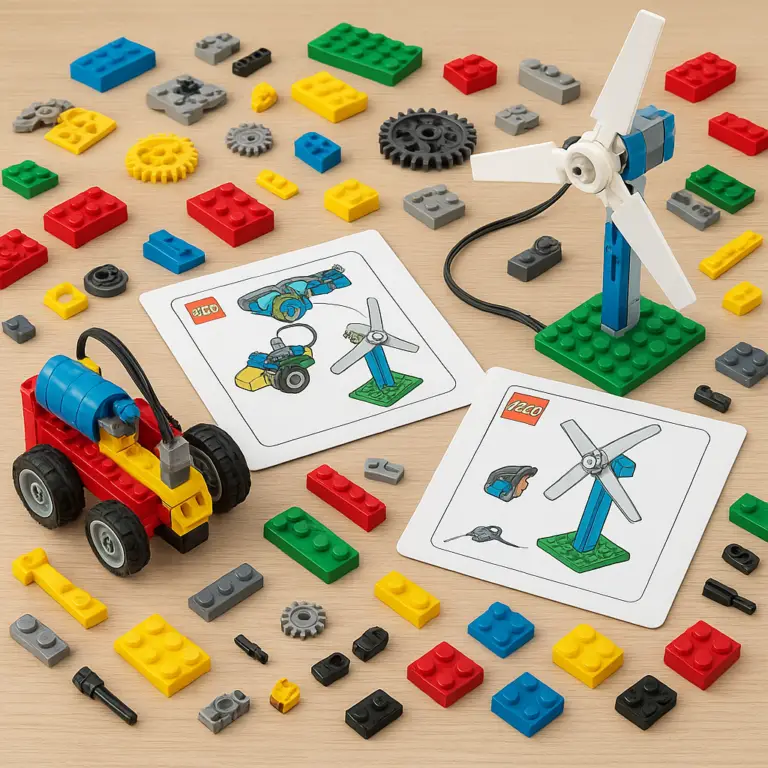
- LEGO Education SPIKE Prime and WeDo 2.0: These educational platforms, while distinct from the main Technic theme, heavily utilize Technic elements and are designed specifically for teaching robotics and coding in classrooms and at home. They’re perfect for introducing younger builders to computational thinking and problem-solving through hands-on projects.
From simple gears to complex algorithms, the evolution of LEGO Technic robots showcases a continuous drive to inspire the next generation of engineers and innovators. It’s a journey that keeps getting more exciting, and we can’t wait to see what comes next!
🤖 Top 10 LEGO Technic Robot Sets You Must Build in 2024
Alright, gearheads and coders, this is where the rubber meets the road! Our Toy Brands™ team has put together a definitive list of the top 10 LEGO Technic robot sets (and some incredibly robot-like ones!) that you absolutely must check out in 2024. We’ve built them, programmed them, and sometimes even crashed them (oops! 😅), so you’re getting the real lowdown from both kid and parent perspectives.
We’re including a mix of explicit robot kits and advanced Technic sets that embody robotic principles through their complex mechanics and app control. Why? Because the line between a “robot” and a “highly automated, programmable machine” is wonderfully blurry in the Technic world!
Here’s our breakdown:
1. LEGO Technic Robot Inventor 51515
This is the undisputed champion of modern LEGO Technic robotics! It’s the spiritual successor to Mindstorms and a powerhouse for learning.
| Aspect | Rating (1-10) |
|---|---|
| Design | 9 |
| Functionality | 10 |
| Build Difficulty | 8 |
| Play Value | 10 |
| Educational Value | 10 |
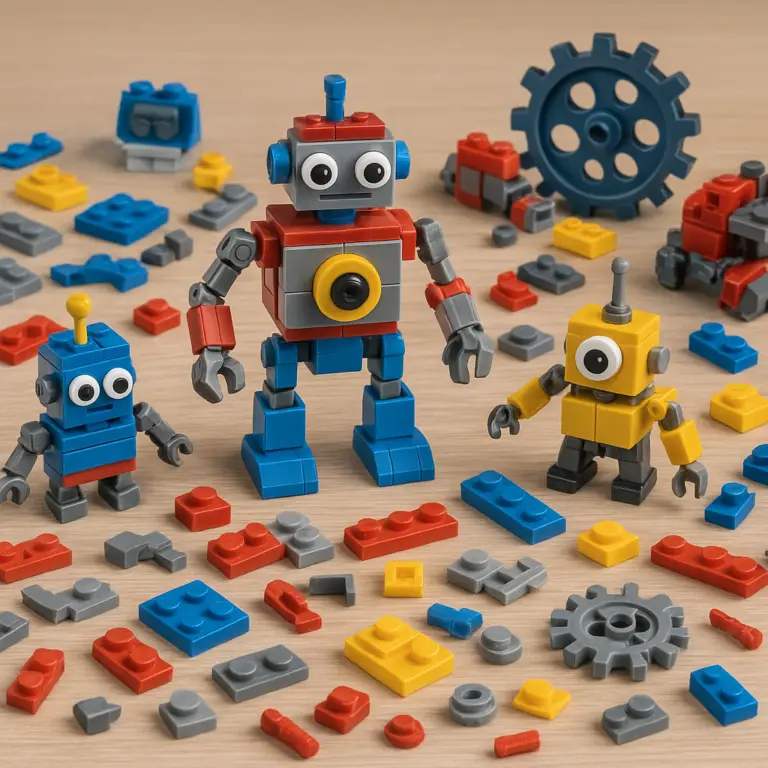
Our Take: The Robot Inventor set is a dream come true for anyone serious about robotics. It comes with five unique robot models you can build and program, each with distinct personalities and capabilities. From Charlie, the dancing robot, to Tricky, the sports bot, there’s so much to explore. The hub, motors, and sensors are robust, and the accompanying app makes programming a breeze with both block-based coding and Python support.
Leo (14) says, “This set is amazing! I built Gelo, the walking robot, and then I customized it to pick up my socks. My mom wasn’t thrilled about the socks, but she was impressed with the robot!” Our parent team loves how it seamlessly integrates complex engineering with approachable coding, making it a fantastic investment in STEM learning.
Features & Benefits:
- Versatile Hub: The intelligent hub features 6 input/output ports, a 6-axis gyro/accelerometer, and a speaker.
- Powerful Motors: Includes 4 medium angular motors for precise movement.
- Advanced Sensors: Comes with a color sensor and a distance sensor with an integrated light.
- Intuitive App: The LEGO® MINDSTORMS® Robot Inventor app offers a drag-and-drop coding interface based on Scratch, plus Python for advanced users.
- Endless Creativity: The parts are fully compatible with other LEGO Technic elements, allowing for limitless custom creations.
Drawbacks:
- Can be a significant investment.
- Requires a compatible smart device for programming.
👉 CHECK PRICE on:
- LEGO Technic Robot Inventor 51515: Amazon | Walmart | LEGO Official Website
2. LEGO MINDSTORMS EV3 31313
Though technically retired, the EV3 remains a legendary robotics platform and is still widely used in education and robotics competitions. If you can find it, it’s a treasure!
| Aspect | Rating (1-10) |
|---|---|
| Design | 8 |
| Functionality | 9 |
| Build Difficulty | 8 |
| Play Value | 9 |
| Educational Value | 10 |
Our Take: The EV3 was the go-to robotics kit for years, and for good reason. It’s incredibly robust, with a powerful programmable brick, multiple motors, and a variety of sensors. The software is comprehensive, allowing for complex programming. Many schools and robotics clubs still use EV3, so there’s a huge community and tons of online resources.
“My first real robot was an EV3,” recalls Maya (12). “It taught me so much about loops and conditional statements. It felt like I was building a real computer!” Parents appreciate its durability and the depth of learning it offers, making it a fantastic choice for serious young roboticists.
Features & Benefits:
- Intelligent EV3 Brick: The central processing unit with a monochrome display, speaker, and ports for motors and sensors.
- Multiple Motors: Includes 3 interactive servo motors (2 large, 1 medium) for precise control.
- Variety of Sensors: Comes with a touch sensor, color sensor, and infrared sensor with a remote beacon.
- Extensive Software: Drag-and-drop programming environment (based on LabVIEW) for Windows/Mac.
- Large Community: Abundant online tutorials, projects, and competition resources.
Drawbacks:
- Officially retired, so availability might be limited to secondary markets.
- Software is desktop-based, not app-based like newer systems.
👉 Shop LEGO MINDSTORMS EV3 on:
3. LEGO Education SPIKE Prime 45678
Designed primarily for educational settings, SPIKE Prime is a fantastic robotics platform that leverages Technic elements for robust builds and engaging STEM learning.
| Aspect | Rating (1-10) |
|---|---|
| Design | 8 |
| Functionality | 9 |
| Build Difficulty | 7 |
| Play Value | 9 |
| Educational Value | 10 |
Our Take: SPIKE Prime is a vibrant, accessible entry into robotics, especially for classrooms or dedicated home learners. It uses a colorful, intuitive block-based coding language (based on Scratch) and features a programmable hub, motors, and sensors. The builds are sturdy, and the projects are designed to teach core coding and engineering principles.
“We used SPIKE Prime in our after-school robotics club,” says Sarah (parent). “The kids loved the bright colors and how quickly they could get a robot moving. It’s really good at breaking down complex ideas into manageable steps.” It’s a great bridge between simpler coding toys and more advanced robotics.
Features & Benefits:
- SPIKE Prime Hub: A programmable hub with 6 input/output ports, a 5×5 light matrix, Bluetooth connectivity, and a speaker.
- Precise Motors: Includes 3 angular motors for accurate movement and feedback.
- Versatile Sensors: Comes with a distance sensor, force sensor, and color sensor.
- Curriculum-Focused: Designed with lesson plans and activities for various age groups.
- Robust Technic Parts: Utilizes a wide array of Technic elements for durable and functional models.
Drawbacks:
- Higher price point due to its educational focus.
- Not typically found in standard toy stores; often purchased through educational suppliers.
👉 Shop LEGO Education SPIKE Prime on:
- LEGO Education SPIKE Prime 45678: Amazon | LEGO Education Official Website
4. LEGO Education WeDo 2.0 45300
For younger builders taking their first steps into robotics, WeDo 2.0 is an excellent, simplified platform that still uses Technic parts.
| Aspect | Rating (1-10) |
|---|---|
| Design | 7 |
| Functionality | 7 |
| Build Difficulty | 5 |
| Play Value | 8 |
| Educational Value | 9 |
Our Take: WeDo 2.0 is perfect for introducing kids aged 7-10 to basic robotics and coding. The builds are simpler, and the programming interface is very visual and intuitive. It’s less about complex mechanisms and more about understanding cause and effect, and how to make things move and react.
Our youngest, Chloe (7), started with WeDo. “I made a frog that jumped when I clapped!” she beams. “It was super easy to make it do what I wanted.” Parents love that it fosters early computational thinking without being overwhelming.
Features & Benefits:
- Smarthub: A programmable hub with 2 input/output ports and Bluetooth connectivity.
- Motor and Sensors: Includes a medium motor, motion sensor, and tilt sensor.
- Simple Software: Drag-and-drop, icon-based programming for tablets and computers.
- Engaging Projects: Comes with guided projects that introduce scientific concepts.
- Durable Parts: Uses a mix of classic LEGO bricks and Technic elements.
Drawbacks:
- Limited complexity compared to Mindstorms or Robot Inventor.
- Primarily for younger children, so older kids might quickly outgrow it.
👉 Shop LEGO Education WeDo 2.0 on:
- LEGO Education WeDo 2.0 45300: Amazon | LEGO Education Official Website
5. LEGO Technic App-Controlled Transformation Vehicle 42140
While not a traditional “robot,” this set is a masterclass in app-controlled robotic movement and transformation, making it incredibly robot-like in its functionality.
| Aspect | Rating (1-10) |
|---|---|
| Design | 9 |
| Functionality | 9 |
| Build Difficulty | 7 |
| Play Value | 9 |
| Educational Value | 8 |
Our Take: This set is pure genius! It builds into two different vehicles (a racer and an exploration vehicle) that can flip over and transform with the push of a button in the Control+ app. The way the motors and gears work together to achieve this seamless transformation is truly robotic. It’s a fantastic way to understand complex mechanical linkages and remote control.
“It’s like having two robots in one!” exclaims Leo. “The transformation is so smooth, it feels like magic, but it’s all gears and motors.” Our parent team sees this as an excellent example of applied robotics, showing how complex systems can be controlled remotely.
Features & Benefits:
- 2-in-1 Build: Create a tracked racer or an exploration vehicle.
- App-Controlled: Uses the LEGO Technic CONTROL+ app for driving and transforming.
- Realistic Movement: Features 2 large motors and a hub for powerful, precise control.
- Innovative Transformation: The vehicle flips over to reveal the second model, demonstrating clever engineering.
- Suspension System: Independent suspension for tackling rough terrain.
Drawbacks:
- Not programmable in the same way as Robot Inventor; focuses on remote control.
- Requires a smart device for full functionality.
👉 CHECK PRICE on:
- LEGO Technic App-Controlled Transformation Vehicle 42140: Amazon | Walmart | LEGO Official Website
6. LEGO Technic App-Controlled Cat® D11 Bulldozer 42131
This massive, highly detailed set is a marvel of app-controlled automation, showcasing how Technic can replicate real-world heavy machinery with robotic precision.
| Aspect | Rating (1-10) |
|---|---|
| Design | 10 |
| Functionality | 9 |
| Build Difficulty | 10 |
| Play Value | 8 |
| Educational Value | 9 |
Our Take: If you want to experience the sheer power and complexity of a real-world machine brought to life with LEGO Technic, this is it. The Cat D11 Bulldozer is enormous, with multiple motors controlling its tracks, blade, and ripper. Controlling it via the Control+ app feels like operating a miniature robot on a construction site. It’s a challenging build, but incredibly rewarding.
“This thing is a beast!” exclaims Mia. “It’s so cool how I can move the blade up and down, and even rip things with the back claw, all from my phone. It’s like a giant robot doing my bidding!” Parents will appreciate the intricate engineering and the patience it teaches during the build.
Features & Benefits:
- Massive Scale: Over 22 inches long, with incredible detail.
- Advanced Control+ Integration: Features 2 hubs and 4 motors for controlling all functions.
- Realistic Functions: Control the tracks, blade lift/tilt/lower, and ripper lift/lower via the app.
- Authentic Design: Highly detailed replica of the iconic Cat D11 Bulldozer.
- Complex Gearing: A masterclass in Technic gearing and power transmission.
Drawbacks:
- Very high piece count and build complexity, making it a long-term project.
- Primarily remote-controlled, not programmable for autonomous tasks.
👉 CHECK PRICE on:
- LEGO Technic App-Controlled Cat® D11 Bulldozer 42131: Amazon | Walmart | LEGO Official Website
7. LEGO Technic Liebherr R 9800 Excavator 42100
Another titan of the Control+ series, this excavator is a testament to large-scale robotic operation and intricate mechanical design.
| Aspect | Rating (1-10) |
|---|---|
| Design | 10 |
| Functionality | 9 |
| Build Difficulty | 10 |
| Play Value | 8 |
| Educational Value | 9 |
Our Take: The Liebherr R 9800 Excavator is a monumental build that offers an unparalleled experience in controlling a complex machine. With seven motors and two smart hubs, it allows for incredibly precise and realistic movements of the boom, arm, and bucket, all managed through the Control+ app. It’s a fantastic way to understand how multiple motors can be coordinated to perform complex tasks, much like an industrial robot.
“Building this was a marathon, but totally worth it!” says our dad. “The way the app lets you control each part of the arm independently, or even program sequences, is really impressive. It’s like a giant, remote-controlled robot arm.” This set is a deep dive into advanced Technic and the principles of automation.
Features & Benefits:
- Massive Model: One of the largest LEGO Technic sets ever, with over 4,100 pieces.
- 7 Motors & 2 Hubs: Provides immense power and control for all functions.
- Multi-Function Control: Drive, steer, rotate the superstructure, operate the boom, arm, and bucket via the Control+ app.
- Customizable Sequences: The app allows for programming custom movements and sequences.
- Realistic Details: Authentic Liebherr livery and intricate mechanical details.
Drawbacks:
- Extremely long build time and high piece count.
- Requires significant space to display and operate.
👉 CHECK PRICE on:
- LEGO Technic Liebherr R 9800 Excavator 42100: Amazon | Walmart | LEGO Official Website
8. LEGO Technic RC Tracked Racer 42065
This set is a fantastic entry point into remote-controlled Technic and the basics of motorized movement, a crucial stepping stone for understanding robotics.
| Aspect | Rating (1-10) |
|---|---|
| Design | 7 |
| Functionality | 8 |
| Build Difficulty | 6 |
| Play Value | 8 |
| Educational Value | 7 |
Our Take: The RC Tracked Racer is a fun, fast, and relatively straightforward build that introduces builders to the Powered Up system (though it uses the older IR remote, it can be upgraded). It’s all about speed and maneuverability, demonstrating how two motors can be used to drive and steer a tracked vehicle. It’s a great way to get hands-on with motorized functions before diving into complex programming.
“This was my first remote-control LEGO set,” says Maya. “It was so much fun racing it around the house! It taught me how tracks work and how to make something turn by controlling the motors separately.” It’s a solid choice for those looking for an engaging, action-packed Technic experience.
Features & Benefits:
- Fast & Agile: Features two powerful motors for high-speed action and 360-degree turns.
- Tracked Movement: Excellent for understanding how tracked vehicles navigate different terrains.
- Remote Control: Comes with an infrared remote control for easy operation.
- 2-in-1 Model: Rebuilds into an RC Off-Road Truck.
- Good Introduction: A great way to experience motorized Technic without complex programming.
Drawbacks:
- Uses older IR remote control, which can be less reliable than Bluetooth.
- No programmable hub or sensors included.
👉 CHECK PRICE on:
9. LEGO Technic Extreme Adventure 42069
While not a robot, this set is an incredible showcase of advanced mechanical engineering that forms the backbone of complex robotic systems. It’s a fantastic platform for understanding how real-world mechanisms work.
| Aspect | Rating (1-10) |
|---|---|
| Design | 9 |
| Functionality | 8 |
| Build Difficulty | 9 |
| Play Value | 7 |
| Educational Value | 8 |
Our Take: The Extreme Adventure is a beast of an off-roader, packed with intricate mechanical functions. It features working steering, suspension, a winch, and even a lifting roof tent. While it doesn’t come with motors or programming out of the box, it’s an ideal candidate for motorization and customization, making it a perfect base for a custom robot project. Understanding its complex gearing and suspension is crucial for designing your own advanced robots.
“This set taught me so much about gearboxes and differentials,” says Leo. “It’s not a robot, but it’s like a masterclass in how to build the body of a robot that can handle anything.” Our parent team sees it as a fantastic way to deepen mechanical understanding before adding the “brains.”
Features & Benefits:
- Complex Mechanics: Features working steering, independent suspension, opening doors, a winch, and a lifting roof tent.
- Detailed Engine: Replicated V8 engine with moving pistons.
- Customization Potential: Excellent base for adding Powered Up motors and a hub for remote control or autonomous functions.
- Challenging Build: Offers a rewarding building experience for experienced Technic fans.
- 2-in-1 Model: Rebuilds into a Mobile Base Vehicle.
Drawbacks:
- No motors or programmable elements included; requires separate purchase for robotics.
- More focused on mechanical realism than interactive play.
👉 CHECK PRICE on:
10. LEGO Technic Mobile Crane 42108
Another excellent example of complex mechanical control and power transmission, the Mobile Crane demonstrates principles vital for robotic arms and automated systems.
| Aspect | Rating (1-10) |
|---|---|
| Design | 8 |
| Functionality | 8 |
| Build Difficulty | 8 |
| Play Value | 7 |
| Educational Value | 8 |
Our Take: The Mobile Crane is a fantastic set for understanding how multiple functions can be controlled from a central gearbox. It features working steering, outriggers, a telescoping boom, and a winch, all operated manually. This hands-on experience with levers, gears, and linkages is invaluable for anyone aspiring to build robotic arms or other complex automated systems. It’s a great way to learn the “hardware” before adding the “software.”
“I loved figuring out how all the gears made the crane arm go up and down,” says Mia. “It’s like a giant puzzle, and when it works, it’s super satisfying.” Parents appreciate that it teaches fundamental engineering principles in a tangible way.
Features & Benefits:
- Multi-Function Control: Operate steering, outriggers, telescoping boom, and winch.
- Complex Gearbox: Learn about power take-offs and how to select different functions.
- Realistic Movement: Experience the mechanics of a real mobile crane.
- Detailed Design: Authentic look and feel of a modern crane.
- Motorization Potential: Can be easily motorized with separate Powered Up components for remote control.
Drawbacks:
- No motors or programmable elements included; requires separate purchase for robotics.
- Manual operation, not app-controlled out of the box.
👉 CHECK PRICE on:
A Note on Third-Party Compatibility: While our list focuses on official LEGO Technic sets, it’s worth noting that the world of LEGO-compatible robotics is vast! Sites like Robot-Academy.com offer kits like the LEGO mBot2 with LEGO components and LEGO-based Arduino Robots. These are fantastic for expanding your horizons, integrating different programming platforms, and pushing the boundaries of what you can build with Technic parts. As Robot-Academy.com states, “Create innovative designs with mBot2 and LEGO parts.” We’ll dive deeper into these alternatives later!
The “Level 1 to 100 LEGO Robots!” Video: Your Next Inspiration!
Speaking of custom builds and pushing boundaries, you absolutely have to check out the video “Level 1 to 100 LEGO Robots!” by Brick Science. It’s embedded right above this article and is a fantastic showcase of what’s possible, from simple motorized contraptions to incredibly complex, multi-functional robots. Watching it will give you a ton of ideas for your own projects and really highlight the creative potential of LEGO Technic robotics. Watch the featured video here!
🛠️ How to Build and Program Your LEGO Technic Robot: A Step-by-Step Guide
So, you’ve got your shiny new LEGO Technic robot set, or maybe a pile of Technic bricks and a dream! What’s next? Building and programming your robot is where the real fun begins. It’s a journey that combines the tactile satisfaction of construction with the logical challenge of coding. Don’t worry, we’ll guide you through it, step by step, with insights from our Toy Brands™ team!
Step 1: The Build – Following Instructions or Freeform Creativity?
This is where your robot takes physical form!
✅ Option A: Following the Official Instructions (Recommended for Beginners)
Most LEGO Technic robot sets come with incredibly detailed, visual instructions. This is the best place to start, especially if you’re new to Technic or robotics.
- Unbox and Organize: Lay out all your pieces. Many builders (like our meticulous dad!) sort pieces by color, type, or size. This saves a ton of time later. “A messy build is a slow build,” he always says.
- Follow Step-by-Step: LEGO instructions are renowned for their clarity. Take your time, double-check each step, and make sure connections are firm. Technic builds often involve precise placement of pins and axles.
- Understand the Mechanics: As you build, try to understand why certain gears are placed where they are, or how a linkage creates a specific movement. This is where the engineering principles really sink in. For example, when building the LEGO Technic Robot Inventor, you’ll see how motors connect to drive wheels or manipulate arms.
- Troubleshooting: If something doesn’t fit or a mechanism feels stiff, go back a few steps. A common mistake is using the wrong length pin or axle. Our kids often get frustrated here, but we remind them that problem-solving is a huge part of engineering!
✅ Option B: Custom Builds (For Experienced Builders)
Once you’ve mastered a few official builds, the world is your oyster! This is where you truly become an inventor.
- Concept & Design: What do you want your robot to do? Draw sketches, plan out the basic structure, and consider the required functions (movement, gripping, sensing). Will it be a walking robot, a robotic arm, or something entirely new?
- Gather Parts: Scavenge your existing Technic collection. Think about the motors, sensors, and hubs you have available. What kind of gears do you need for speed or torque?
- Iterate & Test: Build in stages. Test each mechanism as you go. Does the arm lift correctly? Do the wheels turn smoothly? Our kids often build a basic chassis, test the drive, then add more complexity. “It’s like building a digital game, but in real life!” says Leo.
- Refine: Don’t be afraid to take things apart and rebuild. That’s the essence of engineering design!
Step 2: The Code – Bringing Your Robot to Life!
Once your robot is physically assembled, it’s time to give it a brain! This is where programming comes in. Most LEGO robotics platforms use intuitive, block-based coding environments.
-
Download the App/Software:
- LEGO Technic Robot Inventor: Download the LEGO® MINDSTORMS® Robot Inventor app (available for iOS, Android, Windows, macOS).
- LEGO MINDSTORMS EV3: Download the EV3 Software (desktop application for Windows/macOS).
- LEGO Education SPIKE Prime: Download the LEGO® Education SPIKE™ App.
- LEGO Education WeDo 2.0: Download the LEGO® Education WeDo 2.0 App.
- LEGO Technic Control+ Sets: Download the LEGO Technic CONTROL+ app.
-
Connect Your Hub:
- Most modern LEGO hubs (Robot Inventor, SPIKE Prime, WeDo 2.0, Control+ hubs) connect wirelessly via Bluetooth to your smart device or computer. Follow the in-app instructions to pair.
- Older EV3 bricks connect via USB cable or Bluetooth (which can be a bit trickier).
-
Explore the Programming Interface:
- Block-Based Coding: This is the most common and beginner-friendly method. You drag and drop colorful blocks that represent commands (e.g., “Move Forward,” “Turn Motor A,” “Wait for Touch Sensor”). It’s like building with digital bricks!
- Event-Driven Programming: Most LEGO apps use an event-driven model. You tell the robot to do something “when” an event happens (e.g., “When button pressed,” “When color sensor sees red”).
- Sequencing: Arrange your blocks in a logical order to create a sequence of actions.
Here’s a simplified look at how different platforms approach programming:
Platform Primary Interface Advanced Options Key Features Robot Inventor Scratch-based blocks Python Intuitive, versatile, supports complex logic MINDSTORMS EV3 LabVIEW-based blocks C++, Java, Python Powerful, extensive, good for competitions SPIKE Prime Scratch-based blocks Python Engaging, curriculum-focused, easy to learn WeDo 2.0 Icon-based blocks N/A Simplest, visual, for very young learners Control+ App Pre-programmed controls N/A Remote control, some sequence recording -
Write Your First Program (Hello, World! for Robots):
- Start simple! Make your robot move forward for 1 second.
- Add a turn.
- Incorporate a sensor: “Move forward until the touch sensor is pressed, then stop.”
- Chloe (7) loves making her WeDo robot roar when she claps. “It’s like I’m teaching it tricks!” she giggles.
-
Download and Run:
- Once your program is ready, download it to the robot’s hub.
- Press the “Run” button in the app or on the hub itself.
- Watch your creation come to life!
-
Debug and Iterate:
- Did it do what you expected? Probably not perfectly the first time! This is debugging, a critical skill in programming.
- “Why isn’t it turning?” “Is the motor plugged into the right port?” “Did I tell it to turn enough?” These are common questions.
- Adjust your code, re-download, and test again. This iterative process is how you learn and refine your robot’s behavior. Our parent team emphasizes that patience and persistence are key here.
Building and programming a LEGO Technic robot is a journey of discovery. You’ll learn about mechanics, electronics, and coding, all while having a blast. And remember, the “Level 1 to 100 LEGO Robots!” video shows just how far you can push these concepts with creativity and a bit of coding know-how!
🎮 Best LEGO Technic Robot Controllers and Apps for Kids and Parents
So, you’ve built your awesome LEGO Technic robot, but how do you make it go? That’s where the controllers and apps come in! These digital interfaces are the brains and remote controls for your brick-built buddies. Our Toy Brands™ team has spent countless hours tapping, swiping, and coding with these apps, and we’re ready to share our favorites for both kids and parents.
Official LEGO Apps: The Core Experience
LEGO has done a fantastic job creating user-friendly apps that cater to different age groups and complexity levels. These are your go-to for official sets.
1. LEGO® MINDSTORMS® Robot Inventor App (for Robot Inventor 51515)
- Target Audience: Ages 10+, intermediate to advanced builders and coders.
- Our Take: This app is a powerhouse! It’s beautifully designed, intuitive, and offers a fantastic balance between ease of use and powerful functionality. Based on Scratch, the block-based coding is super accessible, but the option to switch to Python for more advanced users is a huge plus. It includes guided projects for the five official models and a free-build canvas for your own creations.
- Leo (14) loves the Python integration: “It’s awesome that I can learn real coding languages right in the LEGO app. It feels like I’m getting a head start on computer science!”
- Parents appreciate the structured learning path and the clear instructions for each robot. It’s a comprehensive platform for serious robotics.
- Key Features:
- Block-based coding (Scratch-like): Drag-and-drop interface.
- Python coding: For advanced users.
- Built-in tutorials and challenges: Guides you through programming concepts.
- Remote control interface: For direct control of your robots.
- Customizable dashboards: Create your own control layouts.
- Availability: iOS, Android, Windows 10, macOS.
- Download: LEGO Robot Inventor App
2. LEGO® MINDSTORMS® EV3 Software (for MINDSTORMS EV3 31313)
- Target Audience: Ages 10+, intermediate to advanced builders and coders (especially for education/competitions).
- Our Take: While desktop-based and a bit older, the EV3 software is incredibly robust and powerful. It uses a graphical programming language based on LabVIEW, which is widely used in engineering. This software allows for very complex programs and is a staple in many robotics competitions.
- Maya (12) spent hours with this software: “It felt like I was building a flowchart for my robot. It was challenging but so rewarding to see complex programs work.”
- Parents value its depth and the logical thinking it promotes, making it a strong educational tool, even if it’s less ‘flashy’ than newer apps.
- Key Features:
- Graphical programming environment (LabVIEW-based): Highly detailed and powerful.
- Data logging: Record sensor data.
- Sound editor: Customize robot sounds.
- Firmware updates: Keep your EV3 brick up-to-date.
- Extensive documentation and community support.
- Availability: Windows, macOS (desktop application).
- Download: LEGO MINDSTORMS EV3 Software
3. LEGO® Education SPIKE™ App (for SPIKE Prime 45678)
- Target Audience: Ages 8+, beginners to intermediate, especially in educational settings.
- Our Take: The SPIKE App is bright, engaging, and incredibly user-friendly. It’s designed to make coding fun and accessible, with a strong focus on curriculum-aligned projects. The Scratch-based interface is easy for kids to pick up, and the app provides clear instructions and challenges.
- Sarah (parent) says, “This app is fantastic for classrooms. The guided projects are well-thought-out, and the kids quickly grasp coding concepts.”
- Chloe (7) found it easy to use: “The colorful blocks make it fun, and I can make my robot do cool things without getting stuck.”
- Key Features:
- Scratch-based block coding: Visually appealing and easy to learn.
- Curriculum units: Integrated lesson plans and activities.
- Guided projects: Step-by-step building and coding instructions.
- Multi-platform support: Works on tablets and computers.
- Availability: iOS, Android, Windows 10, macOS, Chrome OS.
- Download: LEGO Education SPIKE App
4. LEGO® Education WeDo 2.0 App (for WeDo 2.0 45300)
- Target Audience: Ages 7+, young beginners.
- Our Take: This is the simplest of the LEGO robotics apps, perfect for introducing very young children to coding and robotics concepts. The icon-based, drag-and-drop interface is incredibly intuitive, focusing on cause and effect.
- “It’s so simple, even I can use it!” says Chloe. “I can make my robot move and make sounds just by putting pictures together.”
- Parents love how it demystifies coding for little ones, building foundational skills without frustration.
- Key Features:
- Icon-based block coding: Extremely visual and intuitive.
- Guided projects: Focus on scientific inquiry and engineering.
- Simple interface: Designed for young learners.
- Availability: iOS, Android, Windows 10, macOS, Chrome OS.
- Download: LEGO Education WeDo 2.0 App
5. LEGO Technic CONTROL+ App (for Control+ Sets like 42140, 42131, 42100)
- Target Audience: Ages 9+, remote control enthusiasts.
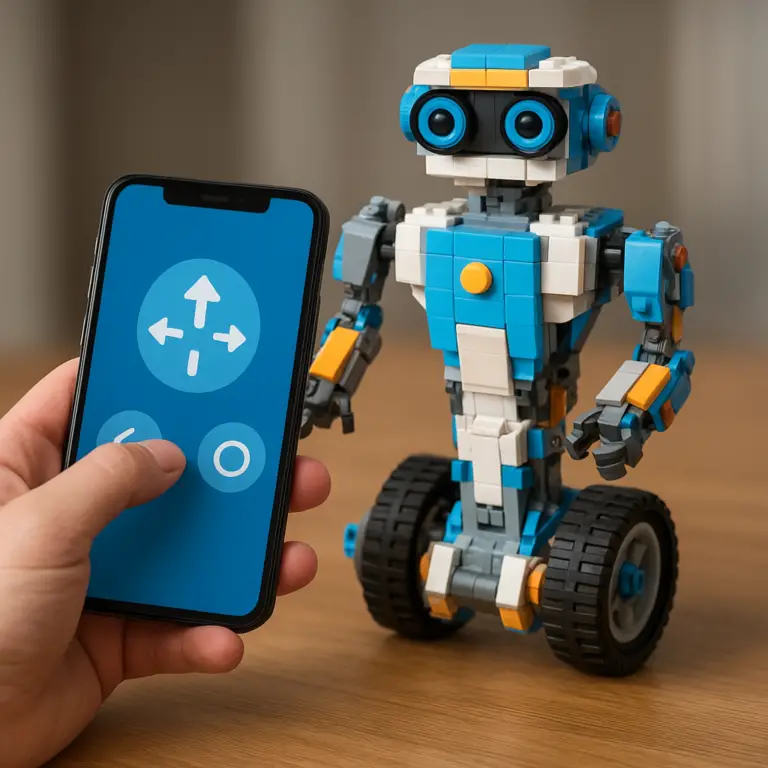
- Our Take: This app transforms your smart device into a sophisticated remote control for large, motorized Technic sets. While it doesn’t offer freeform programming like the robotics apps, it provides incredibly precise control over multiple functions and even allows for recording and replaying sequences of movements. It’s all about the driving and operating experience.
- Mia (11) loves the realistic dashboards: “It feels like I’m in the cockpit of a real bulldozer! The controls are super responsive.”
- Parents appreciate the detailed digital dashboards and the ability to fine-tune controls, enhancing the play experience of these complex models.
- Key Features:
- Realistic control dashboards: Mimic real vehicle controls.
- Multi-function control: Operate multiple motors simultaneously.
- Sequence recording: Record and replay complex movements.
- Challenges and achievements: Adds gamification to the experience.
- Availability: iOS, Android.
- Download: LEGO Technic CONTROL+ App
Third-Party Controllers and Software: Expanding Your Horizons
For those looking to push beyond official LEGO platforms, there are exciting third-party options that integrate with LEGO Technic parts.
Makeblock mBlock Software (for mBot2 with LEGO Components)
- Target Audience: Ages 8+, intermediate coders interested in diverse hardware.
- Our Take: If you’re exploring kits like the LEGO mBot2 with LEGO components from Robot-Academy.com, you’ll likely use Makeblock’s mBlock software. It’s a Scratch-based graphical programming environment that also supports Python. It’s designed to control Makeblock hardware, but its compatibility with LEGO components makes it a versatile tool for hybrid builds.
- “It’s cool how you can mix and match parts,” says Leo. “Using mBlock with LEGO bricks opens up a lot of new possibilities for sensors and motors that aren’t official LEGO.”
- Key Features:
- Scratch-based and Python coding.
- Supports Makeblock hardware and LEGO components.
- AI and IoT integration: For advanced projects.
- Online community and resources.
- Availability: Windows, macOS, iOS, Android, Chrome OS.
- Learn More: Makeblock mBlock Software
Arduino IDE (for LEGO-based Arduino Robots)
- Target Audience: Ages 13+, advanced coders and electronics enthusiasts.
- Our Take: For the true DIY roboticist, integrating LEGO Technic with an Arduino board (as seen with kits from Robot-Academy.com) opens up a world of possibilities. Arduino uses text-based C++ programming, offering ultimate control and flexibility. This is for those who want to understand every line of code and integrate a wider range of sensors and actuators.
- Our dad, who tinkers with electronics, finds this fascinating: “Arduino lets you go deep into the actual electronics and programming. It’s a steeper learning curve, but the control you get is unparalleled for custom robotics.”
- Key Features:
- Text-based C++ programming.
- Open-source hardware and software.
- Vast community and libraries.
- Integrates with a huge array of electronic components.
- Availability: Windows, macOS, Linux.
- Learn More: Arduino IDE
Choosing the right controller and app depends on your set, your age, and your coding aspirations. Whether you stick with the intuitive official LEGO apps or venture into the open-source world of Arduino, each platform offers a unique pathway to bringing your LEGO Technic robots to life!
⚙️ Essential LEGO Technic Robot Parts and Accessories Explained
Building a LEGO Technic robot is like being a mad scientist and an engineer rolled into one! But to truly bring your creations to life, you need to understand the fundamental components that make them tick. Beyond the basic beams and pins, there’s a whole universe of specialized parts that are crucial for robotics. Our Toy Brands™ team has broken down the essential LEGO Technic robot parts and accessories so you know exactly what you’re working with.
The Brains: Intelligent Hubs and Bricks
These are the central processing units of your robot, where your code runs and all the other components connect.
- LEGO Technic Hub (Powered Up Hub): This is the heart of modern LEGO Technic robots like the Robot Inventor and Control+ sets. It’s a smart brick with multiple input/output ports, Bluetooth connectivity, and often an accelerometer/gyro sensor. It powers motors and reads sensors.
- Why it’s essential: It’s the “brain” that executes your code and controls everything.
- Our Take: “The Powered Up Hubs are so much more compact and easier to integrate than the old EV3 brick,” says Leo. “Bluetooth connectivity is a game-changer for programming on the go.”
- 👉 Shop Powered Up Hubs: Amazon search for LEGO Powered Up Hub | LEGO Official Website (Powered Up)
- EV3 Intelligent Brick: The core of the MINDSTORMS EV3 system. It’s a powerful programmable brick with a monochrome display, speaker, and ports for motors and sensors.
- Why it’s essential: A robust, standalone computer for your robot.
- Our Take: “It’s a bit bulky, but super reliable,” notes our dad. “Great for complex programs and competitions where you need a dedicated screen.”
- SPIKE Prime Hub: The central unit for LEGO Education SPIKE Prime. It features a 5×5 light matrix, speaker, Bluetooth, and 6 input/output ports.
- Why it’s essential: Combines processing power with visual feedback and sound.
- Our Take: “The light matrix is awesome for displaying emotions or simple messages on your robot,” says Chloe.
The Muscles: Motors
Motors provide the power to move your robot, whether it’s driving wheels, lifting arms, or spinning gears.
- Powered Up Motors (Medium Angular, Large Angular): These are the modern motors used with Powered Up hubs. They offer precise control, speed, and position feedback.
- Why they’re essential: They are the actuators that convert electrical energy into mechanical motion.
- Our Take: “The angular motors are super precise,” says Leo. “You can tell them to turn exactly 90 degrees, which is great for robotic arms.”
- 👉 Shop Powered Up Motors: Amazon search for LEGO Powered Up Motor | LEGO Official Website (Powered Up)
- EV3 Servo Motors (Large, Medium): Used with the EV3 brick, these motors provide accurate speed and position control.
- Why they’re essential: Reliable and powerful for a wide range of robotic tasks.
- Our Take: “These motors are workhorses,” says Maya. “They can handle a lot of weight and keep going.”
- WeDo 2.0 Medium Motor: A simpler motor for younger builders, used with the WeDo 2.0 Smarthub.
- Why it’s essential: Provides basic movement for entry-level robots.
The Senses: Sensors
Sensors allow your robot to perceive its environment and react to it, making it truly intelligent.
- Distance Sensor (Ultrasonic Sensor): Measures the distance to objects using sound waves.
- Why it’s essential: For obstacle avoidance, object detection, and navigation.
- Our Take: “My robot can stop before it crashes into the wall thanks to this!” exclaims Chloe.
- 👉 Shop LEGO Sensors: Amazon search for LEGO Robot Sensors
- Color Sensor: Detects different colors and light intensity.
- Why it’s essential: For line-following robots, sorting objects, or reacting to color cues.
- Our Take: “We made a robot that sorted M&Ms by color using this,” Leo grins. (Don’t worry, we cleaned it thoroughly!)
- Touch Sensor (Force Sensor): Detects when it’s pressed or released.
- Why it’s essential: For bumper robots, button presses, or detecting contact.
- Our Take: “It’s the simplest sensor but so useful for making robots react to touch,” says Mia.
- Gyro Sensor: Measures rotational motion and orientation.
- Why it’s essential: For balancing robots, precise turns, and maintaining direction.
- Our Take: “This is key for making a robot drive straight or turn exactly 90 degrees,” explains our dad.
- Infrared Sensor (EV3): Detects infrared light, often used with a remote beacon for remote control or object detection.
- Why it’s essential: For remote control and basic object sensing.
The Structure: Technic Elements
These are the building blocks that give your robot its physical form, strength, and mechanical functions.
- Beams: The primary structural elements, often with holes for pins and axles.
- Pins: Connect beams and other elements, allowing for rotation or fixed connections.
- Axles: Rods that transmit rotational motion, often used with gears and wheels.
- Gears: Crucial for transmitting power, changing speed, and altering torque. They come in various sizes and types (spur, bevel, worm).
- Why they’re essential: The heart of mechanical advantage and motion transfer.
- Our Take: “Understanding gears is like learning the alphabet of mechanics,” says our dad. “It’s fundamental to making anything move efficiently.”
- Connectors: Specialized pieces that allow for complex angles and structural integrity.
- Wheels & Tracks: For mobility. Tracks provide excellent traction on uneven surfaces.
- Pneumatics: Air-powered cylinders and pumps for creating powerful, realistic movements (e.g., robotic arms, grippers).
- Why they’re essential: For heavy lifting and realistic hydraulic-like actions.
- Our Take: “Pneumatics are super cool because they feel so real,” says Leo. “You can make a powerful gripper with just air!”
Accessories and Expansion Packs
To truly customize and enhance your LEGO Technic robot, consider these additions:
- Rechargeable Batteries: Essential for sustained play and reducing waste. Many hubs use AA batteries, but rechargeable packs are available.
- Our Take: “Definitely get rechargeable batteries,” advises our mom. “It saves money and the planet!”
- LED Lights: Add visual flair or provide feedback.
- Custom Cables: For connecting components over longer distances.
- Third-Party Add-ons: Sites like Robot-Academy.com offer expansion sets like the Technic Treasure Chest or Six-legged Robot Add-on Pack. These can provide specialized parts, extra sensors, or unique structural elements that aren’t typically found in official LEGO sets, allowing you to build even more complex and innovative robots.
- Why they’re essential: To expand capabilities beyond standard LEGO offerings.
- Our Take: “These add-ons are great for when you’ve exhausted your official parts and want to try something really different, like a multi-legged walker,” says Leo.
👉 Shop LEGO Technic Parts & Accessories:
- General LEGO Technic Parts: Amazon search for LEGO Technic Parts | LEGO Pick a Brick Official Website
- Robot Academy Add-ons: Robot Academy Shop (for compatible kits and add-ons)
Understanding these essential components is your key to unlocking the full potential of LEGO Technic robotics. With the right parts and a bit of imagination, you can build anything from a simple line-follower to a complex, autonomous machine!
💡 Creative LEGO Technic Robot Projects and Customizations to Try
Okay, you’ve mastered the basics, built a few official models, and now you’re itching to unleash your inner inventor! This is where LEGO Technic robots truly shine – the ability to customize, innovate, and create something entirely unique. Our Toy Brands™ team, especially the kids, live for these moments of pure, unadulterated building freedom. Get ready to dive into some awesome creative LEGO Technic robot projects and customizations that will push your skills and imagination to the limit!
Why Customize? The Joy of Invention!
Customizing isn’t just about showing off; it’s about:
- Problem-Solving: You encounter new challenges and figure out unique solutions.
- Deepening Understanding: You learn how different parts interact and how to optimize designs.
- Personal Expression: Your robot becomes a reflection of your ideas and creativity.
- Endless Play: The fun never stops when you can constantly modify and improve your creations.
As the LEGO.com “Robots for Kids” page emphasizes, LEGO robotics “emphasizes creativity, problem-solving, and STEM learning through play.” This is where that really comes alive!
Project Ideas to Spark Your Imagination
Here are some fantastic ideas for your next LEGO Technic robot project, inspired by our own builds and the wider robotics community:
-
The Ultimate BattleBot 🤖💥
- Concept: Design a robust, remote-controlled robot with offensive and defensive capabilities. Think spinning blades, flippers, or powerful pushers.
- Customization Tips: Focus on durability, weight distribution for stability, and powerful motors for speed and weapon activation. Experiment with different weapon designs.
- Our Anecdote: Leo and Maya once built two competing BattleBots. Leo’s “Spinner of Doom” had a fast-spinning horizontal blade, while Maya’s “Pusher-Bot” was designed to flip opponents. Their battles were epic (and sometimes involved flying LEGO pieces!). This is a great way to learn about structural integrity and mechanical advantage.
- Internal Link: This is a perfect project for our Electronic Toys category, as it combines electronics with competitive play!
-
Autonomous Line-Following Robot 🛤️
- Concept: Program a robot to follow a black line on a white surface using a color sensor.
- Customization Tips: Experiment with sensor placement, different line-following algorithms (e.g., proportional control), and adding obstacles for the robot to navigate.
- Learning Focus: This project is fantastic for understanding sensor feedback, control loops, and basic navigation algorithms.
-
Robotic Arm with Gripper 🦾
- Concept: Build a multi-jointed arm that can pick up and move objects.
- Customization Tips: Focus on strong gear ratios for lifting power, precise motor control for smooth movements, and a well-designed gripper mechanism. You could even add a distance sensor to detect objects.
- Our Anecdote: Our dad helped Leo build a robotic arm that could sort small LEGO bricks. “It was tricky getting the angles right and making sure the motors had enough torque, but the precision was amazing once it worked,” he recalls. This teaches about kinematics and actuator control.
-
Walking Robot (Bipedal or Multi-legged) 🚶 ♀️🕷️
- Concept: Move beyond wheels and create a robot that walks on two, four, or even six legs!
- Customization Tips: This is a challenging but rewarding project. Focus on stable leg designs, synchronized motor movements for balance, and using a gyro sensor for stability.
- Inspiration: The “Level 1 to 100 LEGO Robots!” video (embedded above!) features some incredible walking robots. It’s a great place to see what’s possible and get ideas for your own designs. Watch the featured video here!
-
Remote-Controlled Vehicle with Advanced Functions 🚗💨
- Concept: Take a standard Technic vehicle and add more motors, sensors, and custom programming.
- Customization Tips: Add automated steering, self-parking features, or even a “follow-me” mode using a distance sensor. Integrate pneumatics for realistic functions like lifting dump beds or operating cranes.
- Our Anecdote: Mia once modded her LEGO Technic Rally Car to have working headlights and taillights that turned on automatically in the dark using a light sensor. “It felt like I was making a real smart car!” she said proudly.
-
Automated Sorting Machine 📦
- Concept: Build a robot that can sort objects (e.g., LEGO bricks, small toys) by color, size, or type.
- Customization Tips: This requires a color sensor, a conveyor belt mechanism, and a system of gates or pushers to direct objects into different bins.
- Learning Focus: Excellent for teaching conditional logic, sensor integration, and sequential programming.
Tips for Successful Customization
- Start Simple: Don’t try to build a super-complex robot on your first custom project. Master one new function at a time.
- Plan Ahead: Sketch your ideas, think about the mechanics, and consider the programming logic before you start building.
- Test Iteratively: Build a small section, test it, then add more. This helps you identify and fix problems early.
- Learn from Others: Look at online communities (like LEGO fan sites, YouTube channels, or even our own Building Blocks and Sets section for inspiration) for ideas and techniques.
- Don’t Be Afraid to Fail: Every failed attempt is a learning opportunity! “Sometimes my robots just fall apart, but then I figure out why and make them stronger,” says Leo. That’s the spirit of engineering!
- Document Your Work: Take photos or videos of your creations. Explain your code. This helps you remember what you did and share it with others.
Unleashing your creativity with LEGO Technic robots is one of the most rewarding aspects of this hobby. You’re not just following instructions; you’re becoming an engineer, a programmer, and an artist, all at once! What will your next robot do?
📚 LEGO Technic Robots in STEM Education: Why They Rock
If you’ve been following along, you’ve probably already guessed that LEGO Technic robots are more than just fun toys. They are absolute powerhouses for STEM education (Science, Technology, Engineering, and Mathematics)! Our Toy Brands™ team, both the kids who learn from them and the parents who see the lightbulbs go off, can’t stop raving about their educational value. So, why do these brick-built bots rock so hard in the world of learning? Let’s break it down!
The Power of Play-Based Learning
One of the biggest reasons LEGO Technic robots are so effective is that they make learning feel like play. Kids are naturally curious and love to build. When you combine that with the challenge of making something move and think, you’ve got an irresistible learning experience.
- Engaging & Motivating: “It doesn’t feel like homework at all,” says Maya (12). “I’m just playing with LEGO, but I’m actually learning about gears and coding without even realizing it!” This intrinsic motivation is key to deep learning.
- Hands-On Exploration: Instead of just reading about concepts, kids get to physically build, test, and experiment. This tactile experience solidifies understanding in a way textbooks can’t.
Unpacking the STEM Benefits
Let’s look at how LEGO Technic robots specifically target each area of STEM:
🔬 Science
- Physics in Action: Kids learn about forces, motion, friction, gravity, and energy transfer as they build and operate their robots. Why does a heavy robot need more power? How does a gear train affect speed?
- Sensor Principles: Understanding how light, sound, and touch sensors work introduces basic principles of optics, acoustics, and electronics.
- Observation & Experimentation: Kids naturally observe how their robot behaves, form hypotheses about why it’s not working, and experiment with changes.
💻 Technology
- Computational Thinking: This is huge! Kids learn to break down complex problems into smaller, manageable steps (decomposition), identify patterns, create step-by-step instructions (algorithms), and generalize solutions.
- Programming & Coding: Using block-based or text-based coding, children learn fundamental programming concepts like sequences, loops, conditionals, variables, and functions. This is a crucial skill for the digital age.
- Digital Literacy: Becoming comfortable with apps, software interfaces, and connecting devices via Bluetooth.
⚙️ Engineering
- Design & Construction: From following instructions to designing custom robots, kids engage in the full engineering design process: ideation, prototyping, testing, and refining.
- Mechanical Principles: They learn about gears, levers, linkages, axles, and structural stability. “My robot kept falling over until I figured out how to balance the weight better,” recalls Leo, demonstrating a real engineering challenge.
- Problem-Solving: When a robot doesn’t work as expected, kids must diagnose the issue (debugging) and engineer a solution. This fosters resilience and critical thinking. As LEGO.com’s Technic overview states, the theme focuses on “building skills, engineering principles, and problem-solving.”
- Systems Thinking: Understanding how different components (motors, sensors, hub, code) work together as a cohesive system.
➕ Mathematics
- Measurement & Geometry: Calculating distances, angles, and understanding shapes for stable structures.
- Data Analysis: Interpreting sensor readings, understanding speed, and timing movements.
- Logic & Algorithms: The very foundation of programming is mathematical logic.
- Ratios & Proportions: Especially when working with gears to achieve desired speeds and torque.
Beyond the Core STEM: Developing 21st-Century Skills
The benefits don’t stop at STEM subjects. LEGO Technic robots also cultivate essential 21st-century skills:
- Creativity & Innovation: Encouraging kids to think outside the box and invent new solutions.
- Critical Thinking: Analyzing problems, evaluating solutions, and making informed decisions.
- Collaboration: Working with others on projects, sharing ideas, and troubleshooting together. Our kids often team up on bigger builds, learning to delegate and communicate.
- Communication: Explaining their designs, code, and problem-solving processes.
- Perseverance & Resilience: Overcoming challenges and not giving up when things get tough. “There were so many times I wanted to quit when my code had bugs,” says Maya, “but then I’d fix it, and it felt amazing!”
A Parent’s Perspective: Investing in the Future
From a parent’s point of view, investing in LEGO Technic robots is investing in our children’s future. It’s not just about a toy; it’s about providing a foundation for careers in engineering, technology, and science.
“I’ve seen such a difference in Leo’s problem-solving skills since he started with Mindstorms,” says our mom. “He approaches challenges with a much more logical and systematic mindset now.”
For more insights on nurturing these skills, check out our Educational Toys and Parenting Tips and Advice categories.
In conclusion, LEGO Technic robots are far more than just building sets. They are dynamic, interactive learning platforms that make complex STEM concepts accessible, engaging, and incredibly fun. They truly rock in education, preparing kids for a future where innovation and critical thinking are paramount.
🔍 Troubleshooting Common LEGO Technic Robot Issues
Ah, the joys of robotics! One minute your LEGO Technic robot is performing a perfect dance routine, the next it’s stubbornly refusing to move, or worse, making a grinding noise that sends shivers down your spine. Don’t worry, every builder, from novice to expert, runs into issues. Our Toy Brands™ team has faced (and conquered!) countless robot dilemmas, and we’re here to share our wisdom on troubleshooting common LEGO Technic robot issues. Think of us as your pit crew! 🛠️
The Golden Rule of Troubleshooting: Stay Calm and Systematic!
Before you throw your robot across the room (please don’t!), remember to approach problems systematically. Most issues have simple solutions if you know where to look.
Issue 1: My Robot Isn’t Moving (or Moving Incorrectly)! 🛑
This is probably the most common and frustrating problem.
- ❌ Check Power:
- Problem: The hub/brick isn’t turning on, or motors are weak.
- Solution: Are the batteries dead? Replace them with fresh ones or ensure your rechargeable pack is fully charged. Sometimes, loose battery connections can cause intermittent power.
- Parent Tip: “Always have spare batteries or a charged power bank ready,” advises our mom. “Nothing kills a building session faster than dead batteries!”
- ❌ Check Connections:
- Problem: Motors or sensors aren’t responding.
- Solution: Are all cables securely plugged into the correct ports on the hub/brick? Double-check both ends of the cable. Sometimes a cable might look connected but isn’t fully seated.
- Kid Anecdote: Chloe once spent 15 minutes trying to figure out why her robot wasn’t moving, only to find the motor cable was plugged into a sensor port! “It happens to the best of us!” we told her.
- ❌ Check Mechanical Obstructions:
- Problem: Motors are whirring, but wheels aren’t turning, or an arm is stuck.
- Solution: Is something physically blocking the movement? Are gears meshed correctly? Is an axle bent or rubbing against another part? Sometimes a single misplaced pin can cause significant friction.
- Expert Tip: Spin the wheels/gears manually. If they feel stiff, trace the mechanism back to find the point of friction or blockage.
- ❌ Check Code Logic:
- Problem: The robot moves, but not as expected (e.g., turns left instead of right, stops too early).
- Solution: This is a debugging challenge!
- Review your code line by line (or block by block). Is the sequence correct?
- Are motor directions correct? Sometimes you need to reverse a motor’s direction in the code.
- Are sensor thresholds set correctly? (e.g., “stop when distance < 10cm” – maybe it should be 5cm).
- Use print statements/display blocks: Many apps allow you to display sensor values or variable states on the hub’s screen or in the app, which helps you see what the robot “thinks” is happening.
- Leo’s Wisdom: “My code usually has a bug somewhere. I just go through it slowly, imagining what the robot is doing at each step. It’s like being a detective!”
Issue 2: Connectivity Problems 📶
Your app can’t find the hub, or the connection keeps dropping.
- ❌ Bluetooth Issues:
- Problem: App can’t connect to the hub.
- Solution:
- Ensure Bluetooth is enabled on your smart device/computer.
- Make sure the hub is turned on and within range.
- Try turning the hub off and on again.
- Close and reopen the app.
- If multiple hubs are nearby, ensure you’re trying to connect to the correct one.
- Check if the hub is already connected to another device.
- Parent Tip: Sometimes, other Bluetooth devices (headphones, smartwatches) can interfere. Try disconnecting them temporarily.
- ❌ Firmware Updates:
- Problem: Hub/brick isn’t recognized, or functions are buggy.
- Solution: Ensure your hub’s firmware is up-to-date. LEGO regularly releases updates to fix bugs and improve performance. Check your app or software for firmware update options.
Issue 3: Sensors Aren’t Working Accurately 👁️👂
Your robot isn’t detecting objects, colors, or touch correctly.
- ❌ Environmental Factors:
- Problem: Color sensor misreads colors, distance sensor gives inconsistent readings.
- Solution:
- Color Sensor: Ensure good, consistent lighting. Avoid shadows or very bright direct light. The surface you’re scanning should be flat and non-reflective.
- Distance Sensor: Avoid highly reflective surfaces (like glass or shiny metal) which can confuse ultrasonic sensors. Soft materials (like fabric) can also absorb sound waves, reducing accuracy.
- Light Sensor: Ensure it’s not covered or in direct sunlight/darkness if you’re trying to measure ambient light.
- Mia’s Observation: “My color sensor always got confused by the shiny floor until we put down a matte paper track.”
- ❌ Physical Placement:
- Problem: Sensor isn’t detecting anything.
- Solution: Is the sensor facing the right direction? Is it too high or too low? Is it obstructed by other LEGO parts? Ensure a clear line of sight for distance and color sensors.
- ❌ Calibration:
- Problem: Sensor readings are consistently off.
- Solution: Some sensors (like the color sensor) benefit from calibration in different lighting conditions. Check your app’s settings for calibration options.
Issue 4: Grinding Noises or Stripped Gears 😬
This is a sign of mechanical stress!
- ❌ Overload:
- Problem: Motors are straining, making grinding noises.
- Solution: Is your robot trying to lift too much weight, or push against too much resistance? Reduce the load, or redesign your mechanism to use better gear ratios for more torque.
- Expert Tip: Gears are designed to break or slip before the motor burns out. If you hear grinding, stop immediately and assess the load.
- ❌ Improper Gear Meshing:
- Problem: Gears aren’t engaging correctly, leading to slipping or grinding.
- Solution: Ensure gears are perfectly aligned and meshed. There should be a tiny bit of play, not too tight. A common mistake is using a gear combination that doesn’t allow for proper meshing (e.g., trying to mesh a 24-tooth gear directly with a 40-tooth gear without the correct center distance).
- ❌ Stripped Gears:
- Problem: A gear’s teeth are worn down or broken.
- Solution: Replace the damaged gear. This often happens due to excessive force or improper meshing over time.
Maintenance Tips to Prevent Issues
- Keep it Clean: Dust and debris can interfere with sensors and add friction to gears.
- Store Properly: Keep your LEGO Technic parts organized and protected.
- Handle with Care: Avoid dropping your robot or forcing connections.
- Regular Checks: Periodically inspect cables, connections, and moving parts for wear and tear.
Troubleshooting is an integral part of the robotics journey. It teaches patience, logical thinking, and resilience – skills that extend far beyond LEGO bricks! So, when your robot acts up, take a deep breath, consult this guide, and enjoy the satisfaction of figuring it out.
🧩 Comparing LEGO Technic Robots with Other Robotics Kits
The world of educational robotics is vast and exciting, with many fantastic kits available beyond LEGO Technic. While we absolutely adore our brick-built bots, it’s smart to know what else is out there! Our Toy Brands™ team has explored various platforms, and we’re ready to give you a balanced perspective by comparing LEGO Technic robots with other popular robotics kits. This will help you decide which system is the best fit for your family’s or classroom’s needs.
Why Compare? Finding Your Perfect Fit!
Different robotics kits excel in different areas. Some are better for younger kids, some for advanced coders, and others for specific types of projects. Understanding the landscape helps you make an informed choice.
Key Comparison Factors
When evaluating robotics kits, we typically look at:
- Target Age Group: Who is the kit designed for?
- Building System: What kind of construction method does it use?
- Programming Language: How do you code the robot? (Block-based, text-based, etc.)
- Sensors & Motors: What capabilities does it offer for interaction and movement?
- Complexity & Expandability: How much can you grow with the kit?
- Price Point: What’s the general cost? (We won’t list specific prices, but discuss ranges).
- Community & Resources: How much support is available online?
Comparison Table: LEGO Technic Robots vs. The Competition
Let’s put some popular contenders head-to-head!
| Feature | LEGO Technic Robots (e.g., Robot Inventor, EV3) | VEX IQ | Sphero (e.g., BOLT, indi) | Makeblock (e.g., mBot, Codey Rocky) | Arduino-based Kits (e.g., Elegoo, Robot Academy) |
|---|---|---|---|---|---|
| Target Age | 8+ (WeDo), 10+ (EV3/Inventor) | 8-14 (IQ), 14+ (V5) | 4+ (indi), 8+ (BOLT) | 6+ (Codey Rocky), 8+ (mBot) | 12+ (with guidance), 16+ (independent) |
| Building System | LEGO Technic bricks & elements | Snap-together plastic parts, metal beams | Spherical/car chassis, some modularity | Aluminum beams, plastic parts, LEGO-comp. | Varies (often acrylic, metal, LEGO-comp.) |
| Programming | Block (Scratch/LabVIEW), Python | Block (Scratch-based), Python, C++ | Block (Scratch-based), JavaScript | Block (Scratch-based), Python | Text (C++), Block (Scratch-based) |
| Sensors/Motors | Wide range (color, touch, distance, gyro, IR) | Extensive (color, touch, gyro, distance) | Extensive (LED matrix, gyro, light, IR) | Good range (line-follow, ultrasonic, IR) | Highly customizable (any sensor/motor) |
| Complexity | Medium to High | Medium to High | Low to Medium | Low to Medium | Very High |
| Expandability | Excellent (compatible with all LEGO Technic) | Excellent (competition-focused) | Moderate (accessories, coding) | Good (modules, LEGO-compatible) | Unlimited (open-source) |
| Price Range | Mid to High | Mid to High | Low to Mid | Low to Mid | Low to Mid (for basic kits) |
| Community | Huge, global (FLL, education, hobbyists) | Large (VEX Robotics Competition) | Moderate (education, casual users) | Moderate (education, hobbyists) | Massive (global developer community) |
| Key Strength | Intuitive building, strong STEM, creative freedom | Competition-ready, robust, engineering | Screen-free coding, engaging, durable | Affordable, easy entry, versatile | Ultimate customization, deep learning |
Detailed Comparisons:
1. VEX IQ Robotics
- Similarities to LEGO Technic: Both are modular building systems with programmable brains, motors, and sensors, heavily focused on STEM education and robotics competitions (like FIRST LEGO League for LEGO, and VEX IQ Challenge for VEX). They both offer a good balance of building and coding.
- Differences:
- Building System: VEX IQ uses a snap-together plastic construction system with square holes, which can be faster to assemble and disassemble than Technic pins. It also integrates metal beams for more robust structures, especially for competition.
- Programming: VEXcode IQ offers block-based coding (similar to Scratch) and text-based Python/C++.
- Our Take: “VEX IQ feels more ‘industrial’ and competition-focused,” says Leo. “It’s super sturdy, which is great when your robot gets bumped around. But I still love the creative freedom of LEGO bricks.” Parents might find VEX IQ a bit more structured for competition prep.
2. Sphero (e.g., BOLT, indi)
- Similarities to LEGO Technic: Both aim to teach coding and robotics in an engaging way.
- Differences:
- Building System: Sphero robots are typically self-contained spheres (BOLT) or small car-like robots (indi) with minimal physical building. The focus is almost entirely on coding and interaction. Sphero indi even offers screen-free coding with color tiles for very young learners.
- Programming: Primarily block-based (Scratch-like) with JavaScript options for BOLT.
- Our Take: “Sphero BOLT is super fun for coding challenges and light shows, but you don’t build it like LEGO,” says Mia. “It’s more about programming its movements and lights.” Parents find Sphero great for younger kids or those who prefer coding over extensive building.
3. Makeblock (e.g., mBot, Codey Rocky)
- Similarities to LEGO Technic: Both offer modular building, programmable components, and block-based coding (Scratch-based). Makeblock even has kits like the mBot2 with LEGO components (as mentioned by Robot-Academy.com), which directly integrates with Technic parts.
- Differences:
- Building System: Makeblock uses aluminum beams, plastic parts, and often includes pre-assembled electronic modules. It’s generally quicker to assemble than complex Technic builds.
- Programming: Uses mBlock software (Scratch-based, with Python support).
- Our Take: “Makeblock kits are a great entry point because they’re often more affordable and quicker to build,” says our dad. “The mBot is a fantastic little robot for learning the basics, and the LEGO compatibility is a huge bonus for expanding your parts library.”
4. Arduino-based Kits
- Similarities to LEGO Technic: Both allow for building custom robots, integrating sensors and motors. Some kits, like the Arduino LEGO Robot Kit from Robot-Academy.com, are specifically designed to use LEGO Technic elements.
- Differences:
- Building System: Highly varied, from simple acrylic chassis to full integration with LEGO Technic.
- Programming: Primarily text-based C++ using the Arduino IDE. This is a much steeper learning curve but offers unparalleled control and flexibility.
- Our Take: “Arduino is for when you want to get really serious about electronics and coding,” says Leo. “It’s not as ‘plug-and-play’ as LEGO, but you can literally make anything if you learn it.” Our parent team sees Arduino as the next step for teens or adults who have mastered LEGO robotics and want to dive deeper into electronics and advanced programming. It’s a true open-source platform for innovation.
Which One is Right for You?
- Choose LEGO Technic Robots if: You love the tactile building experience, want to learn mechanical engineering alongside coding, appreciate a huge global community, and value creative freedom with a familiar brick system. They are excellent for a wide range of ages and skill levels.
- Consider VEX IQ if: You’re serious about robotics competitions, prefer a very robust and quick-to-assemble system, and want a strong engineering focus.
- Look at Sphero if: You prioritize coding over building, want a durable and engaging screen-free option (indi) or a versatile coding sphere (BOLT) for younger kids.
- Explore Makeblock if: You’re looking for an affordable entry into robotics, appreciate quicker assembly, and want good integration with LEGO Technic parts for hybrid builds.
- Dive into Arduino if: You’re an older teen or adult, want ultimate control and customization, are eager to learn text-based programming (C++), and want to integrate a vast array of electronic components.
Ultimately, each platform offers a unique pathway into the exciting world of robotics. Many enthusiasts, like our Toy Brands™ team, find joy in exploring multiple systems, leveraging the strengths of each to build increasingly complex and innovative creations!
🌟 Expert Tips for Maximizing Fun and Learning with LEGO Technic Robots
You’ve got the sets, you know the parts, and you’re ready to build and code! But how do you truly unlock the full potential of LEGO Technic robots, both for maximum fun and deep learning? Our Toy Brands™ team, with years of combined experience (and countless hours of brick-sorting!), has put together our top expert tips for maximizing fun and learning with LEGO Technic robots. Get ready to elevate your robotics game!
1. Embrace the “Fail Forward” Mentality 🚀
- Tip: Don’t be afraid to make mistakes, have your robot crash, or see your code fail.
- Why it works: Every “failure” is a learning opportunity. Debugging code and redesigning a faulty mechanism are where the real learning happens. It teaches resilience and problem-solving.
- Our Anecdote: “My first walking robot just flopped over every time,” laughs Leo. “It was frustrating, but then I learned about center of gravity and leg synchronization. Now I can build much better walkers!”
- Parenting Tip: Encourage experimentation and praise effort, not just success. “What did you learn from that?” is a powerful question. For more on this, check out our Parenting Tips and Advice section.
2. Go Beyond the Instructions (Eventually!) 💡
- Tip: While official instructions are great for learning fundamentals, challenge yourself to build your own creations.
- Why it works: This fosters creativity, innovation, and independent thinking. It moves you from following steps to becoming a true engineer.
- Our Anecdote: Mia loves taking a basic car chassis and turning it into a completely different vehicle, adding her own functions. “It’s like having unlimited LEGO, because I can always make something new!”
- Expert Advice: Start with small modifications to existing models, then move on to completely original designs.
3. Join the Community & Share Your Builds 🌐
- Tip: Connect with other LEGO Technic and robotics enthusiasts online and in person.
- Why it works: You’ll find inspiration, get help with challenges, and learn new techniques. Sharing your creations builds confidence and communication skills.
- Where to connect: LEGO fan forums, YouTube channels (like Brick Science!), local robotics clubs, and even social media groups.
- Our Take: “Seeing what other people build on YouTube always gives me new ideas,” says Maya. “And sometimes, they have solutions to problems I’m stuck on!”
4. Understand the “Why,” Not Just the “How” 🤔
- Tip: As you build and code, ask yourself why a particular gear ratio is used, or why a specific code block makes the robot behave a certain way.
- Why it works: This moves beyond rote memorization to true conceptual understanding. It’s the difference between assembling parts and truly grasping engineering principles.
- Parenting Tip: Engage your kids with questions: “What do you think will happen if we change this gear?” or “How could we make it go faster/slower?”
5. Set Challenges & Goals 🏆
- Tip: Give your robot a mission!
- Why it works: Challenges provide purpose and motivation. Whether it’s navigating a maze, picking up specific objects, or competing in a friendly BattleBot match, goals drive innovation.
- Challenge Ideas:
- Build a robot that can draw a specific shape.
- Create an automated pet feeder.
- Design a robot that can climb stairs (even small LEGO ones!).
- Participate in a local robotics competition (like FIRST LEGO League).
- Our Anecdote: Our family often sets “Robot Challenges” on weekends. Last month, it was “build a robot that can deliver a snack from the kitchen to the living room.” Hilarity (and some spilled crumbs) ensued, but everyone learned a ton!
6. Explore Different Programming Concepts 💻
- Tip: Don’t just stick to basic movement. Dive into loops, conditionals, variables, and functions.
- Why it works: Mastering these concepts unlocks more complex and intelligent robot behaviors, deepening your computational thinking skills.
- Expert Advice: Once comfortable with block-based coding, try experimenting with Python if your platform supports it (like Robot Inventor or SPIKE Prime). This is a huge leap into real-world programming.
7. Document Your Projects 📸📝
- Tip: Take photos, videos, and notes of your builds and code.
- Why it works: It helps you remember what you did, troubleshoot past issues, and share your creations with others. It’s also a great way to track your progress and see how far you’ve come!
- Our Take: “I keep a ‘robot journal’ where I sketch ideas and write down my code snippets,” says Leo. “It’s super helpful when I want to revisit an old project.”
8. Integrate with Other LEGO Themes & Parts 🧱
- Tip: Don’t limit yourself to just Technic! Combine your robot’s brain and motors with elements from LEGO System, Creator, or even DUPLO for unique aesthetics and functions.
- Why it works: This expands your creative palette and allows for truly imaginative designs.
- Our Anecdote: Chloe once put her WeDo robot’s motor and sensor into a LEGO Friends animal stable to make a “self-cleaning” stable. It was adorable and functional!
- Internal Link: This is a fantastic way to combine the best of Building Blocks and Sets with advanced robotics.
By following these expert tips, you won’t just be building robots; you’ll be cultivating a mindset of innovation, problem-solving, and continuous learning. So go forth, build, code, and have an absolute blast with your LEGO Technic robots!
🎁 Gift Guide: Best LEGO Technic Robot Sets for Different Age Groups
Stumped on what to get the aspiring engineer, coder, or builder in your life? Look no further! Our Toy Brands™ team knows that finding the perfect LEGO Technic robot set can be tricky, especially with so many options. That’s why we’ve put together our ultimate gift guide for LEGO Technic robot sets, broken down by age group. We’ve considered complexity, educational value, and, of course, the sheer fun factor!
For the Young Explorers (Ages 6-8): First Steps into Robotics 🚶 ♂️
At this age, it’s all about sparking curiosity and making learning accessible and fun. Look for sets with simpler builds and intuitive, icon-based programming.
- 1. LEGO Education WeDo 2.0 45300:
- Why it’s great: This is our top pick for younger kids. It uses a very visual, drag-and-drop icon-based coding interface that’s incredibly easy to grasp. The builds are simpler, and the projects are designed to introduce basic science and engineering concepts. It’s a fantastic, frustration-free entry point.
- Our Take: “Chloe (7) absolutely loved making her WeDo robot dance and roar. It’s perfect for building confidence in coding,” says our mom.
- 👉 CHECK PRICE on: Amazon | LEGO Education Official Website
- 2. Makeblock Codey Rocky (LEGO-compatible):
- Why it’s great: While not official LEGO, Codey Rocky is a cute, programmable robot that’s very beginner-friendly and uses Scratch-based coding. It can be expanded with LEGO bricks, making it a versatile option for creative play.
- Our Take: “Codey Rocky is a fun little guy that teaches coding without much building, which is great for kids who just want to jump into programming,” says Mia.
- 👉 CHECK PRICE on: Amazon search for Makeblock Codey Rocky | Makeblock Official Website
For the Budding Engineers (Ages 9-12): Deeper Dives into Mechanics & Code 🧠
This age group is ready for more complex builds, more sophisticated programming, and a deeper understanding of how things work.
- 1. LEGO Technic Robot Inventor 51515:
- Why it’s great: This is the ultimate gift for this age! It offers five official robot models to build and program, plus endless possibilities for custom creations. The Scratch-based app is accessible, but the Python option provides room to grow. It’s a comprehensive robotics education in a box.
- Our Take: “This set is a game-changer. It’s challenging enough to keep them engaged but not so hard that they get frustrated,” says our dad. “Leo (14) still tinkers with his!”
- 👉 CHECK PRICE on: Amazon | Walmart | LEGO Official Website
- 2. LEGO Technic App-Controlled Transformation Vehicle 42140:
- Why it’s great: While not a “robot” in the traditional sense, this set offers incredible app-controlled functionality and a mind-blowing transformation feature. It’s a fantastic way to introduce complex mechanical linkages and remote control, which are core to robotics.
- Our Take: “Mia (11) was obsessed with making this thing flip over,” says our mom. “It’s super engaging and teaches a lot about how motors and gears work together.”
- 👉 CHECK PRICE on: Amazon | Walmart | LEGO Official Website
- 3. LEGO Technic RC Tracked Racer 42065:
- Why it’s great: A fun, fast, and relatively straightforward build that introduces remote control and motorized movement. It’s a great stepping stone before diving into programmable hubs and sensors.
- Our Take: “This was Maya’s (12) first remote-control Technic set, and she loved racing it around,” says our dad. “It’s a good way to get hands-on with motors.”
- 👉 CHECK PRICE on: Amazon | Walmart
For the Advanced Innovators (Ages 13+ & Adults): Pushing the Boundaries 🚀
For teens and adults who are serious about robotics, these sets offer deep complexity, advanced programming options, and immense customization potential.
- 1. LEGO MINDSTORMS EV3 31313:
- Why it’s great: Though retired, if you can find this classic, it’s still a powerhouse. Its robust programmable brick and comprehensive software make it ideal for advanced projects and robotics competitions. It’s a fantastic platform for learning complex algorithms.
- Our Take: “The EV3 is a legend for a reason,” says Leo. “If you want to get serious about robotics, this is a fantastic platform to learn on.”
- 👉 Shop LEGO MINDSTORMS EV3 on: Amazon | Etsy
- 2. LEGO Technic App-Controlled Cat® D11 Bulldozer 42131 or Liebherr R 9800 Excavator 42100:
- Why they’re great: These massive Control+ sets are engineering marvels. While not “robots” in the traditional sense, their intricate mechanics and app-controlled automation demonstrate advanced robotic principles on a grand scale. They are incredibly challenging and rewarding builds.
- Our Take: “Building the Cat D11 was a multi-day project, but the satisfaction of controlling that huge machine with the app was incredible,” says our dad. “It’s a masterclass in complex automation.”
- 👉 CHECK PRICE on:
- LEGO Technic App-Controlled Cat® D11 Bulldozer 42131: Amazon | Walmart | LEGO Official Website
- LEGO Technic Liebherr R 9800 Excavator 42100: Amazon | Walmart | LEGO Official Website
- 3. LEGO-based Arduino Robot Kits (from Robot-Academy.com):
- Why they’re great: For the ultimate tinkerer, combining LEGO Technic with Arduino opens up endless possibilities. These kits allow for deep dives into text-based programming (C++) and integration with a vast array of electronic components. It’s the next frontier for serious hobbyists.
- Our Take: “If you’ve mastered LEGO’s own systems and want to build something truly custom from the ground up, Arduino is the way to go,” says our dad. “It’s a steep learning curve, but incredibly rewarding.”
- 👉 Shop Arduino LEGO Robot Kits on: Robot Academy Shop
No matter the age or skill level, there’s a LEGO Technic robot (or robot-compatible kit!) out there to inspire, educate, and entertain. Happy gifting, and happy building!
🛒 Where to Buy Authentic LEGO Technic Robots: Trusted Retailers and Deals
Alright, you’re convinced! You’re ready to dive into the amazing world of LEGO Technic robots. But where do you go to find these fantastic sets? Our Toy Brands™ team knows the importance of getting authentic products from trusted retailers, and we’ve got the inside scoop on where to buy your next brick-built bot, along with tips for snagging the best deals!
1. The Official LEGO Store (Online & Physical) 🏰
- Why it’s great: This is the most direct source for authentic LEGO products. You’ll find the full range of current sets, including exclusives, and often get access to promotions, VIP points, and free gifts with purchase.
- Pros: Guaranteed authenticity, excellent customer service, access to new releases first, LEGO VIP program rewards.
- Cons: Prices are usually MSRP (Manufacturer’s Suggested Retail Price), so you might not find deep discounts on current sets.
- Our Take: “We always check the LEGO Store first for new releases or if we’re looking for a specific, hard-to-find set,” says our mom. “The VIP points add up!”
- 👉 Shop LEGO Technic Robots on: LEGO Official Website – Technic | LEGO Official Website – Robots for Kids
2. Major Online Retailers: Amazon & Walmart 📦
- Why they’re great: These giants offer convenience, competitive pricing, and a vast selection. They often have sales and can be a great place to find sets that might be out of stock elsewhere.
- Pros: Wide selection, frequent discounts, fast shipping (especially with Amazon Prime or Walmart+), customer reviews to help with purchasing decisions.
- Cons: Need to be careful to buy from reputable sellers to ensure authenticity (especially on Amazon marketplace).
- Our Take: “Amazon is usually our first stop for deals,” says our dad. “We always check the seller to make sure it’s LEGO or Amazon directly.”
- 👉 Shop LEGO Technic Robots on:
3. Big Box Stores: Target & Best Buy 🎯
- Why they’re great: Similar to Amazon and Walmart, these stores carry a good selection of popular LEGO Technic sets and often have their own sales events.
- Pros: In-store shopping experience, price matching, loyalty programs (e.g., Target RedCard discounts).
- Cons: Selection might be more limited than online giants, especially for older or less popular sets.
- Our Take: “Target often has great sales around holidays, and the RedCard discount is a nice bonus,” notes our mom.
4. Specialty Toy Stores & Hobby Shops 🧸
- Why they’re great: These smaller, independent stores often have knowledgeable staff who can offer personalized recommendations. They might also carry unique or harder-to-find sets, especially older ones.
- Pros: Expert advice, community feel, supporting local businesses.
- Cons: Prices might be higher than major retailers, selection can be niche.
- Our Take: “Sometimes, a local toy store will have an older Mindstorms set that you can’t find anywhere else,” says Leo. “And the staff usually know a lot about LEGO!”
5. Secondary Marketplaces: eBay & Etsy (for Retired Sets) ♻️
- Why they’re great: If you’re hunting for a retired classic like the LEGO MINDSTORMS EV3 31313, these marketplaces are your best bet.
- Pros: Access to discontinued sets, potential for unique finds.
- Cons: Prices can fluctuate wildly based on rarity and condition. Authenticity and completeness need careful verification. Always check seller ratings and ask questions.
- Our Take: “We’ve found some great deals on retired sets on eBay, but you have to be smart about it,” advises our dad. “Always read the description carefully and look at all the photos.”
- 👉 Shop Retired LEGO Technic Robots on:
6. For Compatible Kits: Robot-Academy.com 🤖
- Why it’s great: If you’re looking to expand beyond official LEGO sets with compatible components, Robot-Academy.com offers kits like the LEGO mBot2 with LEGO components and LEGO-based Arduino Robots. They also provide educational resources and add-ons.
- Pros: Specialized robotics education focus, unique compatible kits, curriculum support.
- Cons: Not official LEGO products, so ensure you understand what you’re buying.
- Our Take: “Robot Academy is awesome for when you want to mix LEGO with other robotics platforms,” says Leo. “Their add-ons can really boost your custom builds.”
- 👉 Shop Compatible Kits on: Robot Academy Shop
Tips for Finding the Best Deals:
- Sign Up for Newsletters: Many retailers send out alerts for sales and promotions.
- Compare Prices: Use online tools to compare prices across different retailers before buying.
- Holiday Sales: Black Friday, Cyber Monday, Prime Day, and post-holiday sales are prime times for discounts.
- Check Clearance Sections: Both online and in-store clearance sections can hide amazing finds.
- Bundle Deals: Sometimes, buying a larger bundle or a set with accessories can offer better value.
By knowing where to look and how to shop smart, you’ll be well on your way to building your dream LEGO Technic robot collection without breaking the bank!
🧠 The Future of LEGO Technic Robots: Innovations on the Horizon
We’ve journeyed through the history, built some incredible machines, and even debugged a few stubborn bots. But what’s next for our beloved brick-built companions? The world of robotics is evolving at lightning speed, and LEGO Technic robots are sure to evolve right along with it. Our Toy Brands™ team loves to speculate about the future, and we see some truly exciting innovations on the horizon for LEGO Technic robots!
1. More Advanced AI & Machine Learning Integration 🤖💡
Imagine a LEGO robot that doesn’t just follow a line, but learns the best path through a maze after a few attempts.
- Current State: Today’s LEGO robots use pre-programmed logic.
- Future Potential: We could see hubs with more powerful processors capable of running basic machine learning algorithms. This means robots could adapt to their environment, recognize patterns, and make more complex decisions autonomously.
- Our Take: “How cool would it be if my robot could learn my face and bring me a snack when I’m hungry?” dreams Chloe. (We’re working on it, Chloe!) This would take the “smart” in smart bricks to a whole new level.
2. Enhanced Sensor Capabilities & New Sensor Types 👁️👂👃
Robots are only as smart as their senses. We anticipate more sophisticated ways for LEGO robots to perceive the world.
- Current State: Basic color, distance, touch, and gyro sensors.
- Future Potential:
- Vision Sensors: More advanced cameras for object recognition, facial detection, or even augmented reality interactions.
- Environmental Sensors: Detecting temperature, humidity, air quality.
- Haptic Feedback: Robots that can “feel” textures or apply precise pressure.
- Our Take: “A vision sensor would be amazing for sorting LEGO bricks by type, not just color!” exclaims Leo. “Or building a robot that can play catch!”
3. Deeper Integration with Smart Home & IoT (Internet of Things) 🏡🔗
Imagine your LEGO robot becoming a part of your smart home ecosystem.
- Current State: Mostly standalone, app-controlled.
- Future Potential: LEGO robots could potentially interact with smart lights, speakers, or other IoT devices. A robot could turn on the lights when it detects someone entering a room, or play music when it senses a happy dance.
- Our Take: “My robot could tell Alexa to play my favorite song when I walk in!” says Mia. The possibilities for playful automation are endless.
4. Augmented Reality (AR) & Virtual Reality (VR) Experiences 🎮✨
Bridging the gap between the physical and digital worlds could make building and programming even more immersive.
- Current State: Apps provide digital instructions and coding interfaces.
- Future Potential:
- AR Building Guides: Imagine holographic instructions floating above your physical bricks, showing you exactly where each piece goes.
- AR/VR Play Environments: Control your physical robot in a virtual world, or have virtual elements interact with your real-world robot.
- Our Take: “Building with AR would be like having a LEGO ghost show you how to build!” says Maya. “And then I could race my robot against a virtual one!”
5. More Powerful & Efficient Hardware 🔋⚡
As technology advances, LEGO hubs and motors will undoubtedly become smaller, faster, and more energy-efficient.
- Current State: Powered Up hubs are already quite capable.
- Future Potential:
- Smaller Hubs: Allowing for more compact and intricate robot designs.
- More Powerful Motors: Enabling heavier lifting and faster movement.
- Longer Battery Life: Less interruption during play.
- Wireless Charging: Imagine simply placing your robot on a mat to charge!
- Our Take: “Better batteries mean more playtime, which is always a win!” says our mom.
6. Open-Source & Community-Driven Development 🤝💻
While LEGO has its proprietary systems, there’s a growing trend towards more open platforms.
- Current State: LEGO provides official apps, but platforms like Mindstorms EV3 had a strong third-party community.
- Future Potential: LEGO might embrace more open-source tools or provide easier ways for developers to create custom firmware or integrate with other programming languages beyond Python. This would further empower the community, much like Arduino does for electronics enthusiasts.
- Our Take: “If LEGO made it even easier to connect their hubs to things like Raspberry Pi or Arduino, that would be amazing for advanced projects,” says our dad.
The future of LEGO Technic robots is bright, promising even more intelligent, interactive, and inspiring experiences for builders of all ages. What incredible creations will you build when these innovations become a reality? The only limit is your imagination!
✅ Conclusion: Why LEGO Technic Robots Are a Must-Have for Builders and Learners

After our deep dive into the world of LEGO Technic robots, it’s clear these sets are more than just toys — they’re gateways to engineering mastery, coding fluency, and creative expression. From the beginner-friendly WeDo 2.0 to the powerhouse Robot Inventor 51515, LEGO Technic robots offer a spectrum of complexity and learning opportunities that grow with your child (or your inner kid!).
Positives:
- Exceptional educational value: They teach STEM concepts hands-on, blending mechanical engineering with programming.
- High-quality design and durability: LEGO’s precision and robust parts ensure your creations last through countless builds and rebuilds.
- Versatile programming options: From block-based coding to Python, these sets cater to all skill levels.
- Huge community and resources: Tons of tutorials, challenges, and inspiration are just a click away.
- Creative freedom: Beyond instructions, you can customize and invent endlessly, fostering innovation.
Negatives:
- Price point: Some advanced sets can be a significant investment.
- Learning curve: Complex builds and programming may require patience and parental support.
- Device dependency: Many sets require compatible smart devices for programming and app control.
Our Toy Brands™ team confidently recommends LEGO Technic robots for anyone eager to explore robotics, coding, and engineering in a fun, engaging way. Whether you’re a parent looking to nurture STEM skills or a teen ready to tackle complex builds, these sets deliver unmatched value and excitement.
Remember the question we teased earlier — what will your next robot do? With LEGO Technic, the answer is limited only by your imagination. So grab your bricks, fire up the app, and start building your future engineer today!
🔗 Recommended Links for LEGO Technic Robot Enthusiasts
👉 Shop LEGO Technic Robot Sets & Accessories:
-
LEGO Technic Robot Inventor 51515:
Amazon | Walmart | LEGO Official Website -
LEGO Education SPIKE Prime 45678:
Amazon | LEGO Education Official Website -
LEGO Education WeDo 2.0 45300:
Amazon | LEGO Education Official Website -
LEGO Technic App-Controlled Transformation Vehicle 42140:
Amazon | Walmart | LEGO Official Website -
LEGO Technic App-Controlled Cat® D11 Bulldozer 42131:
Amazon | Walmart | LEGO Official Website -
LEGO Technic Liebherr R 9800 Excavator 42100:
Amazon | Walmart | LEGO Official Website -
Robot Academy Compatible Kits & Add-ons:
Robot Academy Shop
Books to Deepen Your Robotics Knowledge:
-
The LEGO MINDSTORMS EV3 Discovery Book by Laurens Valk – A fantastic guide for EV3 builders and programmers.
Amazon Link -
Learning LEGO MINDSTORMS EV3 by Eun Jung Park – Great for beginners wanting to master EV3 programming.
Amazon Link -
Python for Kids: A Playful Introduction to Programming by Jason R. Briggs – Perfect for kids ready to take their LEGO robot coding to the next level.
Amazon Link
❓ FAQ: Your Burning Questions About LEGO Technic Robots Answered

What are the best LEGO Technic robot sets for beginners?
For beginners, especially younger kids (ages 6-8), the LEGO Education WeDo 2.0 is ideal due to its simple builds and icon-based programming. For slightly older beginners (ages 9+), the LEGO Technic Robot Inventor 51515 offers a perfect balance of complexity and accessibility with its guided builds and Scratch-based coding. The SPIKE Prime set is also excellent for classroom or home learning environments. Starting with these sets ensures a smooth introduction to robotics without overwhelming new builders.
How do LEGO Technic robots compare to other robot building kits?
LEGO Technic robots stand out for their modular brick-based building system, which is familiar, versatile, and highly durable. Compared to kits like VEX IQ or Makeblock, LEGO offers a more tactile and creative building experience with extensive community support. While VEX IQ is competition-focused and Arduino kits offer deep customization, LEGO strikes a balance between accessibility and complexity, making it suitable for a wide age range and skill levels. Sphero focuses more on programming and less on building, so LEGO Technic is preferred for those who love hands-on construction.
Can LEGO Technic robots be programmed for advanced functions?
Absolutely! LEGO Technic robots, especially with sets like Robot Inventor and MINDSTORMS EV3, support advanced programming through block-based coding and text-based languages like Python. You can program complex behaviors such as autonomous navigation, sensor integration, and multi-motor coordination. The apps provide tools for debugging and iterative development, enabling users to create sophisticated robotic systems that go far beyond simple remote control.
What age group is LEGO Technic robots most suitable for?
LEGO Technic robots cater to a broad age range. The WeDo 2.0 is perfect for ages 6-8, introducing basic robotics concepts. The Robot Inventor and SPIKE Prime sets suit ages 9-14, offering more complex builds and coding. Older teens and adults can enjoy the MINDSTORMS EV3 and large Control+ sets like the Cat D11 Bulldozer for advanced engineering challenges. The modularity and scalability of LEGO Technic mean there’s something for every skill level.
Are LEGO Technic robots compatible with other LEGO sets?
Yes! One of LEGO Technic’s greatest strengths is its compatibility with other LEGO systems. Technic bricks can seamlessly connect with standard LEGO bricks, Creator sets, and even DUPLO for younger kids. This allows builders to combine mechanical functions with creative designs, expanding possibilities. Additionally, third-party kits like those from Robot Academy integrate LEGO Technic parts with Arduino or Makeblock components, further enhancing compatibility.
What skills do children develop by building LEGO Technic robots?
Children develop a wide range of skills, including:
- STEM skills: Mechanical engineering, physics, coding, and mathematics.
- Problem-solving and critical thinking: Debugging code and troubleshooting mechanical issues.
- Creativity and innovation: Designing custom robots and inventing new functions.
- Fine motor skills: Handling small parts and precise assembly.
- Collaboration and communication: Working with peers on projects.
- Patience and perseverance: Learning through trial and error.
These skills are foundational for future careers in technology and engineering.
Where can I find the latest LEGO Technic robot releases?
The best place to find the latest releases is the official LEGO website (lego.com) and their online store. Major retailers like Amazon, Walmart, and Target also stock new sets promptly. Signing up for LEGO’s VIP program or newsletters from trusted retailers can alert you to new launches and exclusive offers. For educational or compatible kits, sites like Robot Academy provide curated selections and curriculum resources.
Can LEGO Technic robots be used in formal education?
Definitely! LEGO Education offers specialized sets like SPIKE Prime and WeDo 2.0 designed for classroom use. These come with lesson plans aligned to STEM curricula and support hands-on learning. Many schools worldwide use these kits to teach coding, engineering, and scientific inquiry, making LEGO Technic robots a proven educational tool.
Are there online communities for LEGO Technic robot builders?
Yes! Communities like LEGO Technic forums, Reddit’s r/lego, YouTube channels (e.g., Brick Science), and Facebook groups provide forums for sharing builds, troubleshooting, and inspiration. These communities are invaluable for learning new techniques and connecting with fellow enthusiasts.
📖 Reference Links and Resources for LEGO Technic Robots
- LEGO Official Technic Theme
- LEGO Robots for Kids
- LEGO Education SPIKE Prime
- LEGO Education WeDo 2.0
- LEGO MINDSTORMS EV3
- Robot Academy – LEGO Robotics Shop for Parents
- Makeblock mBlock Software
- Arduino Official Website
- Amazon LEGO Technic Search
- Walmart LEGO Technic Search
Ready to start building? Check out our Building Blocks and Sets and Educational Toys sections for more inspiration and expert advice!